

Every Breath Praises: The Five Halleluyahs
This lesson can be read on www.tebeka.com. Printing is for signed-in users only. © Rabbi Haim Tebeka.

After Ashrei come the last five psalms of Tehillim, each one opening and closing with Halleluyah, and four verses of “Baruch”. I tell where they come from: Rabbi Yosi’s wish to be among “those who complete Hallel every day” (Shabbos 118b), why five psalms make ten Halleluyahs, why we say the last verse twice, and where the four Baruch verses come from. Then the meaning of each psalm, and for the Chassidic insight, the very last words of Tehillim, כֹּל הַנְּשָׁמָה תְּהַלֵּל יָהּ: the Midrash, a letter of the Rebbe and the Alter Rebbe on every breath that praises. The full text with my translation, word by word, and three new grammar concepts: commands to many and to a woman, כֹּל and כָּל, and one root in two patterns.
Where we are in the siddur
In Lesson 13 we learned Ashrei and the verse we add after it, וַאֲנַחְנוּ נְבָרֵךְ יָהּ. Now, on pages 160 to 163 of our siddur, Tehillat Hashem, come the last five psalms of the Book of Tehillim, 146 to 150, one after the other. Each one begins with הַלְלוּיָהּ and ends with הַלְלוּיָהּ, so they are called the five Halleluyahs. After Tehillim 150 the siddur adds four verses that begin בָּרוּךְ, “Blessed”. I followed all of it on the printed page, word by word, and compared it with Chabad.org’s Online Siddur and with the text of Tehillim.
Why exactly here? The Alter Rebbe (Shulchan Aruch HaRav 51:1) says that Pesukei D’zimrah is “from Tehillah LeDavid until Kol HaNeshamah”, that is, from Ashrei to the last verse of Tehillim; the translator explains: “until the end of Psalm 150, whose last verse begins with these words.” The reason he gives: whoever says Tehillah l’David three times a day is assured of the World to Come, and “they [also] ordained that one continue to the end of the Book of Tehillim, for the term Halleluya-h appears [in the following psalms] ten times, corresponding to the ten terms expressing praise in the Book of Tehillim”.
The Tur (Orach Chaim 51) brings from Rav Amram Gaon that we add Va’anachnu nevarech Kah “to link Halleluyah after Halleluyah”: from here until Kol HaNeshamah, every psalm ends with Halleluyah and the next begins with Halleluyah. The Alter Rebbe (51:9) gives the same reason: “all the psalms after it open with Halleluyah and close with Halleluyah.” A chain of praise, link after link.
וְאַגַּב אוֹתוֹ מִזְמוֹר תִּקְּנוּ לוֹמַר עַד סִיּוּם תְּהִלִּים שֶׁיֵּשׁ שָׁם י' פְּעָמִים "הַלְלוּיָּהּ"וכתב רב עמרם לשלשולי הללויה בתר הללויהשֶׁכָּל הַמִּזְמוֹרוֹת שֶׁלְּאַחֲרֶיהָ פּוֹתְחוֹת בְּ"הַלְלוּיָהּ" וּמִסְתַּיְּמוֹת בְּ"הַלְלוּיָהּ"
Chabad.org: Online Siddur with Commentary, “Halleluyah, Halleli Nafshi” (Tehillim 146) · Hebrew text, and the commentary Siddur Illuminated by Chassidus (translated by Eliyahu Touger, edited by Sholom Ber Wineberg, Sichos in English); English quoted · chabad.org/…/1524153
Chabad.org: Online Siddur with Commentary, “Halleluyah, Ki Tov” (Tehillim 147) · Hebrew text, and the commentary Siddur Illuminated by Chassidus (translated by Eliyahu Touger, edited by Sholom Ber Wineberg, Sichos in English); English quoted · chabad.org/…/1524154
Chabad.org: Online Siddur with Commentary, “Halleluyah, Hallelu” (Tehillim 148) · Hebrew text, and the commentary Siddur Illuminated by Chassidus (translated by Eliyahu Touger, edited by Sholom Ber Wineberg, Sichos in English); English quoted · chabad.org/…/1524156
Chabad.org: Online Siddur with Commentary, “Halleluyah, Shiru” (Tehillim 149) · Hebrew text, and the commentary Siddur Illuminated by Chassidus (translated by Eliyahu Touger, edited by Sholom Ber Wineberg, Sichos in English); English quoted · chabad.org/…/1524162
Chabad.org: Online Siddur with Commentary, “Halleluyah, Hallelu Keil Bekodsho” (Tehillim 150) · Hebrew text, and the commentary Siddur Illuminated by Chassidus (translated by Eliyahu Touger, edited by Sholom Ber Wineberg, Sichos in English); English quoted · chabad.org/…/1524164
Chabad.org: Online Siddur with Commentary, “Baruch Hashem Le’olam” · Hebrew text, and the commentary Siddur Illuminated by Chassidus (translated by Eliyahu Touger, edited by Sholom Ber Wineberg, Sichos in English); English quoted · chabad.org/…/1524173
Shulchan Aruch HaRav, Orach Chaim 51 (Chabad.org; English translation by Eliyahu Touger) · Hebrew and English quoted, with the translator’s notes · chabad.org/…/aid/3285916
Tur, Orach Chaim 51 · Hebrew text via Sefaria; quoted as printed, unvoweled · sefaria.org/Tur,_Orach_Chaim.51
Rav Amram Gaon · as cited by the Tur; not opened
“Those who complete Hallel every day” (Shabbos 118b)
In a famous passage the Gemara lists the wishes of Rabbi Yosi. One of them: “May my portion be among those who complete Hallel every day.” The Gemara objects at once: “But Mar said: whoever reads Hallel every day, this one blasphemes and reviles!” And it answers: “When we said this, it was about Pesukei D’zimra.”
Rashi explains both sides. The Hallel that we know (Tehillim 113 to 118) is the one “that the early prophets instituted to say at set times, for praise and thanks”, and he refers to Pesachim 117a; “and this one who reads it constantly, not at its time, is nothing but like one who sings a song and jests.” Rabbi Yosi’s daily Hallel is something else: “Pesukei D’zimra: two psalms of praises, Hallelu es Hashem min hashamayim (Tehillim 148), Hallelu Keil bekodsho (Tehillim 150).”
So the Gemara’s “completing Hallel every day” is our five Halleluyahs, and Rashi names two of them by their first words. The Tur (51) brings this passage as the source of Baruch She’amar and of Pesukei D’zimrah, “and what is it? From Tehillah LeDavid until Kol HaNeshamah TeHallel Kah.” Chabad.org’s commentary on Tehillim 148 adds that “Our Sages consider this psalm as the fundamental prayer of Pesukei D’Zimra” (citing Shabbos 118b and the Zohar, vol. II, p. 232b, as cited), and gives one explanation: “it includes a collective expression of the entire creation’s praise of G‑d.”
אָמַר רַבִּי יוֹסֵי: יְהֵא חֶלְקִי מִגּוֹמְרֵי הַלֵּל בְּכׇל יוֹםוְהָאָמַר מָר: הַקּוֹרֵא הַלֵּל בְּכׇל יוֹם הֲרֵי זֶה מְחָרֵף וּמְגַדֵּף! כִּי קָאָמְרִינַן — בִּפְסוּקֵי דְזִמְרָאפסוקי דזמרא - שני מזמורים של הילולים הללו את ה' מן השמים הללו אל בקדשווזה הקוראה תמיד בלא עתה אינו אלא כמזמר שיר ומתלוצץומאי ניהו תהלה לדוד עד כל הנשמה תהלל יה
Rashi on Shabbos 118b · Hebrew text via Sefaria; quoted as printed, unvoweled · sefaria.org/Rashi_on_Shabbat.118b
Tur, Orach Chaim 51 · Hebrew text via Sefaria; quoted as printed, unvoweled · sefaria.org/Tur,_Orach_Chaim.51
Chabad.org: Online Siddur with Commentary, “Halleluyah, Hallelu” (Tehillim 148) · Hebrew text, and the commentary Siddur Illuminated by Chassidus (translated by Eliyahu Touger, edited by Sholom Ber Wineberg, Sichos in English); English quoted · chabad.org/…/1524156
Zohar, vol. II, p. 232b · as cited in Chabad.org’s siddur commentary; not opened
Why five psalms? Ten Halleluyahs
Count them: five psalms, each opening and closing with הַלְלוּיָהּ. Ten Halleluyahs. (My script counted them in the printed text: exactly ten.)
The Gemara (Pesachim 117a) teaches in the name of Rabbi Yehoshua ben Levi: “The Book of Tehillim was said with ten expressions of praise”: nitzu’ach, niggun, maskil, mizmor, shir, ashrei, tehillah, tefillah, hoda’ah, halleluyah. “The greatest of them all is Halleluyah, because it includes the Name and praise at once.” הַלְלוּ is the praise, יָהּ is the Name (§G59).
The Alter Rebbe (51:1) ties the two together: the ten Halleluyahs “correspond to the ten praises in the Book of Tehillim”. The Beis Yosef (51), quoting the Kol Bo (as cited by him), counts them the same way: after Tehillah l’David come “five psalms that open with Halleluyah and close with Halleluyah, and they are ten times Halleluyah, corresponding to the ten praises that David said in the Book of Tehillim.”
Ten again, in Tehillim 150. The Gemara (Rosh Hashanah 32a) asks why we say ten verses of Malchiyos on Rosh Hashanah. “Rebbi said: corresponding to the ten praises that David said in the Book of Tehillim.” Which ones? “Those in which is written ‘Praise Him with the blast of the shofar’.” Rashi: “those of Hallelu Keil bekodsho”, Tehillim 150. Count them in the psalm: הַלְלוּ once and הַלְלוּהוּ nine times. Ten.
בַּעֲשָׂרָה מַאֲמָרוֹת שֶׁל שֶׁבַח נֶאֱמַר סֵפֶר תְּהִלִּיםגָּדוֹל מִכּוּלָּן ״הַלְלוּיָהּ״, שֶׁכּוֹלֵל שֵׁם וָשֶׁבַח בְּבַת אַחַתלפי שה' מזמורים סמוכים אחריו ופותחים בהללויה וחותמים בהללויה והם י"פ הללויה כנגד י' הלולים שאמר דוד בספר תהליםהָנֵי עֲשָׂרָה מַלְכִיּוֹת כְּנֶגֶד מִי? אָמַר רַבִּי: כְּנֶגֶד עֲשָׂרָה הִלּוּלִים שֶׁאָמַר דָּוִד בְּסֵפֶר תְּהִלִּיםהָנָךְ דִּכְתִיב בְּהוּ ״הַלְלוּהוּ בְּתֵקַע שׁוֹפָר״הנך דכתיב בהו הללוהו בתקע שופר - הנך דהללו אל בקדשו
Talmud, Pesachim 117a · Gemara text via Sefaria; quoted · sefaria.org/Pesachim.117a
Shulchan Aruch HaRav, Orach Chaim 51 (Chabad.org; English translation by Eliyahu Touger) · Hebrew and English quoted, with the translator’s notes · chabad.org/…/aid/3285916
Beis Yosef, Orach Chaim 51 · Hebrew text via Sefaria; quoted as printed, unvoweled · sefaria.org/Beit_Yosef,_Orach_Chayim.51
Kol Bo · as cited by the Beis Yosef; not opened
Talmud, Rosh Hashanah 32a, with Rashi · Gemara text via Sefaria; quoted · sefaria.org/Rosh_Hashanah.32a
The doubled verse
In the siddur, the last verse of Tehillim 150 is printed twice: כֹּל הַנְּשָׁמָה תְּהַלֵּל יָהּ הַלְלוּיָהּ, and again, כֹּל הַנְּשָׁמָה תְּהַלֵּל יָהּ הַלְלוּיָהּ. It is written once in Tehillim; we say it twice.
The Tur (51): “and we double the verse Kol haneshamah, because it is the end of Pesukei D’zimra; and in Sefarad they are accustomed to double the end verse of every single psalm.” The Beis Yosef explains that this was the custom in the Tur’s time, “but now they are accustomed to double only the last verse at the end of all the psalms, which is Kol haneshamah tehallel Kah, to make known that the psalms of the end of Tehillim are finished.” He brings Rabbi David Abudraham (as cited by him), who also writes that only this verse is doubled, and adds a parallel: “and likewise in the Song of the Sea we double the verse Hashem yimloch le’olam va’ed, because it is the end of the song.”
This is the ruling of the Alter Rebbe (51:10): “It is customary to repeat the verse beginning Kol HaNeshamah Tehalel Ya-h, because it concludes [the series of psalms recited in] Pesukei DeZimrah. Similarly, [we repeat] the verse, A‑donai Yimloch LeOlam Vaed, because it concludes the Song of the Sea.” We will meet that second doubled verse in a later lesson.
וכופלין פסוק כל הנשמה לפי שהוא סוף פסוקי דזמרה ובספרד נוהגין לכפול סוף פסוק של כל מזמור ומזמוראבל עכשיו לא נהגו לכפול אלא פסוק אחרון שבסוף כל המזמורים שהוא כל הנשמה תהלל יה כדי להודיע שנגמרו המזמורים של סוף תיליםוכתב עוד וכן בשירת הים כופלין פסוק ה' ימלוך לעולם ועד מפני שהוא סוף השירהנוֹהֲגִין לִכְפֹּל … ״כֹּל הַנְּשָׁמָה תְּהַלֵּל יָהּ״ … לְפִי שֶׁהוּא סוֹף פְּסוּקֵי דְּזִמְרָה. וְכֵן פָּסוּק … ״ה׳ יִמְלֹךְ לְעֹלָם וָעֶד״ … שֶׁהוּא סוֹף הַשִּׁירָה
Tur, Orach Chaim 51 · Hebrew text via Sefaria; quoted as printed, unvoweled · sefaria.org/Tur,_Orach_Chaim.51
Beis Yosef, Orach Chaim 51 · Hebrew text via Sefaria; quoted as printed, unvoweled · sefaria.org/Beit_Yosef,_Orach_Chayim.51
Rabbi David Abudraham · as cited by the Beis Yosef; not opened
Shulchan Aruch HaRav, Orach Chaim 51 (Chabad.org; English translation by Eliyahu Touger) · Hebrew and English quoted, with the translator’s notes · chabad.org/…/aid/3285916
Four verses of “Baruch”
After the doubled verse, the siddur prints four verses, each with בָּרוּךְ. They are not one passage of Tanach; they are gathered from three places in Tehillim. I looked each one up:
- בָּרוּךְ יְיָ לְעוֹלָם, אָמֵן וְאָמֵן: the last verse of Tehillim 89 (89:53), the end of the third book of Tehillim.
- בָּרוּךְ יְיָ מִצִּיּוֹן שֹׁכֵן יְרוּשָׁלִָם, הַלְלוּיָהּ: the last verse of Tehillim 135 (135:21).
3 and 4. בָּרוּךְ יְיָ אֱלֹהִים אֱלֹהֵי יִשְׂרָאֵל … and וּבָרוּךְ שֵׁם כְּבוֹדוֹ לְעוֹלָם …: the last two verses of Tehillim 72 (72:18-19), the end of the second book.
The Beis Yosef (51) brings these same four verses: Rabbi David Abudraham writes (as cited by him) that Rabbi Meir (הר״ם), when he had to interrupt between Baruch She’amar and Yishtabach, “would say these verses before he spoke”, “and when he returned to begin from the place where he stopped, he would also say these verses, because they are like a blessing.” His list of verses includes our four, in the same order as our siddur: “Baruch Hashem le’olam amen ve’amen, u’Baruch Hashem miTziyon, u’Baruch Hashem Elokim Elokei Yisrael, u’Baruch shem kevodo le’olam.” Whether one may interrupt in Pesukei D’zimrah, and how, ask your rav.
שהר"ם כשהיה צריך להפסיק בין ב"ש לישתבח היה אומר קודם שידבר אלו הפסוקיםוכשחוזר להתחיל ממקום שפסק היה אומר גם אלו הפסוקים לפי שהם כמו ברכה
Tehillim 146-150; 89:53; 135:21; 72:18-19 · Hebrew text via Sefaria, compared letter by letter · sefaria.org/Psalms.146
Beis Yosef, Orach Chaim 51 · Hebrew text via Sefaria; quoted as printed, unvoweled · sefaria.org/Beit_Yosef,_Orach_Chayim.51
Rabbi David Abudraham · as cited by the Beis Yosef; not opened
Chabad.org: Online Siddur with Commentary, “Baruch Hashem Le’olam” · Hebrew text, and the commentary Siddur Illuminated by Chassidus (translated by Eliyahu Touger, edited by Sholom Ber Wineberg, Sichos in English); English quoted · chabad.org/…/1524173
Tehillim 146: my soul, and my body
The psalm opens with a command to myself: הַלְלִי נַפְשִׁי, “praise, my soul” (a command to a woman, because נֶפֶשׁ is feminine, §G59). Metzudas David reads the opening this way: “all of you, praise Kah, and also my soul, praise Hashem.”
“I will praise Hashem בְּחַיָּי, with my life; I will sing to my G‑d בְּעוֹדִי, while I still am.” Chabad.org’s commentary brings the Alter Rebbe’s explanation (Tanya, Shaar HaYichud VehaEmunah, ch. 6): “חיי, “my life,” he explains, refers to the soul, for the soul is essentially alive”, and עוֹד, “still, besides”, is the body, which is secondary. I opened the chapter in the Tanya: “the life is drawn from the name Havayah, and the od, which is the secondary body, from the name Elokim.” The soul praises; the body sings with it.
“Do not trust in nobles … who have no salvation.” Chabad.org’s commentary explains the deeper meaning of salvation: when a Jew cries out from distress, “G‑d turns to Him. Thus his deliverance blossoms forth from the distress itself” (Yahel Or). Then the list of what Hashem does: He does justice for the oppressed, gives bread to the hungry, frees the bound, opens the eyes of the blind, straightens the bent, guards the strangers, upholds the orphan and the widow. Chassidus reads each of these as a state of the soul as well: “The hungry” are those “who feel a hunger and a yearning for G‑dliness” (Siddur Im Dach).
The psalm ends: “Hashem will reign forever, your G‑d, Zion.” Rashi on this verse: “He will establish His kingship by guarding His children.” And Chabad.org’s commentary: ““Zion” means a “sign.” It refers to the Torah and its mitzvos” (Torah Or).
אתם כולכם הללו את יה וגם את נפשי הללי את ה׳שֶׁהַחַיִּים נִמְשָׁכִים מִשֵּׁם הֲוָיָ״ה, וְהָ״עוֹד״ שֶׁהוּא הַגּוּף הַטָּפֵל – מִשֵּׁם ״אֱלֹהִים״יְקַיֵּם אֶת מַלְכוּתוֹ בִּשְׁמִירַת בָּנָיו
Metzudas David on Tehillim 146-150 · Hebrew text via Sefaria; quoted as printed, unvoweled · sefaria.org/Metzudat_David_on_Psalms.146
Tanya, Shaar HaYichud VehaEmunah, ch. 6 · Hebrew text via Sefaria; quoted · sefaria.org/Tanya,_Part_II;_Shaar_HaYichud_VehaEmunah.6
Rashi on Tehillim 146-150 · Hebrew text via Sefaria; quoted · sefaria.org/Rashi_on_Psalms.146
Yahel Or; Siddur Im Dach; Torah Or · as cited in Chabad.org’s siddur commentary; not opened
Tehillim 147: the Healer of broken hearts
“He heals the broken-hearted and binds up their sorrows.” Metzudas David: “He is the Healer of one whose heart is broken from much grief”; He “makes a bandage for their sorrows, that is, He removes the sadness.” And in the very next verse, the same Hashem “counts the number of the stars”. The One Who knows every star by name knows every broken heart.
He feeds the animals, and “the young ravens that call out.” Rashi brings the Sages: the raven “is cruel to its young, and the Holy One, blessed be He, has mercy on them” and sends them food.
“He does not desire the strength of the horse.” Chabad.org’s commentary (Likkutei Torah) reads this as a lesson about prayer: “The term “horse” refers to letters, for like horses, letters serve as a means of conveyance.” The words carry us, but Hashem wants what is inside them, the fear and love of “those who fear Him”: “Such fear and love is a product of meditation.”
“He satisfies you with the cream of the wheat.” The commentary notes: “חטה, wheat, is numerically equivalent to 22, the number of letters in the Hebrew alphabet” (ח 8 + ט 9 + ה 5 = 22; see §G45). And at the end, “He tells His words to Yaakov, His statutes and judgments to Yisrael”: “For יעקב is י עקב”, the yud that comes down to the heel; “ישראל is ישר אל”, G‑dliness drawn down straight (Siddur Im Dach).
הוא הרופא למי שלבו נשבר מרוב התוגהעושה תחבושת לעצבותם ר״ל מעביר העצבוןשֶׁהוּא אַכְזָרִי עַל בָּנָיו, וְהַקָּדוֹשׁ בָּרוּךְ הוּא מְרַחֵם עֲלֵיהֶם
Metzudas David on Tehillim 146-150 · Hebrew text via Sefaria; quoted as printed, unvoweled · sefaria.org/Metzudat_David_on_Psalms.146
Rashi on Tehillim 146-150 · Hebrew text via Sefaria; quoted · sefaria.org/Rashi_on_Psalms.146
Likkutei Torah; Siddur Im Dach · as cited in Chabad.org’s siddur commentary; not opened
Tehillim 148: all of creation sings
This is the psalm Rashi named first. It calls on everything to praise: first the heavens, the angels, the sun, moon and stars; then the earth, the sea creatures, fire and hail, snow and mist, mountains, trees, animals, birds, kings, young men and young women, old and young.
Chabad.org’s commentary (Toras Shmuel) sees the four kinds of creation in the list: ““mountains and all the hills,” refers to inanimate existence (domeim), “fruit trees, and all cedars,” to the plant kingdom (tzomei’ach), “wild beasts, and all cattle; crawling creatures, and winged fowl,” to the animal kingdom (chai), and “kings of the earth, and all peoples…” to humans (medaber).”
“Let them praise the Name of Hashem, for He commanded and they were created.” Metzudas David: “all of them will praise Hashem, for He commanded that they be created, and behold, they were created.” On “a law He gave, and it will not pass”, Rashi: “this one will serve by day and this one by night, and it will not pass that law.” The commentary explains why the verse says “commanded”: “A command implies a state of distance. To a friend, you suggest. To a person who will understand, you explain.” And the answer to distance is praise: “Hallel, “praise,” also has the implication “to shine forth,” as in the phrase behilo neiro, “his lamp shall shine forth.”” (Siddur Im Dach; Torah Or). When we praise, His light shines.
כולם יהללו את ה׳ כי הוא צוה שיהיו נבראים והנה נבראוזֶה יְשַׁמֵּשׁ בַּיּוֹם וְזֶה יְשַׁמֵּשׁ בַּלַּיְלָה וְלֹא יַעֲבוֹר אוֹתוֹ חֹק
Metzudas David on Tehillim 146-150 · Hebrew text via Sefaria; quoted as printed, unvoweled · sefaria.org/Metzudat_David_on_Psalms.146
Rashi on Tehillim 146-150 · Hebrew text via Sefaria; quoted · sefaria.org/Rashi_on_Psalms.146
Toras Shmuel; Siddur Im Dach; Torah Or · as cited in Chabad.org’s siddur commentary; not opened
Tehillim 149: a new song
“Sing to Hashem a new song.” Chabad.org’s commentary says this song belongs to the future Redemption, and that we taste it already on Shabbos: “Therefore in the Kabbalas Shabbos prayers we say, “Sing a new song to G‑d””. “Let Israel rejoice in its Maker”: the Rebbe explains that our mission of making the world a dwelling for Hashem “should not be fulfilled as a burden or a yoke, but with happiness, indeed, overwhelming happiness” (Sichos Lag B’Omer 5736, as cited).
“The exaltations of G‑d in their throat, and a double-edged sword in their hand.” Rashi joins the two halves: “the exaltations of G‑d in their throat, and they are as a double-edged sword in their hand.” Their praise is their sword. The commentary (Torah Or) adds that our prayer must be worked on, like steel: “A sword is made of hardened steel.”
רוֹמְמוֹת אֵל בִּגְרוֹנָם. וְהֵם לְחֶרֶב פִּיפִיּוֹת בְּיָדָם
Rashi on Tehillim 146-150 · Hebrew text via Sefaria; quoted · sefaria.org/Rashi_on_Psalms.146
Sichos Lag B’Omer 5736; Torah Or · as cited in Chabad.org’s siddur commentary; not opened
Tehillim 150: ten instruments
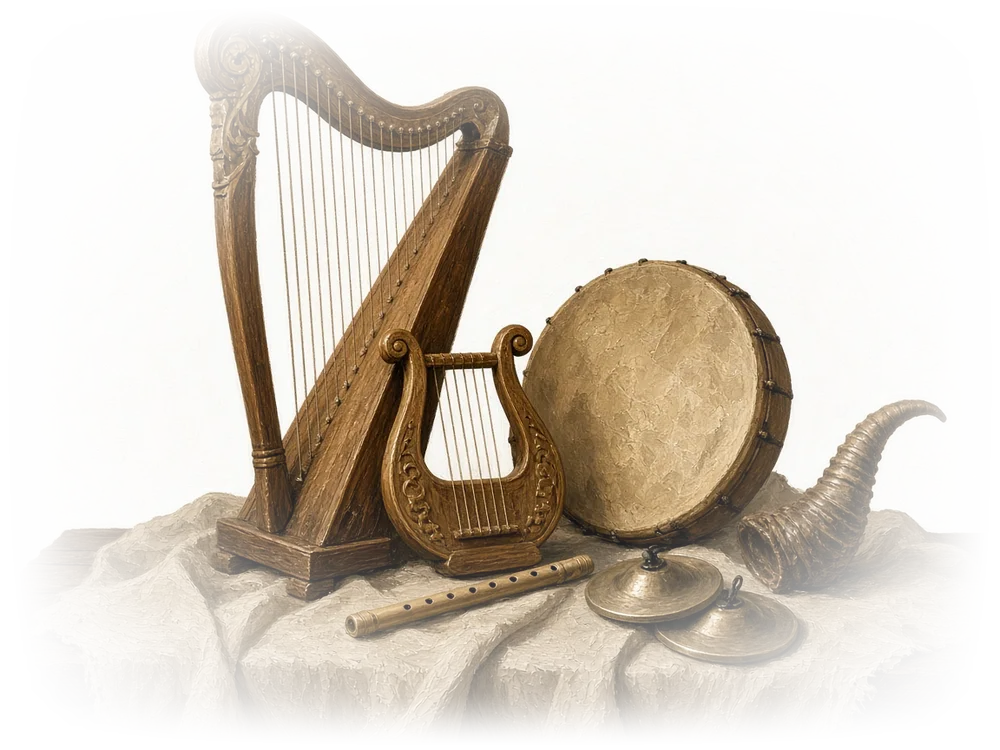
The last psalm is all praise: no story, no request. Praise Him in His holiness, in His mighty deeds, “according to His abundant greatness”, with shofar, harp and lyre, drum and dance, strings and flute, and two kinds of cymbals. Rashi on the strings and flute: “they are kinds of musical instruments.” On “according to His abundant greatness”, Metzudas David: “as His greatness is abundant, so praise Him much.”
Chabad.org’s commentary: “The psalm continues, mentioning ten types of instruments, each one corresponding to one of the ten Sefiros and each one producing a sound reflecting a particular emotional quality” (Siddur Im Dach; Likkutei Torah). And the first of them: ““Praise Him by sounding the shofar” points to teshuvah stemming from the inner point of the heart; a simple sound, a tekiah, a level above being divided into letters”.
Then the instruments stop, and the last verse is about us: “Let every soul praise Kah.” Metzudas David: “everyone who has in him a soul and an understanding spirit will praise Kah; the Book of Tehillim is complete.” Rashi too ends with “סליק ספר”, “the book is finished.” Tehillim ends with breath.
בְּמִנִּים וְעוּגָב. מִינֵי כְּלֵי שִׁיר הֵםכרוב גודלו. ר״ל כמו שגדולתו מרובה כן הללוהו הרבהכל מי שיש בו נשמה ונפש משכלת תהלל את יה, נשלם ספר תהלים
Rashi on Tehillim 146-150 · Hebrew text via Sefaria; quoted · sefaria.org/Rashi_on_Psalms.146
Metzudas David on Tehillim 146-150 · Hebrew text via Sefaria; quoted as printed, unvoweled · sefaria.org/Metzudat_David_on_Psalms.146
Siddur Im Dach; Likkutei Torah · as cited in Chabad.org’s siddur commentary; not opened
“Kol haneshamah”: every breath praises

The very last words of Tehillim, the words we say twice: כֹּל הַנְּשָׁמָה תְּהַלֵּל יָהּ. Chabad.org’s commentary on this verse brings three sources, one after the other: the Midrash, a letter of the Rebbe, and a teaching of the Alter Rebbe. I read the Midrash in Bereishis Rabbah 14:9. The Rebbe’s letter (Igros Kodesh, vol. 15, letter 5396) and the Alter Rebbe’s words (Torah Or, Mikeitz, 36b) I read in the Hebrew that Chabad.org prints in its notes; I did not open the volumes themselves. The translations are mine.
Rabbi Levi said in the name of Rabbi Chanina: For every single breath that a person breathes, he must praise the Creator. What is the reason? “Let every soul (neshamah) praise Kah”: let every breath (neshimah) praise Kah.
At every moment one can bind oneself and connect [with Hashem], since the possibility of serving Hashem is in all matters, to the point that our Sages said, “Let every soul praise Kah”: for every single breath one must praise Hashem, blessed be He. That is to say, a person is able to make even his breathing, though it seems to be a mere necessity, a service to Him, blessed be He.
For neshamah comes from the word neshimah, the breathing in a person, which is in the mode of ratzo and shov: it draws in the air, and it goes in and goes out. And this is why it is called neshamah: it is the source of all the breaths, and their sum. And therefore the heart beats always in ratzo and shov, while all the other limbs are quiet and rest.
— Bereishis Rabbah 14:9; the Rebbe, Igros Kodesh, vol. 15, letter 5396; the Alter Rebbe, Torah Or, Mikeitz, 36b (my translations; the last two from the Hebrew printed by Chabad.org)
Igros Kodesh of the Rebbe, vol. 15, letter 5396 (ה׳שצו) · the Hebrew passage as printed in the notes of Chabad.org’s Online Siddur with Commentary (Tehillim 150); the volume itself not opened; translated by me · chabad.org/…/1524164
Torah Or, Mikeitz, p. 36b (לו,ב) · the Hebrew passage as printed in the notes of Chabad.org’s Online Siddur with Commentary (Tehillim 150); the volume itself not opened; translated by me · chabad.org/…/1524164
Chabad.org: Online Siddur with Commentary, “Halleluyah, Hallelu Keil Bekodsho” (Tehillim 150) · Hebrew text, and the commentary Siddur Illuminated by Chassidus (translated by Eliyahu Touger, edited by Sholom Ber Wineberg, Sichos in English); English quoted · chabad.org/…/1524164
What the commentary adds, and what I take from it
Even what we must do. Chabad.org’s commentary sums up the Rebbe’s letter: “Implied is that every aspect of our lives, even those that are necessary for our very existence, must be utilized as a means to serve and praise G‑d.” Breathing is the most necessary thing of all; no one decides to breathe. Even that can be praise.
In and out. On the Alter Rebbe’s words the commentary explains: the breathing of the lungs “reflects the pattern of ratzo (yearning to bond with G‑d above the limits of this world) and shov (returning to carry out His will in this world)”; and in its note: “Aside from the heart and lungs, no other limb or organ follows such a pattern.” (The English commentary names its source as Likkutei Torah; the Hebrew it prints is from Torah Or, Mikeitz, 36b.) And on the word כֹּל: “Every soul possesses an encompassing dimension of its own, making it a microcosm of all existence” (Siddur Im Dach).
From here on, my own thoughts. The breath He gave. In Lesson 5 we said every morning: אֱלֹהַי, נְשָׁמָה שֶׁנָּתַתָּ בִּי, “my G‑d, the soul You gave me”, and אַתָּה נְפַחְתָּהּ בִּי, “You breathed it into me.” The same Midrash in Bereishis Rabbah says that when a person sleeps, the soul “rises and draws life for him from above.” Every morning the breath comes back; at the end of Pesukei D’zimrah, the breath praises.
When you say it twice. The first time, the words: “Let every soul praise Kah.” The second time, slowly, feel the breath that carries the words. It goes out as praise, and comes back in as life. נְשָׁמָה, “soul”, and נְשִׁימָה, “breath”, come from one root, נ־שׁ־ם (§G61).
Torah Or, Mikeitz, p. 36b (לו,ב) · the Hebrew passage as printed in the notes of Chabad.org’s Online Siddur with Commentary (Tehillim 150); the volume itself not opened; translated by me · chabad.org/…/1524164
Midrash Bereishis Rabbah 14:9 · Hebrew text via Sefaria; quoted · sefaria.org/Bereshit_Rabbah.14.9
Siddur Im Dach; Likkutei Torah · as cited in Chabad.org’s siddur commentary; not opened
How the text is printed here
The five psalms and the four verses after them are printed in full, line by line, with my own translation. I took the Hebrew from Chabad.org’s Online Siddur and checked every word against our printed siddur, Tehillat Hashem, pages 160 to 163; where the two differ, I print the spelling of the printed siddur and list it under the text. Every verse was also compared, letter by letter, with the verse in Tehillim. The numbers are the verse numbers of each psalm; the last verse of Tehillim 150 is printed twice, as we say it.
Chabad.org: Online Siddur with Commentary, “Halleluyah, Halleli Nafshi” (Tehillim 146) · Hebrew text, and the commentary Siddur Illuminated by Chassidus (translated by Eliyahu Touger, edited by Sholom Ber Wineberg, Sichos in English); English quoted · chabad.org/…/1524153
Chabad.org: Online Siddur with Commentary, “Halleluyah, Ki Tov” (Tehillim 147) · Hebrew text, and the commentary Siddur Illuminated by Chassidus (translated by Eliyahu Touger, edited by Sholom Ber Wineberg, Sichos in English); English quoted · chabad.org/…/1524154
Chabad.org: Online Siddur with Commentary, “Halleluyah, Hallelu” (Tehillim 148) · Hebrew text, and the commentary Siddur Illuminated by Chassidus (translated by Eliyahu Touger, edited by Sholom Ber Wineberg, Sichos in English); English quoted · chabad.org/…/1524156
Chabad.org: Online Siddur with Commentary, “Halleluyah, Shiru” (Tehillim 149) · Hebrew text, and the commentary Siddur Illuminated by Chassidus (translated by Eliyahu Touger, edited by Sholom Ber Wineberg, Sichos in English); English quoted · chabad.org/…/1524162
Chabad.org: Online Siddur with Commentary, “Halleluyah, Hallelu Keil Bekodsho” (Tehillim 150) · Hebrew text, and the commentary Siddur Illuminated by Chassidus (translated by Eliyahu Touger, edited by Sholom Ber Wineberg, Sichos in English); English quoted · chabad.org/…/1524164
Chabad.org: Online Siddur with Commentary, “Baruch Hashem Le’olam” · Hebrew text, and the commentary Siddur Illuminated by Chassidus (translated by Eliyahu Touger, edited by Sholom Ber Wineberg, Sichos in English); English quoted · chabad.org/…/1524173
Tehillim 146-150; 89:53; 135:21; 72:18-19 · Hebrew text via Sefaria, compared letter by letter · sefaria.org/Psalms.146
1. Tehillim 146: Halleluyah, halleli nafshi
| Hebrew | Meaning |
|---|---|
| הַלְלוּיָהּ, הַלְלִי נַפְשִׁי אֶת יְיָ: | 1. Halleluyah! Praise Hashem, my soul. |
| אֲהַלְלָה יְיָ בְּחַיָּי, אֲזַמְּרָה לֵאלֹהַי בְּעוֹדִי: | 2. I will praise Hashem with my life; I will sing to my G‑d while I still am. |
| אַל תִּבְטְחוּ בִנְדִיבִים, בְּבֶן אָדָם שֶׁאֵין לוֹ תְשׁוּעָה: | 3. Do not trust in nobles, in a son of man, who has no salvation. |
| תֵּצֵא רוּחוֹ יָשֻׁב לְאַדְמָתוֹ, בַּיּוֹם הַהוּא אָבְדוּ עֶשְׁתֹּנֹתָיו: | 4. His spirit goes out, he returns to his earth; on that day his plans are lost. |
| אַשְׁרֵי שֶׁאֵל יַעֲקֹב בְּעֶזְרוֹ, שִׂבְרוֹ עַל יְיָ אֱלֹהָיו: | 5. Fortunate is he whose help is the G‑d of Yaakov, whose hope is in Hashem his G‑d, |
| עֹשֶׂה שָׁמַיִם וָאָרֶץ, אֶת הַיָּם וְאֶת כָּל אֲשֶׁר בָּם, הַשֹּׁמֵר אֱמֶת לְעוֹלָם: | 6. Maker of heaven and earth, the sea and all that is in them, Who keeps truth forever; |
| עֹשֶׂה מִשְׁפָּט לַעֲשׁוּקִים, נֹתֵן לֶחֶם לָרְעֵבִים, יְיָ מַתִּיר אֲסוּרִים: | 7. Who does justice for the oppressed, Who gives bread to the hungry. Hashem frees the bound. |
| יְיָ פֹּקֵחַ עִוְרִים, יְיָ זֹקֵף כְּפוּפִים, יְיָ אֹהֵב צַדִּיקִים: | 8. Hashem opens the eyes of the blind; Hashem straightens the bent; Hashem loves the righteous. |
| יְיָ שֹׁמֵר אֶת גֵּרִים, יָתוֹם וְאַלְמָנָה יְעוֹדֵד, וְדֶרֶךְ רְשָׁעִים יְעַוֵּת: | 9. Hashem guards the strangers; He upholds the orphan and the widow, and He twists the way of the wicked. |
| יִמְלֹךְ יְיָ לְעוֹלָם, אֱלֹהַיִךְ צִיּוֹן, לְדֹר וָדֹר, הַלְלוּיָהּ: | 10. Hashem will reign forever, your G‑d, Tziyon, for all generations. Halleluyah! |
Verse 1: הַלְלִי נַפְשִׁי, a command to “my soul”, spoken as to a woman (§G59). Verse 10: אֱלֹהַיִךְ, “your G‑d”, said to Tziyon (§G53).
Tehillim 146-150; 89:53; 135:21; 72:18-19 · Hebrew text via Sefaria, compared letter by letter · sefaria.org/Psalms.146
Siddur Tehillat Hashem (Kehot), pp. 160-163 · the printed page, checked for the order and for each word
2. Tehillim 147 (verses 1-11): Ki tov zamrah
| Hebrew | Meaning |
|---|---|
| הַלְלוּיָהּ, כִּי טוֹב זַמְּרָה אֱלֹהֵינוּ, כִּי נָעִים נָאוָה תְהִלָּה: | 1. Halleluyah! For it is good to sing to our G‑d; for it is pleasant, praise is fitting. |
| בּוֹנֵה יְרוּשָׁלִַם יְיָ, נִדְחֵי יִשְׂרָאֵל יְכַנֵּס: | 2. Hashem builds Yerushalayim; He will gather in the scattered of Israel. |
| הָרוֹפֵא לִשְׁבוּרֵי לֵב, וּמְחַבֵּשׁ לְעַצְּבוֹתָם: | 3. He heals the broken-hearted and binds up their sorrows. |
| מוֹנֶה מִסְפָּר לַכּוֹכָבִים, לְכֻלָּם שֵׁמוֹת יִקְרָא: | 4. He counts the number of the stars; He calls each of them by name. |
| גָּדוֹל אֲדֹנֵינוּ וְרַב כֹּחַ, לִתְבוּנָתוֹ אֵין מִסְפָּר: | 5. Great is our Master and abundant in strength; His understanding has no number. |
| מְעוֹדֵד עֲנָוִים יְיָ, מַשְׁפִּיל רְשָׁעִים עֲדֵי אָרֶץ: | 6. Hashem lifts up the humble; He lowers the wicked to the ground. |
| עֱנוּ לַייָ בְּתוֹדָה, זַמְּרוּ לֵאלֹהֵינוּ בְכִנּוֹר: | 7. Call out to Hashem with thanks; sing to our G‑d with the harp. |
| הַמְכַסֶּה שָׁמַיִם בְּעָבִים, הַמֵּכִין לָאָרֶץ מָטָר, הַמַּצְמִיחַ הָרִים חָצִיר: | 8. Who covers the heavens with clouds, Who prepares rain for the earth, Who makes grass grow on the mountains. |
| נוֹתֵן לִבְהֵמָה לַחְמָהּ, לִבְנֵי עֹרֵב אֲשֶׁר יִקְרָאוּ: | 9. He gives the animal its food, to the young ravens that call out. |
| לֹא בִגְבוּרַת הַסּוּס יֶחְפָּץ, לֹא בְשׁוֹקֵי הָאִישׁ יִרְצֶה: | 10. Not in the strength of the horse does He delight, not in the legs of a man does He take pleasure. |
| רוֹצֶה יְיָ אֶת יְרֵאָיו, אֶת הַמְיַחֲלִים לְחַסְדּוֹ: | 11. Hashem takes pleasure in those who fear Him, in those who hope for His kindness. |
Our siddur, like Tehillim, writes יְרוּשָׁלִַם without a yod (Chabad.org prints יְרוּשָׁלַיִם); the two vowels under the ל tell us to say Y’rusholayim. In verse 5 our siddur writes אֲדֹנֵינוּ without a vav, as in Tehillim, where Chabad.org prints אֲדוֹנֵינוּ. In verse 3 the siddur writes הָרוֹפֵא with a vav, where Tehillim writes הָרֹפֵא. In verse 9, לַחְמָהּ has a dot in the final ה: “its food” (§G26).
Tehillim 146-150; 89:53; 135:21; 72:18-19 · Hebrew text via Sefaria, compared letter by letter · sefaria.org/Psalms.146
Siddur Tehillat Hashem (Kehot), pp. 160-163 · the printed page, checked for the order and for each word
Tehillim 147 (verses 12-20): Shabchi Yerushalayim
| Hebrew | Meaning |
|---|---|
| שַׁבְּחִי יְרוּשָׁלִַם אֶת יְיָ, הַלְלִי אֱלֹהַיִךְ צִיּוֹן: | 12. Praise Hashem, Yerushalayim; praise your G‑d, Tziyon. |
| כִּי חִזַּק בְּרִיחֵי שְׁעָרָיִךְ, בֵּרַךְ בָּנַיִךְ בְּקִרְבֵּךְ: | 13. For He has strengthened the bars of your gates; He has blessed your children within you. |
| הַשָּׂם גְּבוּלֵךְ שָׁלוֹם, חֵלֶב חִטִּים יַשְׂבִּיעֵךְ: | 14. He makes peace in your borders; with the cream of the wheat He satisfies you. |
| הַשֹּׁלֵחַ אִמְרָתוֹ אָרֶץ, עַד מְהֵרָה יָרוּץ דְּבָרוֹ: | 15. He sends His saying to the earth; His word runs very swiftly. |
| הַנֹּתֵן שֶׁלֶג כַּצָּמֶר, כְּפוֹר כָּאֵפֶר יְפַזֵּר: | 16. He gives snow like wool; He scatters frost like ashes. |
| מַשְׁלִיךְ קַרְחוֹ כְפִתִּים, לִפְנֵי קָרָתוֹ מִי יַעֲמֹד: | 17. He casts down His ice like crumbs; before His cold, who can stand? |
| יִשְׁלַח דְּבָרוֹ וְיַמְסֵם, יַשֵּׁב רוּחוֹ יִזְּלוּ מָיִם: | 18. He sends out His word and melts them; He makes His wind blow, and the waters flow. |
| מַגִּיד דְּבָרָיו לְיַעֲקֹב, חֻקָּיו וּמִשְׁפָּטָיו לְיִשְׂרָאֵל: | 19. He tells His words to Yaakov, His statutes and His judgments to Israel. |
| לֹא עָשָׂה כֵן לְכָל גּוֹי, וּמִשְׁפָּטִים בַּל יְדָעוּם, הַלְלוּיָהּ: | 20. He has not done so for any nation, and His judgments they have not known. Halleluyah! |
Verse 12 again: יְרוּשָׁלִַם, without a yod. Verses 12-14 speak to Yerushalayim as to a woman: שַׁבְּחִי and הַלְלִי, “praise!” (§G59); then “your” in שְׁעָרָיִךְ (gates), בָּנַיִךְ (children) and גְּבוּלֵךְ (borders) (§G53). In verse 19 we read and print דְּבָרָיו, “His words”; in Tehillim it is written דברו (§G55).
Tehillim 146-150; 89:53; 135:21; 72:18-19 · Hebrew text via Sefaria, compared letter by letter · sefaria.org/Psalms.146
Siddur Tehillat Hashem (Kehot), pp. 160-163 · the printed page, checked for the order and for each word
3. Tehillim 148: Hallelu es Hashem min hashamayim
| Hebrew | Meaning |
|---|---|
| הַלְלוּיָהּ, הַלְלוּ אֶת יְיָ מִן הַשָּׁמַיִם, הַלְלוּהוּ בַּמְּרוֹמִים: | 1. Halleluyah! Praise Hashem from the heavens; praise Him in the heights. |
| הַלְלוּהוּ כָל מַלְאָכָיו, הַלְלוּהוּ כָּל צְבָאָיו: | 2. Praise Him, all His angels; praise Him, all His hosts. |
| הַלְלוּהוּ שֶׁמֶשׁ וְיָרֵחַ, הַלְלוּהוּ כָּל כּוֹכְבֵי אוֹר: | 3. Praise Him, sun and moon; praise Him, all stars of light. |
| הַלְלוּהוּ שְׁמֵי הַשָּׁמָיִם, וְהַמַּיִם אֲשֶׁר מֵעַל הַשָּׁמָיִם: | 4. Praise Him, heavens of the heavens, and the waters that are above the heavens. |
| יְהַלְלוּ אֶת שֵׁם יְיָ, כִּי הוּא צִוָּה וְנִבְרָאוּ: | 5. Let them praise the Name of Hashem, for He commanded and they were created. |
| וַיַּעֲמִידֵם לָעַד לְעוֹלָם, חָק נָתַן וְלֹא יַעֲבוֹר: | 6. He set them up forever and ever; He gave a law, and it will not pass. |
| הַלְלוּ אֶת יְיָ מִן הָאָרֶץ, תַּנִּינִים וְכָל תְּהֹמוֹת: | 7. Praise Hashem from the earth, sea creatures and all the depths; |
| אֵשׁ וּבָרָד שֶׁלֶג וְקִיטוֹר, רוּחַ סְעָרָה עֹשָׂה דְבָרוֹ: | 8. fire and hail, snow and mist, stormy wind that does His word; |
| הֶהָרִים וְכָל גְּבָעוֹת, עֵץ פְּרִי וְכָל אֲרָזִים: | 9. the mountains and all hills, fruit trees and all cedars; |
| הַחַיָּה וְכָל בְּהֵמָה, רֶמֶשׂ וְצִפּוֹר כָּנָף: | 10. the wild beast and all cattle, creeping things and winged birds; |
| מַלְכֵי אֶרֶץ וְכָל לְאֻמִּים, שָׂרִים וְכָל שֹׁפְטֵי אָרֶץ: | 11. kings of the earth and all peoples, princes and all judges of the earth; |
| בַּחוּרִים וְגַם בְּתוּלוֹת, זְקֵנִים עִם נְעָרִים: | 12. young men and also young women, old men together with youths. |
| יְהַלְלוּ אֶת שֵׁם יְיָ, כִּי נִשְׂגָּב שְׁמוֹ לְבַדּוֹ, הוֹדוֹ עַל אֶרֶץ וְשָׁמָיִם: | 13. Let them praise the Name of Hashem, for His Name alone is exalted; His glory is over earth and heaven. |
| וַיָּרֶם קֶרֶן לְעַמּוֹ, תְּהִלָּה לְכָל חֲסִידָיו, לִבְנֵי יִשְׂרָאֵל עַם קְרֹבוֹ, הַלְלוּיָהּ: | 14. He has raised up the horn of His people, praise for all His pious ones, for the children of Israel, the people close to Him. Halleluyah! |
In verse 2 we read and print צְבָאָיו, “His hosts”; in Tehillim it is written צבאו (§G55). הַלְלוּהוּ, “praise Him”, is a command to many with “Him” at the end (§G59, §G51). Notice כָל in verse 2 and כָּל further on: the same word (§G60).
Tehillim 146-150; 89:53; 135:21; 72:18-19 · Hebrew text via Sefaria, compared letter by letter · sefaria.org/Psalms.146
Siddur Tehillat Hashem (Kehot), pp. 160-163 · the printed page, checked for the order and for each word
4. Tehillim 149: Shiru laShem shir chadash
| Hebrew | Meaning |
|---|---|
| הַלְלוּיָהּ, שִׁירוּ לַייָ שִׁיר חָדָשׁ, תְּהִלָּתוֹ בִּקְהַל חֲסִידִים: | 1. Halleluyah! Sing to Hashem a new song, His praise in the assembly of the pious. |
| יִשְׂמַח יִשְׂרָאֵל בְּעֹשָׂיו, בְּנֵי צִיּוֹן יָגִילוּ בְמַלְכָּם: | 2. Let Israel rejoice in its Maker; let the children of Tziyon delight in their King. |
| יְהַלְלוּ שְׁמוֹ בְמָחוֹל, בְּתֹף וְכִנּוֹר יְזַמְּרוּ לוֹ: | 3. Let them praise His Name with dance; with drum and harp let them sing to Him. |
| כִּי רוֹצֶה יְיָ בְּעַמּוֹ, יְפָאֵר עֲנָוִים בִּישׁוּעָה: | 4. For Hashem takes pleasure in His people; He adorns the humble with salvation. |
| יַעְלְזוּ חֲסִידִים בְּכָבוֹד, יְרַנְּנוּ עַל מִשְׁכְּבוֹתָם: | 5. Let the pious exult in glory; let them sing for joy upon their beds. |
| רוֹמְמוֹת אֵל בִּגְרוֹנָם, וְחֶרֶב פִּיפִיּוֹת בְּיָדָם: | 6. The exaltations of G‑d are in their throat, and a double-edged sword in their hand, |
| לַעֲשׂוֹת נְקָמָה בַגּוֹיִם, תּוֹכֵחוֹת בַּלְאֻמִּים: | 7. to carry out vengeance on the nations, rebukes on the peoples; |
| לֶאְסֹר מַלְכֵיהֶם בְּזִקִּים, וְנִכְבְּדֵיהֶם בְּכַבְלֵי בַרְזֶל: | 8. to bind their kings with chains, and their nobles with fetters of iron; |
| לַעֲשׂוֹת בָּהֶם מִשְׁפָּט כָּתוּב, הָדָר הוּא לְכָל חֲסִידָיו, הַלְלוּיָהּ: | 9. to carry out upon them the written judgment. It is splendor for all His pious ones. Halleluyah! |
שִׁירוּ, “sing!”, is a command to many (§G59). The verbs יִשְׂמַח (rejoice), יָגִילוּ (be glad), יְהַלְלוּ (praise), יְזַמְּרוּ (make music), יַעְלְזוּ (exult) and יְרַנְּנוּ (sing out) are future forms used as wishes: “let them…” (§G30).
Tehillim 146-150; 89:53; 135:21; 72:18-19 · Hebrew text via Sefaria, compared letter by letter · sefaria.org/Psalms.146
Siddur Tehillat Hashem (Kehot), pp. 160-163 · the printed page, checked for the order and for each word
5. Tehillim 150: Hallelu Keil bekodsho, and Baruch Hashem le’olam
| Hebrew | Meaning |
|---|---|
| הַלְלוּיָהּ, הַלְלוּ אֵל בְּקָדְשׁוֹ, הַלְלוּהוּ בִּרְקִיעַ עֻזּוֹ: | 1. Halleluyah! Praise G‑d in His holiness; praise Him in the firmament of His strength. |
| הַלְלוּהוּ בִּגְבוּרֹתָיו, הַלְלוּהוּ כְּרֹב גֻּדְלוֹ: | 2. Praise Him for His mighty deeds; praise Him according to His abundant greatness. |
| הַלְלוּהוּ בְּתֵקַע שׁוֹפָר, הַלְלוּהוּ בְּנֵבֶל וְכִנּוֹר: | 3. Praise Him with the blast of the shofar; praise Him with lyre and harp. |
| הַלְלוּהוּ בְּתֹף וּמָחוֹל, הַלְלוּהוּ בְּמִנִּים וְעֻגָב: | 4. Praise Him with drum and dance; praise Him with strings and flute. |
| הַלְלוּהוּ בְּצִלְצְלֵי שָׁמַע, הַלְלוּהוּ בְּצִלְצְלֵי תְרוּעָה: | 5. Praise Him with resounding cymbals; praise Him with clashing cymbals. |
| כֹּל הַנְּשָׁמָה תְּהַלֵּל יָהּ הַלְלוּיָהּ: | 6. Let every soul praise Kah. Halleluyah! |
| כֹּל הַנְּשָׁמָה תְּהַלֵּל יָהּ הַלְלוּיָהּ: | 7. Let every soul praise Kah. Halleluyah! (said twice) |
| בָּרוּךְ יְיָ לְעוֹלָם, אָמֵן וְאָמֵן: | Blessed is Hashem forever. Amen and amen. (Tehillim 89:53) |
| בָּרוּךְ יְיָ מִצִּיּוֹן שֹׁכֵן יְרוּשָׁלִָם, הַלְלוּיָהּ: | Blessed is Hashem from Tziyon, Who dwells in Yerushalayim. Halleluyah! (Tehillim 135:21) |
| בָּרוּךְ יְיָ אֱלֹהִים אֱלֹהֵי יִשְׂרָאֵל, עֹשֵׂה נִפְלָאוֹת לְבַדּוֹ: | Blessed is Hashem, G‑d, the G‑d of Israel, Who alone does wonders. (Tehillim 72:18) |
| וּבָרוּךְ שֵׁם כְּבוֹדוֹ לְעוֹלָם, וְיִמָּלֵא כְבוֹדוֹ אֶת כָּל הָאָרֶץ, אָמֵן וְאָמֵן: | And blessed is His glorious Name forever, and may the whole earth be filled with His glory. Amen and amen. (Tehillim 72:19) |
Ten praises: הַלְלוּ once and הַלְלוּהוּ nine times. The last verse, כֹּל הַנְּשָׁמָה, is said twice. Here כֹּל stands alone, with a holam (§G60). Then come four verses from three psalms: 89:53, 135:21, 72:18-19. In the second, our siddur writes יְרוּשָׁלִָם without a yod; Chabad.org prints יְרוּשָׁלָיִם.
Chabad.org: Online Siddur with Commentary, “Baruch Hashem Le’olam” · Hebrew text, and the commentary Siddur Illuminated by Chassidus (translated by Eliyahu Touger, edited by Sholom Ber Wineberg, Sichos in English); English quoted · chabad.org/…/1524173
Tehillim 146-150; 89:53; 135:21; 72:18-19 · Hebrew text via Sefaria, compared letter by letter · sefaria.org/Psalms.146
Siddur Tehillat Hashem (Kehot), pp. 160-163 · the printed page, checked for the order and for each word
Tehillim 146: speaking to my soul
The psalm begins with a command to the soul, then David speaks of himself, “my life”, “while I still am”, and then forbids: “do not trust”.
הַלְלוּיָהּ, הַלְלִי נַפְשִׁי אֶת יְיָ:אֲהַלְלָה יְיָ בְּחַיָּי, אֲזַמְּרָה לֵאלֹהַי בְּעוֹדִי:אַל תִּבְטְחוּ בִנְדִיבִים, בְּבֶן אָדָם שֶׁאֵין לוֹ תְשׁוּעָה:
| הַלְלִי | = | ◌י | + | הַלְלִ |
| hal’li praise! (to a woman) | command to a woman | praise |
| בְּחַיָּי | = | ◌י | + | חַיָּ | + | בְּ |
| b’chayoy with my life | my | live | in, with |
| בְּעוֹדִי | = | ◌י | + | עוֹדִ | + | בְּ |
| b’odi while I still am | my | still, more | in, with |
| תִּבְטְחוּ | = | ◌וּ | + | בְטְח | + | תִּ |
| tivt’chu trust (you all) | you all | trust | you (future) |
Tehillim 147: the Builder, and the city
Participles tell what Hashem does all the time (§G15). Then the psalm turns to Yerushalayim and speaks to her, as to a woman.
בּוֹנֵה יְרוּשָׁלִַם יְיָ, נִדְחֵי יִשְׂרָאֵל יְכַנֵּס:הָרוֹפֵא לִשְׁבוּרֵי לֵב, וּמְחַבֵּשׁ לְעַצְּבוֹתָם:שַׁבְּחִי יְרוּשָׁלִַם אֶת יְיָ, הַלְלִי אֱלֹהַיִךְ צִיּוֹן:
| בּוֹנֵה | = | בּוֹנֵה |
| boneh Builder of | build |
| לִשְׁבוּרֵי | = | ◌י | + | שְׁבוּרֵ | + | לִ |
| lish’vurei to the broken of | of (plural chain) | break | to, for |
| לַחְמָהּ | = | ◌הּ | + | לַחְמָ |
| lachmoh its food | her, its | bread, food |
| שַׁבְּחִי | = | ◌י | + | שַׁבְּחִ |
| shab’chi praise! (to a woman) | command to a woman | praise |
| יַשְׂבִּיעֵךְ | = | ◌ךְ | + | שְׂבִּיעֵ | + | יַ |
| yasbi’eich He satisfies you | you (f.) | be full | he (hif’il future) |
Tehillim 148: praise Him!
One word again and again: הַלְלוּהוּ. And one reason: “He commanded, and they were created.”
הַלְלוּהוּ כָל מַלְאָכָיו, הַלְלוּהוּ כָּל צְבָאָיו:יְהַלְלוּ אֶת שֵׁם יְיָ, כִּי הוּא צִוָּה וְנִבְרָאוּ:
| הַלְלוּהוּ | = | ◌הוּ | + | ◌וּ | + | הַלְל |
| hal’luhu praise Him! | Him | command to many | praise |
| מַלְאָכָיו | = | ◌יו | + | מַלְאָכָ |
| mal’ochov His angels | his (plural) | messenger |
| צִוָּה | = | צִוָּה |
| tzivoh He commanded | command |
| וְנִבְרָאוּ | = | ◌וּ | + | בְרָא | + | נִ | + | וְ |
| v’nivra’u and they were created | they (past) | create | nif’al (passive) | and |
Tehillim 149 and 150: song, and breath
From “sing!” to “every soul”: the instruments fall silent, and the soul, the breath itself, praises.
הַלְלוּיָהּ, שִׁירוּ לַייָ שִׁיר חָדָשׁ, תְּהִלָּתוֹ בִּקְהַל חֲסִידִים:רוֹמְמוֹת אֵל בִּגְרוֹנָם, וְחֶרֶב פִּיפִיּוֹת בְּיָדָם:כֹּל הַנְּשָׁמָה תְּהַלֵּל יָהּ הַלְלוּיָהּ:
| שִׁירוּ | = | ◌וּ | + | שִׁיר |
| shiru sing! | command to many | sing |
| בִּגְרוֹנָם | = | ◌ם | + | גְרוֹנָ | + | בִּ |
| bigronom in their throat | their | throat | in, with |
| תְּהִלָּתוֹ | = | ◌וֹ | + | ◌ת | + | הִלָּ | + | תְּ |
| t’hilloso His praise | his | -oh → -as | praise | noun-maker ת |
| הַנְּשָׁמָה | = | ◌ה | + | נְּשָׁמָ | + | הַ |
| han’shomoh the soul | feminine -oh | breathe | the |
| תְּהַלֵּל | = | הַלֵּל | + | תְּ |
| t’halleil let it praise | praise | she (future) |
| הַלְלוּיָהּ | = | ◌יָהּ | + | ◌וּ | + | הַלְל |
| hal’luyoh praise Kah! | Kah (the Name) | command to many | praise |
Baruch Hashem le’olam: wonders, and a full earth
Two nif’al forms, with the passive נ: “wonders”, and “may it be filled”.
בָּרוּךְ יְיָ אֱלֹהִים אֱלֹהֵי יִשְׂרָאֵל, עֹשֵׂה נִפְלָאוֹת לְבַדּוֹ:וּבָרוּךְ שֵׁם כְּבוֹדוֹ לְעוֹלָם, וְיִמָּלֵא כְבוֹדוֹ אֶת כָּל הָאָרֶץ, אָמֵן וְאָמֵן:
| נִפְלָאוֹת | = | ◌וֹת | + | פְלָא | + | נִ |
| nifla’os wonders | plural (f.) -os | wonder | nif’al (passive) |
| וְיִמָּלֵא | = | מָּלֵא | + | יִ | + | וְ |
| v’yimolei and may it be filled | fill | it (nif’al future) | and |
- Lesson 1 §G5 · Nouns: masculine, feminine, plural: feminine -oh, which becomes -as/-os before an ending; plurals -im and -os; vowels shorten as the word grows
- Lesson 2 §G9 · The article: “the”: ha- plus a dagesh in the next letter; ho- before alef, ayin, reish; hidden inside be-, le-, ke-
- Lesson 2 §G10 · The construct chain: “X of Y”: two nouns side by side mean “X of Y”; the article goes on the second; feminine -oh becomes -as
- Lesson 2 §G11 · The pi’el: a doubled middle letter: the pi’el doubles the middle root letter with a dagesh; past ki-, present me-
- Lesson 3 §G15 · The active participle: “the One Who does”: the kal present has o after the first root letter and ei under the second: pokei’ach, zokeif; it describes an action that goes on
- Lesson 3 §G16 · The hif’il present: ma- … -i-: the hif’il present has ma- (mei-) in front and a yud before the last root letter: matir, malbish, hameichin, hama’avir; it means “causes to …”
- Lesson 3 §G19 · Two small signs: the furtive patach and the soft letter: a patach under a final ח or ע is read before the letter (koach); בּ כּ פּ lose their dagesh after a vowel (vinoh, gover)
- Lesson 4 §G20 · The future tense: a letter in front: the future puts a prefix letter before the root: e- (א) I, ti- (ת) you or she, yi- (י) he or it, ni- (נ) we; after אִם it means “if … were to”
- Lesson 4 §G21 · The nif’al: when the action is done to the subject: the nif’al is the passive of the simple verb: past and present with ni-/ne- (nivro, ne’emon); future with a dagesh in the first root letter (yisoseim, yiposei’ach)
- Lesson 5 §G26 · “Her, it”: the ending -oh with a dot in the hei: on a verb, infinitive or participle, ־ָהּ (with a mappik, a dot inside the final hei) means “her” or “it” for a feminine noun: v’rosoh You created it
- Lesson 5 §G28 · Nouns with a מ in front: many nouns are made by putting מ (ma-, mi-) before the root: ma’aseh a deed (ע־שׂ־ה, do), mitzvoh a command (צ־ו־ה), mitz’od a step (צ־ע־ד)
- Lesson 6 §G30 · “May He bless you”: the future as a wish, with object endings: the future (§G20) also says “may…”: y’vorech’cho may He bless you; an ending after a future verb names the object: -cho you, -eim them
- Lesson 6 §G31 · Commands and requests: the imperative, and נָא: the command form is the future without its front letter: t’dabeir → dabeir speak!; a form that names the action can also command (omor); נָא makes a request: v’ha’arev no, please make sweet
- Lesson 9 §G44 · Hollow roots: when the middle root letter is a vav (אוֹר, מֵאִיר, טוּבוֹ): in roots like א־ו־ר (light) and ט־ו־ב (good) the middle ו is a vowel, not a full letter: or light, mei’ir gives light (hif’il, §G16), mo’or a luminary (מ in front, §G28), tov good, tuvo His goodness
- Lesson 10 §G48 · Roots that end in hei (עֹשֶׂה, פּוֹדֶה, הָיָה): when a root ends in ה, the participle ends in -eh (עֹשֶׂה oseh, פּוֹדֶה podeh), the past “he” ends in -oh (הָיָה hoyoh), and before an ending the ה drops (מַעֲשֶׂה → מַעֲשֵׂי)
- Lesson 11 §G51 · “Him” on a verb: ־ֵהוּ and ־ֶנּוּ: “him, it” attached to a verb is usually ־ֵהוּ (-eihu): אֲשַׂגְּבֵהוּ, “I will set him on high”; after a future it can also be ־ֶנּוּ (-ennu): יַצִּילֶנּוּ, “He will save him”
- Lesson 12 §G53 · “Your” said to a woman: ־ַיִךְ or ־ֵךְ or ־ָךְ: when one speaks to a woman, or to a city, which in Hebrew is feminine, “your” and “you” end in ־ךְ with a plain sheva, not in ־ךָ; on a plural noun the ending is ־ַיִךְ; Tehillim 122 speaks to Yerushalayim this way
- Lesson 12 §G55 · Written one way, read another: k’siv and k’ri: in a few places in Tanach the word as it is written (k’siv) differs from the word as it is read (k’ri); the siddur prints the reading with its vowels, and sometimes notes the written form in small letters; we always say the k’ri
In Lesson 6 we learned the command form: take the future, remove the front letter, and what remains is “do!” (§G31). That was a command to one man. The five Halleluyahs are full of commands, to everyone and to everything, so we need the other two endings.
To many: ־וּ. The future “you all will…” ends in ־וּ (§G20), and so does the command: הַלְלוּ (hal’lu), “praise!” (all of you); שִׁירוּ (shiru), “sing!”; זַמְּרוּ (zamru), “make music!”; עֱנוּ (enu), “call out!” (147:7).
To a woman: ־ִי. Said to a woman, the command ends in ־ִי, as in הַלְלִי נַפְשִׁי (hal’li nafshi), “praise, my soul!” (146:1), because נֶפֶשׁ, “soul”, is feminine; and שַׁבְּחִי יְרוּשָׁלִַם … הַלְלִי אֱלֹהַיִךְ צִיּוֹן, “praise, Yerushalayim … praise your G‑d, Tziyon” (147:12), because a city is spoken to as a woman, with ־ַיִךְ, “your” (§G53).
Do not confuse this ־ִי with the ־ִי of “my” (§G18): in נַפְשִׁי, “my soul”, it is on a noun; in הַלְלִי it is on a verb.
“Praise Him!” Add ־הוּ, “him” (§G51), to הַלְלוּ and you have הַלְלוּהוּ (hal’luhu), “praise Him!”, again and again in Tehillim 148 and nine times in Tehillim 150.
הַלְלוּיָהּ. The word is two words: הַלְלוּ, “praise!” (to many), and יָהּ, a Name of Hashem, with a dot in the ה (§G26). This is why the Gemara (Pesachim 117a) calls it the greatest of the ten expressions of praise in Tehillim: “it includes the Name and praise at once.” In our siddur it is written as one word, and we say it as one word.
| הַלְלוּ | hal’lu | praise! (to many) | 148:1 |
| שִׁירוּ | shiru | sing! (to many) | 149:1 |
| הַלְלִי נַפְשִׁי | hal’li nafshi | praise, my soul! | 146:1, to a woman |
| שַׁבְּחִי | shab’chi | praise! (to Yerushalayim) | 147:12, to a woman |
| הַלְלוּהוּ | hal’luhu | praise Him! | 148:2; 150:1-5 |
| הַלְלוּיָהּ | hal’luyoh | praise Kah! | command + the Name |
The last verse of Tehillim begins כֹּל הַנְּשָׁמָה, with a cholam, the vowel o written as a dot above. But in Tehillim 148 we find כָל מַלְאָכָיו and כָּל צְבָאָיו, with a kamatz under the כ. Is it the same word? Yes: “all, every”.
Alone or joined. When כֹּל stands on its own, or carries its own stress, it is written with a cholam: עֵינֵי כֹל, “the eyes of all” (Ashrei), and כֹּל הַנְּשָׁמָה. When it leans on the next word and is said together with it, “all-of”, it is written כָּל. The vowel under it is not the usual kamatz but a kamatz katan, a “small kamatz”, which is read o. So the word is always kol. In the pronunciation of this course both signs sound alike; a reader who says the ordinary kamatz as a must still read כָּל as kol, never kal. Some printings mark the kamatz katan with a slightly longer sign, כׇּל; our siddur prints the ordinary kamatz.
Hard or soft. Look again at 148:2: הַלְלוּהוּ כָל מַלְאָכָיו, then הַלְלוּהוּ כָּל צְבָאָיו. The rule of §G19 explains it. In the first half, הַלְלוּהוּ is read together with the next word, and since it ends in a vowel the כ turns soft: chol. In the second half the cantillation of Tehillim puts a pause on הַלְלוּהוּ, so the next word starts afresh, with a dagesh: kol.
With endings. With an ending the vowel is a short u: כֻּלָּנוּ, “all of us”, כֻּלָּם, “all of them” (§G34).
| כֹּל הַנְּשָׁמָה | kol han’shomoh | every soul | 150:6, alone: cholam |
| כָל מַלְאָכָיו | chol mal’ochov | all His angels | 148:2, joined, soft כ |
| כָּל צְבָאָיו | kol tz’vo’ov | all His hosts | 148:2, after a pause |
| לְכָל חֲסִידָיו | l’chol chasidov | for all His pious ones | 148:14 |
A root is like a seed of three letters (§G1). The vowels around it, and the letters added before and after, are the pattern, and the pattern makes the word. We saw families of words from one root before (ב־ר־ך, §G49) and nouns made with מ in front (§G28). Here is one more way.
נ־שׁ־ם, “breathe”. Put the root into the pattern ־ְ־ָ־ָה and you have נְשָׁמָה (n’shomoh), “soul”. Put it into the pattern ־ְ־ִי־ָה and you have נְשִׁימָה (n’shimoh), “a breath, breathing”: this pattern names the act itself. The two words differ by a single vowel and a yod.
The Midrash reads the verse with both. On כֹּל הַנְּשָׁמָה תְּהַלֵּל יָהּ, Bereishis Rabbah (14:9) says: “כָּל הַנְּשִׁימָה תְּהַלֵּל יָהּ”, “let every breath praise Kah”, and teaches that for every single breath a person breathes he must praise the Creator. This is the Chassidic insight of this lesson.
In a chain. Like every feminine noun in ־ָה, the word נְשָׁמָה becomes נִשְׁמַת in a chain (§G10, §G58): נִשְׁמַת כָּל חַי, “the soul of every living being”, which we say on Shabbos morning.
ה־ל־ל, “praise”. The same game with the root of this lesson: הַלֵּל (hallel), “praise”, the name of the Hallel; תְּהִלָּה (t’hilloh), “praise”, with ת in front; its plural gives the name of the whole book, תְּהִלִּים; and the verb, תְּהַלֵּל, “let it praise”. One root, many words.
| נְשָׁמָה | n’shomoh | soul | 150:6 |
| נְשִׁימָה | n’shimoh | breath, breathing | Bereishis Rabbah 14:9 |
| נִשְׁמַת | nishmas | the soul of | in a chain |
| תְּהִלָּתוֹ | t’hilloso | His praise | 149:1 |
| תְּהַלֵּל | t’halleil | let it praise | 150:6, the verb |
Small words in the Halleluyahs
| Word | Transliteration | Meaning | Root | Grammar |
|---|---|---|---|---|
| אַל | al | do not | — | With the future, a “do not”: אַל תִּבְטְחוּ בִנְדִיבִים (146:3). |
| לֹא, בַּל | lo, bal | not | — | לֹא בִגְבוּרַת הַסּוּס יֶחְפָּץ (147:10); the rarer בַּל, “not”: וּמִשְׁפָּטִים בַּל יְדָעוּם (147:20). |
| מִן | min | from | — | הַלְלוּ אֶת יְיָ מִן הַשָּׁמַיִם … מִן הָאָרֶץ (148:1, 148:7). Often shortened to מִ or מֵ in front of a word: מִצִּיּוֹן, “from Tziyon”. |
| עִם, גַּם | im, gam | with; also | — | בַּחוּרִים וְגַם בְּתוּלוֹת, זְקֵנִים עִם נְעָרִים (148:12). |
| עַד | ad | until; up to | — | עַד מְהֵרָה, “very swiftly” (147:15); עֲדֵי אָרֶץ, “down to the ground” (147:6). |
| לְבַדּוֹ | l’vado | He alone | ב־ד־ד | כִּי נִשְׂגָּב שְׁמוֹ לְבַדּוֹ (148:13); עֹשֵׂה נִפְלָאוֹת לְבַדּוֹ (Baruch, verse 3). |
| הַלְלוּיָהּ hal’luyoh · praise Kah! the first and last word of each of Tehillim 146-150, ten times; Baruch, verse 2; and וַאֲנַחְנוּ נְבָרֵךְ יָהּ … הַלְלוּיָהּ (Lesson 13) | זַמֵּר zammeir · sing, make music 146:2 אֲזַמְּרָה; 147:1 זַמְּרָה; 147:7 זַמְּרוּ; 149:3 יְזַמְּרוּ; and the name פְּסוּקֵי דְזִמְרָה |
| צִיּוֹן Tziyon · Tziyon, Zion 146:10; 147:12; 149:2; Baruch, verse 2 | חֲסִידִים chasidim · the pious ones 148:14 חֲסִידָיו; 149:1, 149:5; 149:9 חֲסִידָיו |
| שָׁמַיִם shomayim · heaven, heavens 146:6; 147:8; 148:1, 148:4, 148:13 | נְשָׁמָה n’shomoh · soul (breath) 150:6, said twice; and אֱלֹהַי, נְשָׁמָה שֶׁנָּתַתָּ בִּי (Lesson 5) |
- Which psalms are the five Halleluyahs, and what does the siddur add after them?
- Rabbi Yosi wished to be “among those who complete Hallel every day”. Why does the Gemara object, and how does it answer (Shabbos 118b)? Which two psalms does Rashi name?
- How many times does הַלְלוּיָהּ appear in Tehillim 146-150? What do they correspond to, according to the Alter Rebbe (51:1)?
- Why is הַלְלוּיָהּ “the greatest” of the ten expressions of praise (Pesachim 117a)? Split the word into its parts. → see §G59
- What does the Gemara in Rosh Hashanah 32a learn from the ten praises of Tehillim 150? Count them.
- Which verse do we say twice, and why (the Tur, the Beis Yosef, Shulchan Aruch HaRav 51:10)? Which other verse is doubled for the same reason?
- Where in Tehillim does each of the four Baruch verses come from? What did Rabbi Meir do with them, according to Abudraham as cited by the Beis Yosef?
- In Tehillim 146:2, what are חַיַּי and עוֹדִי according to the Alter Rebbe? Which one praises and which one makes music?
- Tehillim 148 calls all of creation to praise. Name the four kinds of creation that Chabad.org’s commentary finds in its list.
- In הַלְלוּ, in הַלְלִי and in הַלְלוּהוּ: who is spoken to? Find one of each in the psalms. → see §G59
- Why do we read כָל in 148:2 as chol and כֹּל in 150:6 as kol? What is a kamatz katan? → see §G60
- What does Bereishis Rabbah 14:9 learn from כֹּל הַנְּשָׁמָה תְּהַלֵּל יָהּ? How does the Rebbe’s letter apply it to something we cannot help doing? → see §G61
The lesson PDFs are for signed-in users.