

The Song of the Sea: Vayevarech David and Az Yashir
This lesson can be read on www.tebeka.com. Printing is for signed-in users only. © Rabbi Haim Tebeka.

After the Halleluyahs, the siddur brings four passages that lead us from King David’s blessing to the shore of the sea: Vayevarech David, Atah Hu, Vayosha, and the Song of the Sea, followed by its closing verses about Hashem’s kingship. I tell where we stand and where we give tzedakah, according to the Alter Rebbe; how the Song is to be said, with kavanah and with joy; why the Torah writes “he will sing” in the future, which the Sages read as a hint of the Resurrection; and why the Song ends with the kingship of the time to come. Then the meaning of each passage, a teaching of the Alter Rebbe on “dry land in the midst of the sea”, the text verse by verse, the key words, and three new grammar concepts: אָז with the future, the poetic ־מוֹ, and the careful reading of the hard and soft letters.
Where we are in the siddur
In Lesson 14 we finished the Book of Tehillim with the five Halleluyahs and four verses of “Baruch”. Now, on pages 163 to 165 of our siddur, Tehillat Hashem, come four passages from four different books. First, King David’s blessing before the whole assembly, וַיְבָרֶךְ דָּוִיד (Divrei HaYamim I 29:10-13). Then the blessing of the Levites in the days of Ezra and Nechemiah, וִיבָרְכוּ שֵׁם כְּבוֹדֶךָ and אַתָּה הוּא (Nechemiah 9:5-11), which tells the story from Avraham to the splitting of the sea. Then the two verses that close the story of the sea, וַיּוֹשַׁע (Shemos 14:30-31), and the Song of the Sea itself, אָז יָשִׁיר (Shemos 15:1-18).
After the Song, the siddur prints its last verse twice, then the same verse in the Aramaic of Onkelos, then the verse כִּי בָא סוּס פַּרְעֹה (Shemos 15:19), and three verses of the Prophets about Hashem’s kingship: Tehillim 22:29, Ovadiah 1:21 and Zechariah 14:9. I followed all of it on the printed page, word by word, and compared it with Chabad.org’s Online Siddur and with the text of Tanach.
Why these passages, and why here, just before Yishtabach? The Alter Rebbe (Shulchan Aruch HaRav 51:1) writes that we add, before the blessing Yishtabach, Vayevarech David until מְהַלְלִים לְשֵׁם תִּפְאַרְתֶּךָ, then Vayivarchu, and the Song of the Sea, “because all those fifteen expressions of praise set out in the blessing Yishtabach, the Sages expounded them from the Song of the Sea and from those verses of Vayevarech David.” The translator’s note sends to the Mechilta, Parshas Beshalach, Parshas HaShirah (as cited). We will count those fifteen praises when we reach Yishtabach.
David said his blessing on a day of joy. The verse just before it says: “The people rejoiced over their giving, for with a whole heart they gave to Hashem, and King David too rejoiced with a great joy” (Divrei HaYamim I 29:9). Keep this verse in mind; we will come back to it with the tzedakah.
לְפִי שֶׁכָּל אוֹתָם ט״ו לְשׁוֹנוֹת שֶׁל שֶׁבַח הַסְּדוּרוֹת דְּבִרְכוֹת יִשְׁתַּבַּח דְּרָשׁוּם חֲכָמִים מִתּוֹךְ שִׁירַת הַיָּם וּמִתּוֹךְ אוֹתָן פְּסוּקִים שֶׁל ״וַיְבָרֶךְ דָּוִיד״וַיִּשְׂמְחוּ הָעָם עַל הִתְנַדְּבָם כִּי בְּלֵב שָׁלֵם הִתְנַדְּבוּ… וְגַם דָּוִיד הַמֶּלֶךְ שָׂמַח שִׂמְחָה גְדוֹלָה
Divrei HaYamim I 29:10-13; Nechemiah 9:5-11; Shemos 14:30-15:19; Tehillim 22:29; Ovadiah 1:21; Zechariah 14:9 · Hebrew text via Sefaria, compared letter by letter · sefaria.org/I_Chronicles.29.10-13
Shulchan Aruch HaRav, Orach Chaim 51 (Chabad.org; English translation by Eliyahu Touger) · Hebrew and English quoted, with the translator’s notes · chabad.org/…/aid/3285916
Mechilta, Parshas HaShirah · as cited in the translator’s notes on Chabad.org; not opened
Standing
The Alter Rebbe writes (51:11): “It became the custom to stand for Vayevarech David until תִּפְאַרְתֶּךָ. And some add to stand until they say אַתָּה הוּא ה׳ הָאֱלֹהִים, whose first letters spell אֶהְיֶה, and afterwards they sit.” Look at the four words in the siddur: א of אַתָּה, then ה of הוּא, then the first letter of Hashem’s Name, a yud, and ה of הָאֱלֹהִים.
In the same paragraph he adds a detail: when one reaches וְעַתָּה אֱלֹהֵינוּ מוֹדִים אֲנַחְנוּ לָךְ, “one does not bow” there. The translator explains why it needs saying: “Though it does not mention bowing down, one does bow while reciting the same phrase (Modim Anachnu Lach — “we give thanks to You”) when it appears in Shemoneh Esreh.”
Something I noticed in the verse itself (it is my observation, not a source for the custom): the words we say, וִיבָרְכוּ שֵׁם כְּבוֹדֶךָ, are the end of a verse in which the Levites call out to the people קוּמוּ בָּרְכוּ, “Stand up, bless Hashem your G‑d from world to world” (Nechemiah 9:5).
And the Song of the Sea? The Alter Rebbe does not speak of standing for it. The Kitzur Shulchan Aruch (14:4), which I opened, does: “And likewise from Vayevarech David until אַתָּה הוּא ה׳ הָאֱלֹהִים, one says it standing. And likewise the Shirah, one says it standing, with kavanah and with joy.” The translator’s note on the Alter Rebbe’s words says: “Common practice is to remain standing from Vayvarech David until having responded to Barchu. (Derech HaChayim and Kitzur Shulchan Aruch, cited in Ketzos HaShulchan 18:4, write that one should stand while reciting the Song of the Sea.)” The Derech HaChayim and the Ketzos HaShulchan I did not open. For what to do in your own minyan, ask your rav.
וְנָהֲגוּ לַעֲמֹד לְ״וַיְבָרֶךְ דָּוִיד״ עַד ״תִּפְאַרְתֶּךָ״ … וְיֵשׁ מוֹסִיפִין לַעֲמֹד עַד שֶׁאוֹמְרִים ״אַתָּה הוּא ה׳ הָאֱלֹהִים״ … רָאשֵׁי תֵּבוֹת ״אֶהְיֶה״, וְאַחַר כָּךְ יוֹשְׁבִיןאֵין לִשְׁחוֹת וּלְהִשְׁתַּחֲווֹת שָׁםוְכֵן מִן וַיְבָרֵךְ דָוִיד עַד אַתָּה הוּא ה׳ הָאֱלֹהִים, יֹאמַר בַּעֲמִידָה. וְכֵן הַשִּׁירָה יֹאמַר בַּעֲמִידָה בְּכַוָּנָה וּבְשִׂמְחָה
Kitzur Shulchan Aruch 14:4 · Hebrew text via Sefaria; quoted · sefaria.org/Kitzur_Shulchan_Arukh.14.4
Divrei HaYamim I 29:10-13; Nechemiah 9:5-11; Shemos 14:30-15:19; Tehillim 22:29; Ovadiah 1:21; Zechariah 14:9 · Hebrew text via Sefaria, compared letter by letter · sefaria.org/I_Chronicles.29.10-13
Derech HaChayim; Ketzos HaShulchan 18:4 · as cited in the translator’s notes on Chabad.org; not opened
Tzedakah at “v’atah moshel bakol”
In the same paragraph (51:11) the Alter Rebbe writes: “And when one says וְאַתָּה מוֹשֵׁל בַּכֹּל, “and You rule over everything”, one gives tzedakah, standing.” The verse goes on: “and in Your hand are strength and might, and in Your hand it is to make great and to strengthen all.” Whatever I have comes from His hand; at this moment I give some of it away.
The translator’s note explains where this comes from and what it is. “In sec. 92:10 the Alter Rebbe quotes Bava Basra 10a” that it is good to give tzedakah before prayer, from the verse “I will behold Your face בְּצֶדֶק, in righteousness”. The Pri Megadim (Mishbetzos Zahav 92:30), in the name of the AriZal, connects that gift to the tzedakah given at Vayevarech David. But the note continues: since the Alter Rebbe writes about the two in two separate places, “This distinction indicates that there should be two separate donations: one before prayer (at the very beginning of the Morning Service, not directly before Shemoneh Esreh) and one when reciting the phrase VeAtah Moshel BaKol. See Igros Kodesh of the Rebbe, Vol. 19, p. 71.” I read this in the note; section 92, the Pri Megadim and the Rebbe’s letter I did not open.
Think of the verse we saw above: the day David said these words, the people had just given “with a whole heart”, and they rejoiced. A coin in the pushke at וְאַתָּה מוֹשֵׁל בַּכֹּל makes us part of that day. (On Shabbos and Yom Tov, when we do not handle money, ask your rav what to do.)
וּכְשֶׁאוֹמְרִים ״וְאַתָּה מוֹשֵׁל בַּכֹּל״ – נוֹתְנִים צְדָקָה … מְעֻמָּד
Divrei HaYamim I 29:10-13; Nechemiah 9:5-11; Shemos 14:30-15:19; Tehillim 22:29; Ovadiah 1:21; Zechariah 14:9 · Hebrew text via Sefaria, compared letter by letter · sefaria.org/I_Chronicles.29.10-13
Shulchan Aruch HaRav 92:10; Bava Basra 10a; Pri Megadim, Mishbetzos Zahav 92:30; Igros Kodesh of the Rebbe, vol. 19, p. 71 · as cited in the translator’s notes on Chabad.org; not opened

Every day, with kavanah and with joy
The Zohar (parshas Beshalach) calls the Song of the Sea “the song of the Queen to the Holy One, blessed be He”, and teaches: “Every person who says this song every day, and has kavanah in it, merits to say it in the time to come. For in it is the world that passed, and in it is the world to come, and in it are the bonds of faith, and in it are the days of King Moshiach.” I read it in the Aramaic on Sefaria; the translation is mine. The Kaf HaChayim (51:40) begins his words on the Song with this: “The Song of the Sea must be said with great kavanah”, and quotes this Zohar.
The Kitzur Shulchan Aruch, as we saw, says to say it “with kavanah and with joy”. The Mishnah Berurah (51:17) goes further: “And he should say the Song of the Sea with joy, and picture in his mind as if on that very day he crossed through the sea; and whoever says it with joy, his sins are forgiven.” The Kaf HaChayim (51:41) brings the same in the name of the Midrash (as cited), and adds what joy means here: “with great joy, and with care for the words and the cantillation, and having in mind as if he himself is going out of Egypt and crossing the sea and the Holy One, blessed be He, saves him.”
So the Song is not a story about others. Every morning I go out of my own Egypt, the sea opens before me, and I sing.
כָּל בַּר נָשׁ דְּאָמַר שִׁירָתָא דָּא בְּכָל יוֹמָא, וּמְכַוֵּון בָּהּ, זָכֵי לְמֵימְרָא לְזִמְנָא דְּאָתֵידְּהָא אִית בָּהּ עָלְמָא דְּעָבַר, וְאִית בָּהּ עָלְמָא דְּאָתֵי, וְאִית בָּהּ קִשְׁרֵי מְהֵימָנוּתָא, וְאִית בָּהּ יוֹמֵי דְּמַלְכָּא מְשִׁיחָאויאמר שירת הים בשמחה וידמה בדעתו כאלו באותו היום עבר בים והאומר בשמחה מוחלין לו עונותיושמי שאומר אותה בכל יום בשמחה רבה ובדקדוק התיבות ובטעמים ומכוין כאילו הוא בעצמו יוצא ממצרים ועובר הים והקב״ה מצילו מוחלין לו עונותיו
Kitzur Shulchan Aruch 14:4 · Hebrew text via Sefaria; quoted · sefaria.org/Kitzur_Shulchan_Arukh.14.4
Mishnah Berurah 51:17 · Hebrew text via Sefaria; quoted as printed, unvoweled · sefaria.org/Mishnah_Berurah.51.17
Kaf HaChayim, Orach Chaim 51:40-41 · Hebrew text via Sefaria; quoted as printed, unvoweled · sefaria.org/Kaf_HaChayim_on_Shulchan_Arukh,_Orach_Chayim.51.40
the Midrash quoted by the Kaf HaChayim · as cited by the Kaf HaChayim; not opened
“Az yashir”: he will sing
The Song begins with a strange word. The story happened in the past, and yet the Torah writes יָשִׁיר, “he will sing”, in the future, not שָׁר, “he sang”. Rashi gives two answers. The plain meaning: “Then, when he saw the miracle, it rose in his heart to sing a song … here too, יָשִׁיר: his heart told him that he should sing, and so he did.” The future form speaks of the thought that came first: “it teaches us that the yod is said for the thought.”
“But its midrash, our Rabbis said: from here there is a hint to the Resurrection of the Dead from the Torah.” This is the Gemara in Sanhedrin 91b: “It was taught: Rabbi Meir said: From where do we learn the Resurrection of the Dead from the Torah? As it says: Then Moshe and the children of Israel will sing… It does not say ‘sang’, but ‘will sing’: from here, the Resurrection of the Dead from the Torah.” The Gemara learns the same from אָז יִבְנֶה יְהוֹשֻׁעַ, “then Yehoshua will build” (Yehoshua 8:30).
A few lines later the same page says: “Rabbi Yehoshua ben Levi said: Whoever says shirah in this world merits to say it in the World to Come,” from the verse אַשְׁרֵי יוֹשְׁבֵי בֵיתֶךָ עוֹד יְהַלְלוּךָ סֶּלָה, the first verse of Ashrei (Lesson 13). The Song I sing this morning is the beginning of a song that will be sung again. See §G62 for the grammar of אָז with the future.
אָז כְּשֶׁרָאָה הַנֵּס עָלָה בְלִבּוֹ שֶׁיָּשִׁיר שִׁירָהלִמְּדָנוּ שֶׁהַיּוֹ״ד עַל שֵׁם הַמַּחֲשָׁבָה נֶאֶמְרָהאֲבָל מִדְרָשׁוֹ אָמְרוּ רַבּוֹתֵינוּ ז״ל: מִכָּאן רֶמֶז לִתְחִיַּת הַמֵּתִים מִן הַתּוֹרָהתַּנְיָא, אָמַר רַבִּי מֵאִיר: מִנַּיִין לִתְחִיַּית הַמֵּתִים מִן הַתּוֹרָה״שָׁר״ לֹא נֶאֱמַר, אֶלָּא ״יָשִׁיר״ – מִכָּאן לִתְחִיַּית הַמֵּתִים מִן הַתּוֹרָה
כׇּל הָאוֹמֵר שִׁירָה בְּעוֹלָם הַזֶּה זוֹכֶה וְאוֹמְרָהּ לָעוֹלָם הַבָּא
Talmud, Sanhedrin 91b · Gemara text via Sefaria; quoted · sefaria.org/Sanhedrin.91b
How did they sing?
The Gemara in Sotah 30b tells: “On that day Rabbi Akiva expounded: When Israel came up from the sea, they set their eyes on saying shirah.” How did they sing it? Rabbi Akiva: “like an adult who leads the Hallel, and they answer after him the headings”: Moshe said אָשִׁירָה לַה׳ and they answered אָשִׁירָה לַה׳ after each line. Rabbi Eliezer, son of Rabbi Yosi HaGlili: “like a child who leads the Hallel, and they answer after him all that he says.” Rabbi Nechemiah: like the one who leads the Shema in the shul, “who begins first, and they answer after him”, so that they all sang together.
And Rabbi Yosi HaGlili: when they came up from the sea, even the smallest sang. A baby lay on its mother’s knees and a nursing child at its mother’s breast; “when they saw the Shechinah, the baby raised its neck, and the nursing child let go of the breast, and they said: זֶה אֵלִי וְאַנְוֵהוּ, This is my G‑d and I will glorify Him.” The Gemara brings the verse: מִפִּי עוֹלְלִים וְיֹנְקִים יִסַּדְתָּ עֹז, “From the mouth of babes and sucklings You have founded strength” (Tehillim 8:3).
בְּשָׁעָה שֶׁעָלוּ יִשְׂרָאֵל מִן הַיָּם, נָתְנוּ עֵינֵיהֶם לוֹמַר שִׁירָהוְכֵיצַד אָמְרוּ שִׁירָה — כְּגָדוֹל הַמַּקְרֶא אֶת הַלֵּל, וְהֵן עוֹנִין אַחֲרָיו רָאשֵׁי פְרָקִיםכְּקָטָן הַמַּקְרֶא אֶת הַלֵּל, וְהֵן עוֹנִין אַחֲרָיו כׇּל מָה שֶׁהוּא אוֹמֵרכְּסוֹפֵר הַפּוֹרֵס עַל שְׁמַע בְּבֵית הַכְּנֶסֶת, שֶׁהוּא פּוֹתֵחַ תְּחִילָּה וְהֵן עוֹנִין אַחֲרָיוכֵּיוָן שֶׁרָאוּ אֶת הַשְּׁכִינָה, עוֹלָל הִגְבִּיהַּ צַוָּארוֹ, וְתִינוֹק שָׁמַט דַּד מִפִּיו, וְאָמְרוּ ״זֶה אֵלִי וְאַנְוֵהוּ״
The last verse twice, in Aramaic, and “Ki va sus”
In Lesson 14 we saw that we say כֹּל הַנְּשָׁמָה twice because it ends Pesukei D’zimrah. The Alter Rebbe continues there (51:10): “and likewise the verse ה׳ יִמְלֹךְ לְעֹלָם וָעֶד, because it is the end of the Song. And some add the verse כִּי בָא סוּס פַּרְעֹה, because it too is part of the Song.” The translator notes: “Based on the teachings of the AriZal, we also recite that verse in its Aramaic paraphrase.” The Mishnah Berurah (51:17) says the same: “And in the name of the AriZal they wrote that one should also say the Targum of this verse”, twice in the Hebrew and once in the Aramaic, “and that one should say the verse כִּי בָא סוּס פַּרְעֹה, for this passage too is the main part of the Song.”
So our siddur prints יְיָ יִמְלֹךְ לְעֹלָם וָעֶד twice, then the words of Onkelos: יְיָ מַלְכוּתֵהּ קָאֵם לְעָלַם וּלְעָלְמֵי עָלְמַיָּא, “Hashem, His kingship stands forever and to all eternity.” Onkelos changes the future, “will reign”, into the present, “stands”. The Aramaic words are old friends: ־ֵהּ “his” (§G41) and ־ָא “the” (§G40).
Then כִּי בָא סוּס פַּרְעֹה (15:19), which looks back on the whole story. Rashi: “When Pharaoh’s horse came”, that is, at the time it came into the sea, the waters returned, while “the children of Israel walked on the dry land in the middle of the sea.”
וְכֵן פָּסוּק ״ה׳ יִמְלֹךְ לְעֹלָם וָעֶד״ … שֶׁהוּא סוֹף הַשִּׁירָה … וְיֵשׁ מוֹסִיפִין פָּסוּק ״כִּי בָא סוּס פַּרְעֹה וְגו׳״ … שֶׁגַּם הוּא מֵהַשִּׁירָהובשם האר״י כתבו שיש לומר ג״כ תרגום פסוק זהושיש לומר פסוק כי בא סוס פרעה שגם פרשה זו מעיקר שירהכי בא סוס פרעה. כַּאֲשֶׁר בָּא
Mishnah Berurah 51:17 · Hebrew text via Sefaria; quoted as printed, unvoweled · sefaria.org/Mishnah_Berurah.51.17
Targum Onkelos on Shemos 15:18 · Hebrew text via Sefaria; quoted · sefaria.org/Onkelos_Exodus.15.18
Rashi on Shemos 14:31 and 15 · Hebrew text via Sefaria; quoted · sefaria.org/Rashi_on_Exodus.15
Chabad.org: Online Siddur with Commentary, “Az Yashir Moshe” (Shemos 15) · Hebrew text, and the commentary Siddur Illuminated by Chassidus (translated by Eliyahu Touger, edited by Sholom Ber Wineberg, Sichos in English); English quoted · chabad.org/…/1524187
The song of the Redemption
The Song ends with Hashem’s kingship, and the siddur ends the whole passage the same way: “For the kingship is Hashem’s, and He rules over the nations” (Tehillim 22:29); “Saviors will go up on Mount Zion to judge the mountain of Esav, and the kingship will be Hashem’s” (Ovadiah 1:21); “Hashem will be King over all the earth; on that day Hashem will be One and His Name One” (Zechariah 14:9).
Chabad.org’s commentary on ה׳ יִמְלֹךְ brings from Toras Shmuel: “This is the first time the concept of G‑d’s kingship is mentioned in Scripture.” And why the future? “This verse uses the future tense, because this degree of revelation will not be an ongoing, manifest reality until the Ultimate Future.” On Zechariah 14:9 it says: “In the Ultimate Future, all existence will accept His rule and humbly submit itself in homage to Him (Yahel Or).”
Rashi says it too, on the verse just before: the Beis HaMikdash is dear, “for the world was created with one hand”, “and the Mikdash with two hands. And when will it be built with two hands? At the time when ‘Hashem will reign forever and ever’, in the time to come, when all the kingship will be His.” And the Zohar we saw: in this Song “are the days of King Moshiach.” The Song of the Sea is the song of the first redemption, and it already sings of the last one.
חָבִיב בֵּית הַמִּקְדָּשׁ, שֶׁהָעוֹלָם נִבְרָא בְּיָד אַחַתוּמִקְדָּשׁ בִּשְׁתֵּי יָדַיִם, וְאֵימָתַי יִבָּנֶה בִּשְׁתֵּי יָדַיִם? בִּזְמַן שֶׁ״ה׳ יִמְלֹךְ לְעֹלָם וָעֶד״ – לֶעָתִיד לָבֹא שֶׁכָּל הַמְּלוּכָה שֶׁלּוֹ
Chabad.org: Online Siddur with Commentary, “Az Yashir Moshe” (Shemos 15) · Hebrew text, and the commentary Siddur Illuminated by Chassidus (translated by Eliyahu Touger, edited by Sholom Ber Wineberg, Sichos in English); English quoted · chabad.org/…/1524187
Rashi on Shemos 14:31 and 15 · Hebrew text via Sefaria; quoted · sefaria.org/Rashi_on_Exodus.15
Toras Shmuel; Yahel Or · as cited in Chabad.org’s siddur commentary; not opened
Vayevarech David: everything is Yours
David blesses “before the eyes of all the assembly”, and his first words are a blessing that will become the pattern of our berachos: בָּרוּךְ אַתָּה ה׳. Chabad.org’s commentary brings from Likkutei Torah (as cited) that the first letters of וַיְבָרֶךְ דָּוִיד אֶת ה׳ spell ודאי: “The first letters of the words of this Hebrew phrase serve as an acronym for the term ודאי, which connotes definitive truth.”
Then five words of praise: הַגְּדֻלָּה, the greatness, הַגְּבוּרָה, the might, הַתִּפְאֶרֶת, the beauty, הַנֵּצַח, the victory, הַהוֹד, the glory. The commentary brings our Sages’ reading: “The greatness” refers to the act of Creation; “the might,” to the exodus from Egypt; “the beauty,” to the Giving of the Torah; “the victory,” to Jerusalem; and “the glory,” to the Temple.” כִּי כֹל בַּשָּׁמַיִם וּבָאָרֶץ, “for everything in heaven and on earth” is Yours.
“Wealth and honor are from before You, and You rule over everything”: this is the moment of the tzedakah. And the end: וְעַתָּה אֱלֹהֵינוּ מוֹדִים אֲנַחְנוּ לָךְ, “and now, our G‑d, we thank You”. The commentary: ““You” refers to G‑d’s Essence. Accordingly, the verse mentions “thankful acknowledgment,” for there is no praise appropriate for His Essence.”
לְךָ יְיָ הַגְּדֻלָּה, וְהַגְּבוּרָה, וְהַתִּפְאֶרֶת, וְהַנֵּצַח, וְהַהוֹד, כִּי כֹל בַּשָּׁמַיִם וּבָאָרֶץ, לְךָ יְיָ הַמַּמְלָכָה וְהַמִּתְנַשֵּׂא לְכֹל לְרֹאשׁ:וְעַתָּה אֱלֹהֵינוּ, מוֹדִים אֲנַחְנוּ לָךְ, וּמְהַלְלִים לְשֵׁם תִּפְאַרְתֶּךָ:
Divrei HaYamim I 29:10-13; Nechemiah 9:5-11; Shemos 14:30-15:19; Tehillim 22:29; Ovadiah 1:21; Zechariah 14:9 · Hebrew text via Sefaria, compared letter by letter · sefaria.org/I_Chronicles.29.10-13
Likkutei Torah; the Sages’ reading of the five praises · as cited in Chabad.org’s siddur commentary; not opened
Atah Hu: from Avraham to the sea
The Levites’ blessing (Nechemiah 9) begins with Creation, אַתָּה הוּא ה׳ לְבַדֶּךָ, “You are Hashem, You alone”: You made the heavens, the earth and the seas, and וְאַתָּה מְחַיֶּה אֶת כֻּלָּם, “You give life to them all”. Then history: You chose Avram, brought him out of Ur Kasdim, and made his name Avraham.
“And You found his heart faithful before You.” Chabad.org’s commentary: “It was Avraham’s simple sincerity, his trust and his faith which motivated G‑d to bond Himself with Avraham and his descendants (Kesser Shem Tov).” And: ““A faithful heart” implies a heart that possesses a singular, unified purpose.”
From Avraham the story goes straight to Egypt and the sea: You saw the affliction of our fathers, You heard their cry at the Sea of Reeds, You split the sea before them, “and they passed through the midst of the sea on dry land”. These words, בְתוֹךְ הַיָּם בַּיַּבָּשָׁה, are the subject of the Chassidic insight of this lesson.
אַתָּה הוּא יְיָ לְבַדֶּךָוּמָצָאתָ אֶת לְבָבוֹ נֶאֱמָן לְפָנֶיךָוְהַיָּם בָּקַעְתָּ לִפְנֵיהֶם וַיַּעַבְרוּ בְתוֹךְ הַיָּם בַּיַּבָּשָׁה
Chabad.org: Online Siddur with Commentary, “Vecharot Imo Habrit” (Nechemiah 9:8-11) · Hebrew text, and the commentary Siddur Illuminated by Chassidus (translated by Eliyahu Touger, edited by Sholom Ber Wineberg, Sichos in English); English quoted · chabad.org/…/1524180
Divrei HaYamim I 29:10-13; Nechemiah 9:5-11; Shemos 14:30-15:19; Tehillim 22:29; Ovadiah 1:21; Zechariah 14:9 · Hebrew text via Sefaria, compared letter by letter · sefaria.org/I_Chronicles.29.10-13
Kesser Shem Tov · as cited in Chabad.org’s siddur commentary; not opened
Vayosha: they saw, they feared, they believed
“Israel saw the great hand that Hashem did in Egypt; and the people feared Hashem, and they believed in Hashem and in Moshe His servant.” Rashi on “the great hand”: “the great might that the hand of the Holy One, blessed be He, did.”
Chabad.org’s commentary (Or HaTorah, as cited) reads the verse as steps: וַיַּרְא, “saw”, and וַיִּירְאוּ, “feared”, sound alike: “Fear and sight employ the same root letters.” Seeing brought awe. “From this awareness, the people proceeded to a higher level, emunah, faith.” Only then, אָז, came the Song.
וַיַּרְא יִשְׂרָאֵל אֶת הַיָּד הַגְּדֹלָה אֲשֶׁר עָשָׂה יְיָ בְּמִצְרַיִם, וַיִּירְאוּ הָעָם אֶת יְיָ, וַיַּאֲמִינוּ בַּייָ וּבְמֹשֶׁה עַבְדּוֹ:אֶת הַגְּבוּרָה הַגְּדוֹלָה שֶׁעָשְׂתָה יָדוֹ שֶׁל הַקָּבָּ״ה
Divrei HaYamim I 29:10-13; Nechemiah 9:5-11; Shemos 14:30-15:19; Tehillim 22:29; Ovadiah 1:21; Zechariah 14:9 · Hebrew text via Sefaria, compared letter by letter · sefaria.org/I_Chronicles.29.10-13
Rashi on Shemos 14:31 and 15 · Hebrew text via Sefaria; quoted · sefaria.org/Rashi_on_Exodus.15
Or HaTorah · as cited in Chabad.org’s siddur commentary; not opened
“This is my G‑d”
“Moshe and the children of Israel” sang together. Chabad.org’s commentary explains that at the sea the people’s outer selves joined their inner selves, “and they were able to sing together with Moses”.
עָזִּי וְזִמְרָת יָהּ, “my strength and song is Kah”. Rashi explains the unusual vowels: “עָזִּי is like עֻזִּי, and וְזִמְרָת is like וְזִמְרָתִי”, that is, “my strength” and “my song” (§G63).
זֶה אֵלִי, “this is my G‑d”. Rashi: “In His glory He was revealed to them, and they were pointing at Him with a finger; a maidservant at the sea saw what the prophets did not see” (Mechilta). The commentary: “The expression “This is my G‑d” indicates that G‑dliness was so apparent at the Splitting of the Sea that the Jews could point to it with their finger and say: “This is it.”” And on וְאַנְוֵהוּ, “I will glorify Him”: the word “can be taken beyond its literal meaning and divided as אני והוא, “I and He.”” (from the maamar BeShaah SheHikdimu 5672, as cited).
עָזִּי וְזִמְרָת יָהּ וַיְהִי לִי לִישׁוּעָה, זֶה אֵלִי וְאַנְוֵהוּ, אֱלֹהֵי אָבִי וַאֲרֹמְמֶנְהוּ:עָזִּי כְּמוֹ עֻזִּי, וְזִמְרָת כְּמוֹ וְזִמְרָתִיבִּכְבוֹדוֹ נִגְלָה עֲלֵיהֶם וְהָיוּ מַרְאִין אוֹתוֹ בְּאֶצְבַּע, רָאֲתָה שִׁפְחָה עַל הַיָּם מַה שֶּׁלֹּא רָאוּ נְבִיאִים
Rashi on Shemos 14:31 and 15 · Hebrew text via Sefaria; quoted · sefaria.org/Rashi_on_Exodus.15
Mechilta (in Rashi); BeShaah SheHikdimu 5672 · as cited in Chabad.org’s siddur commentary; not opened
Your right hand, and “Who is like You”
“Your right hand, Hashem, is glorious in power; Your right hand, Hashem, shatters the enemy.” Why “right hand” twice? Rashi (Mechilta): “when Israel do the will of the Omnipresent, the left becomes right.” Chabad.org’s commentary (Or HaTorah, as cited) explains that at the sea the hidden became revealed, “and, as a result, everything was an expression of His right hand – His mercy and kindness”.
מִי כָמֹכָה בָּאֵלִם, “Who is like You among the mighty”: Rashi, בָּאֵלִם means “among the strong”. נוֹרָא תְהִלֹּת, “awesome in praises”: Rashi, “they are afraid to tell Your praises, lest they fall short”, as the verse says, לְךָ דֻמִיָּה תְהִלָּה, “to You, silence is praise”. Notice the two מִי כָ in this verse; the Alter Rebbe tells us how to read each one (§G64).
The Song tells the end of the Egyptians gently: “You stretched out Your right hand, the earth swallowed them.” Rashi learns from these words that they merited burial, “in reward for having said ‘Hashem is the righteous one’” (Shemos 9:27).
יְמִינְךָ יְיָ נֶאְדָּרִי בַּכֹּחַ, יְמִינְךָ יְיָ תִּרְעַץ אוֹיֵב:כְּשֶׁיִּשְׂרָאֵל עוֹשִׂין אֶת רְצוֹנוֹ שֶׁל מָקוֹם הַשְּׂמֹאל נַעֲשֵׂית יָמִיןמִי כָמֹכָה בָּאֵלִם יְיָ, מִי כָּמֹכָה נֶאְדָּר בַּקֹּדֶשׁ, נוֹרָא תְהִלֹּת, עֹשֵׂה פֶלֶא:נורא תהלת. יָרְאוּי מִלְּהַגִּיד תְּהִלּוֹתֶיךָ פֶן יִמְעֲטוּמִכָּאן שֶׁזָּכוּ לִקְבוּרָה בִּשְׂכַר שֶׁאָמְרוּ ה׳ הַצַּדִּיק
Rashi on Shemos 14:31 and 15 · Hebrew text via Sefaria; quoted · sefaria.org/Rashi_on_Exodus.15
Or HaTorah; Mechilta (in Rashi) · as cited in Chabad.org’s siddur commentary; not opened
“Bring them in and plant them”
עַם זוּ קָנִיתָ, “this people that You acquired”. Rashi: “You cherished them above the other nations, like an object bought at a high price, which is dear to a person.”
תְּבִיאֵמוֹ וְתִטָּעֵמוֹ, “You will bring them and plant them on the mountain of Your inheritance.” Rashi: “Moshe prophesied that he would not enter the Land; that is why it does not say תְּבִיאֵנוּ, ‘bring us’.” The ending ־מוֹ means “them” (§G63).
מָכוֹן לְשִׁבְתְּךָ, “the place You made for Your dwelling”. Rashi: “the Mikdash below is set opposite the Throne above.” And Chabad.org’s commentary: “At the time of the Splitting of the Sea, G‑d had prepared the setting for the revelation that would be manifest in the Beis HaMikdash.”
תְּבִיאֵמוֹ וְתִטָּעֵמוֹ בְּהַר נַחֲלָתְךָ, מָכוֹן לְשִׁבְתְּךָ פָּעַלְתָּ יְיָ, מִקְּדָשׁ, אֲדֹנָי, כּוֹנְנוּ יָדֶיךָ:קנית. חִבַּבְתָּ מִשְּׁאָר אֻמּוֹת, כְּחֵפֶץ הַקָּנוּי בְּדָמִים יְקָרִים שֶׁחָבִיב עַל הָאָדָםנִתְנַבֵּא מֹשֶׁה שֶׁלֹּא יִכָּנֵס לָאָרֶץ לְכָךְ לֹא נֶאֱמַר ״תְּבִיאֵנוּ״מכון לשבתך. מִקְדָּשׁ שֶׁל מַטָּה מְכֻוָּן כְּנֶגֶד כִּסֵּא שֶׁל מַעְלָה
Rashi on Shemos 14:31 and 15 · Hebrew text via Sefaria; quoted · sefaria.org/Rashi_on_Exodus.15
“On dry land, in the midst of the sea”
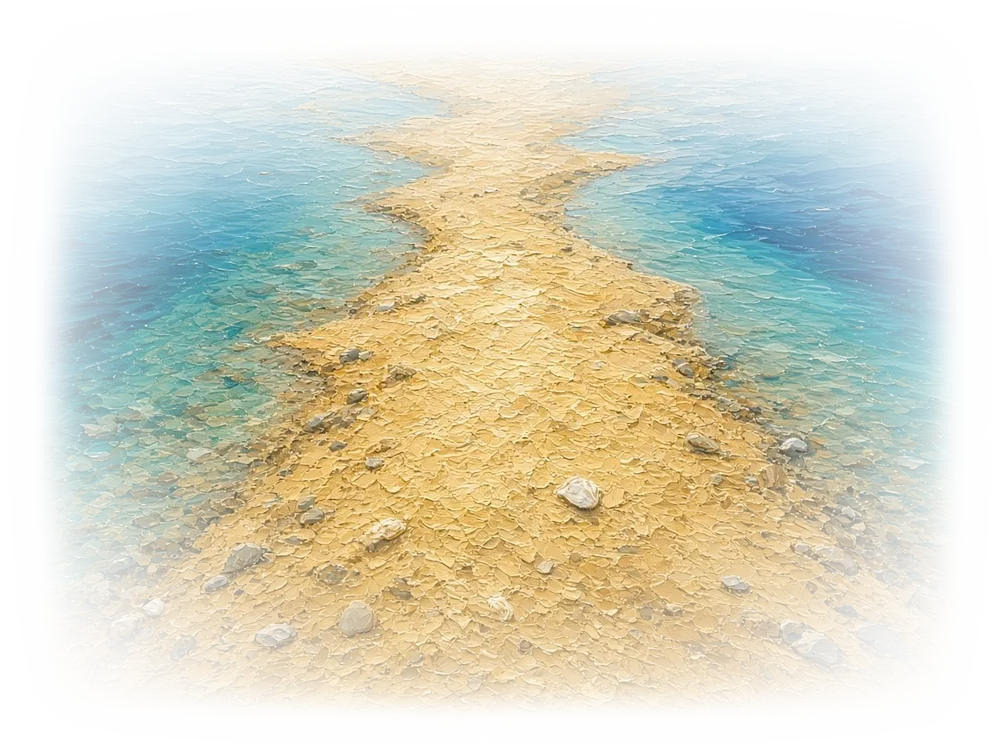
In Atah Hu we say: וַיַּעַבְרוּ בְתוֹךְ הַיָּם בַּיַּבָּשָׁה, “they passed through the midst of the sea on dry land” (Nechemiah 9:11). If they were in the midst of the sea, how was it dry land? And if it was dry land, why say “in the midst of the sea”? On these words, Chabad.org’s commentary prints in its notes a passage of the Alter Rebbe from Torah Or (Beshalach, 64b). I read it in that Hebrew; I did not open the volume itself. The translation is mine.
And behold, at the time of the splitting of the sea there was a revelation of His very Being and Essence, which is above the order of the worlds; and through this, sea and dry land are truly equal, and from the sea dry land was made: from concealment, revelation.
And this is “He turned the sea into dry land; through the river they passed on foot”, and “they passed through the midst of the sea on dry land”, precisely: for the concealment became revelation, through the revelation of His Essence, for which concealment and revelation are truly equal.
And this is “there we will rejoice in Him”: truly in His very Being and Essence. And this is the level of the joy of a mitzvah.
— The Alter Rebbe, Torah Or, Beshalach, 64b (my translation, from the Hebrew printed by Chabad.org); the verses: Tehillim 66:6 and Nechemiah 9:11
Tehillim 66:6 · Hebrew text via Sefaria; quoted · sefaria.org/Psalms.66.6
Divrei HaYamim I 29:10-13; Nechemiah 9:5-11; Shemos 14:30-15:19; Tehillim 22:29; Ovadiah 1:21; Zechariah 14:9 · Hebrew text via Sefaria, compared letter by letter · sefaria.org/I_Chronicles.29.10-13
Chabad.org: Online Siddur with Commentary, “Vecharot Imo Habrit” (Nechemiah 9:8-11) · Hebrew text, and the commentary Siddur Illuminated by Chassidus (translated by Eliyahu Touger, edited by Sholom Ber Wineberg, Sichos in English); English quoted · chabad.org/…/1524180
What the commentary adds, and what I take from it
Sea and dry land. Chabad.org’s English commentary explains the two words: “In kabbalistic terminology, the terms “dry land” and “sea” are analogies for alma de’isgalia, “the revealed worlds,” the realms of existence that can be perceived, and alma de’iskasia, “the hidden worlds,” realms of existence too elevated to be perceived, respectively.” And: “At the time of the Splitting of the Sea, the Jews passed through the sea, i.e., they were exposed to these sublime levels of G‑dly light. Nevertheless, they proceeded through “on dry land”; they were able to consciously appreciate these revelations (Torah Or).”
Kingship, for the first time. On ה׳ יִמְלֹךְ the commentary prints a passage from Toras Shmuel (5633, vol. 2, p. 515), which I read in that Hebrew and translate: “The first time kingship is mentioned in the Torah is at the splitting of the sea, as it is written: Hashem will reign forever and ever. And therefore we say: Your kingship Your children saw, as You split the sea before Moshe.” And: “the sea is the level of concealment … and it was revealed to be like land, that is, in the mode of revelation.” We will say מַלְכוּתְךָ רָאוּ בָנֶיךָ every evening in Maariv.
From far above. On עַד יַעֲבֹר עַמְּךָ, the commentary prints from Likkutei Torah (Balak, 74a): “and at the splitting of the sea the revelation was from far, far above, higher than the level of the light that surrounds all worlds, and through this He turned the sea into dry land, so that the hidden world came into the revealed, truly.” (Read in the Hebrew printed by Chabad.org; my translation.)
From here on, my own thoughts. The joy of a mitzvah. The Alter Rebbe ends with joy: “there we will rejoice in Him … this is the level of the joy of a mitzvah.” This is the joy the Mishnah Berurah and the Kaf HaChayim ask for when we say the Song: to picture that today I crossed the sea. A mitzvah is a small splitting of the sea. What was hidden, the will of Hashem, becomes something I can hold in my hand, a coin, tefillin, a word of Torah: dry land in the midst of the sea.
When you say it. At וַיַּעַבְרוּ בְתוֹךְ הַיָּם בַּיַּבָּשָׁה, slow down. Then, a few lines later, the Song begins: אָז יָשִׁיר. First the sea becomes dry land; then comes the song.
Chabad.org: Online Siddur with Commentary, “Az Yashir Moshe” (Shemos 15) · Hebrew text, and the commentary Siddur Illuminated by Chassidus (translated by Eliyahu Touger, edited by Sholom Ber Wineberg, Sichos in English); English quoted · chabad.org/…/1524187
Torah Or, Beshalach, p. 64b (סד,ב) · the Hebrew passage as printed in the notes of Chabad.org’s Online Siddur with Commentary (Nechemiah 9:11); the volume itself not opened; translated by me · chabad.org/…/1524180
Toras Shmuel 5633, vol. 2, p. 515 (תקטו) · the Hebrew passage as printed in the notes of Chabad.org’s Online Siddur with Commentary (Shemos 15:18); the volume itself not opened; translated by me · chabad.org/…/1524187
Likkutei Torah, Balak, p. 74a (עד,א) · the Hebrew passage as printed in the notes of Chabad.org’s Online Siddur with Commentary (Shemos 15:16); the volume itself not opened; translated by me · chabad.org/…/1524187
Mishnah Berurah 51:17 · Hebrew text via Sefaria; quoted as printed, unvoweled · sefaria.org/Mishnah_Berurah.51.17
Kaf HaChayim, Orach Chaim 51:40-41 · Hebrew text via Sefaria; quoted as printed, unvoweled · sefaria.org/Kaf_HaChayim_on_Shulchan_Arukh,_Orach_Chayim.51.40
How the text is printed here
The four passages and the closing verses are printed in full, verse by verse, with my own translation and the place of each verse. I took the Hebrew from Chabad.org’s Online Siddur and checked every word against our printed siddur, Tehillat Hashem, pages 163 to 165; where the two differ, I print the spelling of the printed siddur and list it under the text. Every verse was also compared, letter by letter, with the text of Tanach, and the Aramaic line with Targum Onkelos. In a Sefer Torah the Song is written in a special layout; our siddur prints it as running text, and here it is printed verse by verse.
Chabad.org: Online Siddur with Commentary, “Baruch Hashem Le’olam” (Vayevarech David, Atah Hu) · Hebrew text, and the commentary Siddur Illuminated by Chassidus (translated by Eliyahu Touger, edited by Sholom Ber Wineberg, Sichos in English); English quoted · chabad.org/…/1524173
Chabad.org: Online Siddur with Commentary, “Vecharot Imo Habrit” (Nechemiah 9:8-11) · Hebrew text, and the commentary Siddur Illuminated by Chassidus (translated by Eliyahu Touger, edited by Sholom Ber Wineberg, Sichos in English); English quoted · chabad.org/…/1524180
Chabad.org: Online Siddur with Commentary, “Vayosha Hashem” (Shemos 14:30-31) · Hebrew text, and the commentary Siddur Illuminated by Chassidus (translated by Eliyahu Touger, edited by Sholom Ber Wineberg, Sichos in English); English quoted · chabad.org/…/1524182
Chabad.org: Online Siddur with Commentary, “Az Yashir Moshe” (Shemos 15) · Hebrew text, and the commentary Siddur Illuminated by Chassidus (translated by Eliyahu Touger, edited by Sholom Ber Wineberg, Sichos in English); English quoted · chabad.org/…/1524187
Divrei HaYamim I 29:10-13; Nechemiah 9:5-11; Shemos 14:30-15:19; Tehillim 22:29; Ovadiah 1:21; Zechariah 14:9 · Hebrew text via Sefaria, compared letter by letter · sefaria.org/I_Chronicles.29.10-13
Targum Onkelos on Shemos 15:18 · Hebrew text via Sefaria; quoted · sefaria.org/Onkelos_Exodus.15.18
1. Vayevarech David (Divrei HaYamim I 29:10-13)
| Hebrew | Meaning |
|---|---|
| וַיְבָרֶךְ דָּוִיד אֶת יְיָ לְעֵינֵי כָּל הַקָּהָל, וַיֹּאמֶר דָּוִיד, בָּרוּךְ אַתָּה יְיָ אֱלֹהֵי יִשְׂרָאֵל אָבִינוּ, מֵעוֹלָם וְעַד עוֹלָם: | David blessed Hashem before the eyes of all the assembly, and David said: Blessed are You, Hashem, the G‑d of Israel our father, from world to world. (Divrei HaYamim I 29:10) |
| לְךָ יְיָ הַגְּדֻלָּה, וְהַגְּבוּרָה, וְהַתִּפְאֶרֶת, וְהַנֵּצַח, וְהַהוֹד, כִּי כֹל בַּשָּׁמַיִם וּבָאָרֶץ, לְךָ יְיָ הַמַּמְלָכָה וְהַמִּתְנַשֵּׂא לְכֹל לְרֹאשׁ: | Yours, Hashem, are the greatness, and the might, and the beauty, and the victory, and the glory, for everything in the heavens and on the earth is Yours; Yours, Hashem, is the kingdom, and You are exalted as Head over all. (Divrei HaYamim I 29:11) |
| וְהָעֹשֶׁר וְהַכָּבוֹד מִלְּפָנֶיךָ, וְאַתָּה מוֹשֵׁל בַּכֹּל, וּבְיָדְךָ, כֹּחַ וּגְבוּרָה, וּבְיָדְךָ, לְגַדֵּל וּלְחַזֵּק לַכֹּל: | Wealth and honor come from before You, and You rule over everything; in Your hand are strength and might, and in Your hand it is to make great and to give strength to all. (Divrei HaYamim I 29:12) |
| וְעַתָּה אֱלֹהֵינוּ, מוֹדִים אֲנַחְנוּ לָךְ, וּמְהַלְלִים לְשֵׁם תִּפְאַרְתֶּךָ: | And now, our G‑d, we thank You and praise Your glorious Name. (Divrei HaYamim I 29:13) |
Verse 13: at מוֹדִים אֲנַחְנוּ לָךְ we do not bow (Shulchan Aruch HaRav 51:11). Verse 12: at וְאַתָּה מוֹשֵׁל בַּכֹּל, tzedakah, standing.
Divrei HaYamim I 29:10-13; Nechemiah 9:5-11; Shemos 14:30-15:19; Tehillim 22:29; Ovadiah 1:21; Zechariah 14:9 · Hebrew text via Sefaria, compared letter by letter · sefaria.org/I_Chronicles.29.10-13
Siddur Tehillat Hashem (Kehot), pp. 163-165 · the printed page, checked for the order and for each word
2. Vayivarchu and Atah Hu (Nechemiah 9:5-11)
| Hebrew | Meaning |
|---|---|
| וִיבָרְכוּ שֵׁם כְּבוֹדֶךָ, וּמְרוֹמַם עַל כָּל בְּרָכָה וּתְהִלָּה: | And let them bless Your glorious Name, which is exalted above every blessing and praise. (Nechemiah 9:5) |
| אַתָּה הוּא יְיָ לְבַדֶּךָ, אַתָּה עָשִׂיתָ אֶת הַשָּׁמַיִם, שְׁמֵי הַשָּׁמַיִם, וְכָל צְבָאָם, הָאָרֶץ וְכָל אֲשֶׁר עָלֶיהָ, הַיַּמִּים וְכָל אֲשֶׁר בָּהֶם, וְאַתָּה מְחַיֶּה אֶת כֻּלָּם, וּצְבָא הַשָּׁמַיִם לְךָ מִשְׁתַּחֲוִים: | You are Hashem, You alone. You made the heavens, the heaven of heavens and all their host, the earth and all that is on it, the seas and all that is in them, and You give life to them all; and the host of the heavens bows to You. (Nechemiah 9:6) |
| אַתָּה הוּא יְיָ הָאֱלֹהִים, אֲשֶׁר בָּחַרְתָּ בְּאַבְרָם, וְהוֹצֵאתוֹ מֵאוּר כַּשְׂדִּים, וְשַׂמְתָּ שְׁמוֹ אַבְרָהָם: | You are Hashem, the G‑d, Who chose Avram, and brought him out of Ur Kasdim, and made his name Avraham. (Nechemiah 9:7) |
| וּמָצָאתָ אֶת לְבָבוֹ נֶאֱמָן לְפָנֶיךָ, וְכָרוֹת עִמּוֹ הַבְּרִית, לָתֵת אֶת אֶרֶץ הַכְּנַעֲנִי הַחִתִּי הָאֱמֹרִי וְהַפְּרִזִּי וְהַיְבוּסִי וְהַגִּרְגָּשִׁי לָתֵת לְזַרְעוֹ, וַתָּקֶם אֶת דְּבָרֶיךָ כִּי צַדִּיק אָתָּה: | And You found his heart faithful before You, and You made the covenant with him, to give the land of the Kenaani, the Chitti, the Emori, the Perizzi, the Yevusi and the Girgashi, to give it to his children; and You kept Your words, for You are righteous. (Nechemiah 9:8) |
| וַתֵּרֶא אֶת עֳנִי אֲבוֹתֵינוּ בְּמִצְרָיִם, וְאֶת זַעֲקָתָם שָׁמַעְתָּ עַל יַם סוּף: | You saw the affliction of our fathers in Egypt, and You heard their cry at the Sea of Reeds. (Nechemiah 9:9) |
| וַתִּתֵּן אֹתֹת וּמֹפְתִים בְּפַרְעֹה וּבְכָל עֲבָדָיו וּבְכָל עַם אַרְצוֹ, כִּי יָדַעְתָּ כִּי הֵזִידוּ עֲלֵיהֶם, וַתַּעַשׂ לְךָ שֵׁם כְּהַיּוֹם הַזֶּה: | You gave signs and wonders against Pharaoh, and against all his servants, and against all the people of his land, for You knew that they had acted wickedly against them; and You made Yourself a Name, as on this very day. (Nechemiah 9:10) |
| וְהַיָּם בָּקַעְתָּ לִפְנֵיהֶם וַיַּעַבְרוּ בְתוֹךְ הַיָּם בַּיַּבָּשָׁה, וְאֶת רֹדְפֵיהֶם הִשְׁלַכְתָּ בִמְצוֹלֹת, כְּמוֹ אֶבֶן בְּמַיִם עַזִּים: | You split the sea before them, and they passed through the midst of the sea on dry land; and their pursuers You threw into the depths, like a stone into mighty waters. (Nechemiah 9:11) |
Nechemiah 9:5: the siddur begins in the middle of the verse, at וִיבָרְכוּ, and writes כְּבוֹדֶךָ with a vav, where Nechemiah writes כְּבֹדֶךָ. Nechemiah 9:6: in the Tanach, the word before עָשִׂיתָ is written את and read אַתָּה (§G55); the siddur prints what we read. Nechemiah 9:9: our siddur writes אֲבוֹתֵינוּ with a vav, where Nechemiah and Chabad.org write אֲבֹתֵינוּ. These are vowel letters only; the words are read the same.
Chabad.org: Online Siddur with Commentary, “Vecharot Imo Habrit” (Nechemiah 9:8-11) · Hebrew text, and the commentary Siddur Illuminated by Chassidus (translated by Eliyahu Touger, edited by Sholom Ber Wineberg, Sichos in English); English quoted · chabad.org/…/1524180
Divrei HaYamim I 29:10-13; Nechemiah 9:5-11; Shemos 14:30-15:19; Tehillim 22:29; Ovadiah 1:21; Zechariah 14:9 · Hebrew text via Sefaria, compared letter by letter · sefaria.org/I_Chronicles.29.10-13
Siddur Tehillat Hashem (Kehot), pp. 163-165 · the printed page, checked for the order and for each word
3. Vayosha (Shemos 14:30-31)
| Hebrew | Meaning |
|---|---|
| וַיּוֹשַׁע יְיָ בַּיּוֹם הַהוּא אֶת יִשְׂרָאֵל מִיַּד מִצְרָיִם, וַיַּרְא יִשְׂרָאֵל אֶת מִצְרַיִם מֵת עַל שְׂפַת הַיָּם: | On that day Hashem saved Israel from the hand of Egypt, and Israel saw Egypt dead on the shore of the sea. (Shemos 14:30) |
| וַיַּרְא יִשְׂרָאֵל אֶת הַיָּד הַגְּדֹלָה אֲשֶׁר עָשָׂה יְיָ בְּמִצְרַיִם, וַיִּירְאוּ הָעָם אֶת יְיָ, וַיַּאֲמִינוּ בַּייָ וּבְמֹשֶׁה עַבְדּוֹ: | Israel saw the great hand that Hashem did against Egypt, and the people feared Hashem, and they believed in Hashem and in Moshe His servant. (Shemos 14:31) |
וַיַּרְא, “he saw”, and וַיִּירְאוּ, “they feared”: two different roots that sound alike, ר־א־ה and י־ר־א. Both are “vav that turns” forms (§G32): a future form with וַ in front tells the past.
Divrei HaYamim I 29:10-13; Nechemiah 9:5-11; Shemos 14:30-15:19; Tehillim 22:29; Ovadiah 1:21; Zechariah 14:9 · Hebrew text via Sefaria, compared letter by letter · sefaria.org/I_Chronicles.29.10-13
Siddur Tehillat Hashem (Kehot), pp. 163-165 · the printed page, checked for the order and for each word
4. Az Yashir (Shemos 15:1-10)
| Hebrew | Meaning |
|---|---|
| אָז יָשִׁיר מֹשֶׁה וּבְנֵי יִשְׂרָאֵל אֶת הַשִּׁירָה הַזֹּאת לַייָ וַיֹּאמְרוּ לֵאמֹר, אָשִׁירָה לַייָ כִּי גָאֹה גָּאָה, סוּס וְרֹכְבוֹ רָמָה בַיָּם: | Then Moshe and the children of Israel will sing this song to Hashem, and they said: I will sing to Hashem, for He is exalted above the proud; the horse and its rider He threw into the sea. (Shemos 15:1) |
| עָזִּי וְזִמְרָת יָהּ וַיְהִי לִי לִישׁוּעָה, זֶה אֵלִי וְאַנְוֵהוּ, אֱלֹהֵי אָבִי וַאֲרֹמְמֶנְהוּ: | My strength and my song is Kah, and He has been my salvation. This is my G‑d and I will glorify Him, the G‑d of my father and I will exalt Him. (Shemos 15:2) |
| יְיָ אִישׁ מִלְחָמָה, יְיָ שְׁמוֹ: | Hashem is a Master of war; Hashem is His Name. (Shemos 15:3) |
| מַרְכְּבוֹת פַּרְעֹה וְחֵילוֹ יָרָה בַיָּם, וּמִבְחַר שָׁלִישָׁיו טֻבְּעוּ בְיַם סוּף: | Pharaoh’s chariots and his army He cast into the sea, and his chosen officers sank in the Sea of Reeds. (Shemos 15:4) |
| תְּהֹמֹת יְכַסְיֻמוּ, יָרְדוּ בִמְצוֹלֹת כְּמוֹ אָבֶן: | The deep waters covered them; they went down into the depths like a stone. (Shemos 15:5) |
| יְמִינְךָ יְיָ נֶאְדָּרִי בַּכֹּחַ, יְמִינְךָ יְיָ תִּרְעַץ אוֹיֵב: | Your right hand, Hashem, is glorious in power; Your right hand, Hashem, shatters the enemy. (Shemos 15:6) |
| וּבְרֹב גְּאוֹנְךָ תַּהֲרֹס קָמֶיךָ, תְּשַׁלַּח חֲרֹנְךָ יֹאכְלֵמוֹ כַּקַּשׁ: | In the greatness of Your majesty You tear down those who rise against You; You send out Your anger, it consumes them like straw. (Shemos 15:7) |
| וּבְרוּחַ אַפֶּיךָ נֶעֶרְמוּ מַיִם, נִצְּבוּ כְמוֹ נֵד נֹזְלִים, קָפְאוּ תְהֹמֹת בְּלֶב יָם: | At the breath of Your nostrils the waters piled up; the flowing waters stood like a wall; the deep waters froze in the heart of the sea. (Shemos 15:8) |
| אָמַר אוֹיֵב, אֶרְדֹּף אַשִּׂיג אֲחַלֵּק שָׁלָל, תִּמְלָאֵמוֹ נַפְשִׁי, אָרִיק חַרְבִּי, תּוֹרִישֵׁמוֹ יָדִי: | The enemy said: I will pursue, I will overtake, I will divide the spoil; my desire will be filled with them; I will draw my sword, my hand will destroy them. (Shemos 15:9) |
| נָשַׁפְתָּ בְרוּחֲךָ כִּסָּמוֹ יָם, צָלֲלוּ כַּעוֹפֶרֶת בְּמַיִם אַדִּירִים: | You blew with Your wind, the sea covered them; they sank like lead in mighty waters. (Shemos 15:10) |
אָז יָשִׁיר, “then … will sing”: a future after אָז (§G62). Verse 4: our siddur writes מַרְכְּבוֹת and שָׁלִישָׁיו with full spelling, where the Torah and Chabad.org write מַרְכְּבֹת and שָׁלִשָׁיו. Verse 5: יְכַסְיֻמוּ, “covered them”, with the poetic ending ־מוּ (§G63). Verse 10: pause between בְּמַיִם and אַדִּירִים (Mishnah Berurah 51:17).
Divrei HaYamim I 29:10-13; Nechemiah 9:5-11; Shemos 14:30-15:19; Tehillim 22:29; Ovadiah 1:21; Zechariah 14:9 · Hebrew text via Sefaria, compared letter by letter · sefaria.org/I_Chronicles.29.10-13
Siddur Tehillat Hashem (Kehot), pp. 163-165 · the printed page, checked for the order and for each word
Az Yashir (Shemos 15:11-17)
| Hebrew | Meaning |
|---|---|
| מִי כָמֹכָה בָּאֵלִם יְיָ, מִי כָּמֹכָה נֶאְדָּר בַּקֹּדֶשׁ, נוֹרָא תְהִלֹּת, עֹשֵׂה פֶלֶא: | Who is like You among the mighty, Hashem? Who is like You, glorious in holiness, awesome in praises, doing wonders? (Shemos 15:11) |
| נָטִיתָ יְמִינְךָ, תִּבְלָעֵמוֹ אָרֶץ: | You stretched out Your right hand, the earth swallowed them. (Shemos 15:12) |
| נָחִיתָ בְחַסְדְּךָ עַם זוּ גָּאָלְתָּ, נֵהַלְתָּ בְעָזְּךָ אֶל נְוֵה קָדְשֶׁךָ: | In Your kindness You led this people that You redeemed; You guided them with Your strength to Your holy dwelling. (Shemos 15:13) |
| שָׁמְעוּ עַמִּים יִרְגָּזוּן, חִיל אָחַז יֹשְׁבֵי פְּלָשֶׁת: | Nations heard, they trembled; terror seized the dwellers of Peleshes. (Shemos 15:14) |
| אָז נִבְהֲלוּ אַלּוּפֵי אֱדוֹם, אֵילֵי מוֹאָב יֹאחֲזֵמוֹ רָעַד, נָמֹגוּ כֹּל יֹשְׁבֵי כְנָעַן: | Then the chiefs of Edom were alarmed; the mighty of Moav, trembling seized them; all the dwellers of Kenaan melted away. (Shemos 15:15) |
| תִּפֹּל עֲלֵיהֶם אֵימָתָה וָפַחַד, בִּגְדֹל זְרוֹעֲךָ יִדְּמוּ כָּאָבֶן, עַד יַעֲבֹר עַמְּךָ יְיָ, עַד יַעֲבֹר עַם זוּ קָנִיתָ: | Fear and dread fall upon them; by the greatness of Your arm they are still as a stone; until Your people pass over, Hashem, until this people that You acquired passes over. (Shemos 15:16) |
| תְּבִיאֵמוֹ וְתִטָּעֵמוֹ בְּהַר נַחֲלָתְךָ, מָכוֹן לְשִׁבְתְּךָ פָּעַלְתָּ יְיָ, מִקְּדָשׁ, אֲדֹנָי, כּוֹנְנוּ יָדֶיךָ: | You will bring them and plant them on the mountain of Your inheritance, the place You made for Your dwelling, Hashem; the Sanctuary, my Master, that Your hands established. (Shemos 15:17) |
Verse 11: מִי כָמֹכָה with a soft chaf, then מִי כָּמֹכָה with a hard kaf; verse 16: יִדְּמוּ כָּאָבֶן, hard; verse 13: עַם זוּ גָּאָלְתָּ, with a dagesh in the gimmel (§G64). Verse 17: our siddur writes תְּבִיאֵמוֹ with a yod, where the Torah and Chabad.org write תְּבִאֵמוֹ (§G63).
Divrei HaYamim I 29:10-13; Nechemiah 9:5-11; Shemos 14:30-15:19; Tehillim 22:29; Ovadiah 1:21; Zechariah 14:9 · Hebrew text via Sefaria, compared letter by letter · sefaria.org/I_Chronicles.29.10-13
Siddur Tehillat Hashem (Kehot), pp. 163-165 · the printed page, checked for the order and for each word
5. Hashem yimloch, and the closing verses
| Hebrew | Meaning |
|---|---|
| יְיָ יִמְלֹךְ לְעֹלָם וָעֶד: | Hashem will reign forever and ever. (Shemos 15:18) |
| יְיָ יִמְלֹךְ לְעֹלָם וָעֶד: | Hashem will reign forever and ever. (Shemos 15:18, again) |
| יְיָ מַלְכוּתֵהּ קָאֵם לְעָלַם וּלְעָלְמֵי עָלְמַיָּא: | Hashem, His kingship stands forever and to all eternity. (Aramaic, Onkelos) (Targum Onkelos, 15:18) |
| כִּי בָא סוּס פַּרְעֹה בְּרִכְבּוֹ וּבְפָרָשָׁיו בַּיָּם וַיָּשֶׁב יְיָ עֲלֵהֶם אֶת מֵי הַיָּם, וּבְנֵי יִשְׂרָאֵל הָלְכוּ בַיַּבָּשָׁה בְּתוֹךְ הַיָּם: | For when Pharaoh’s horse came, with his chariots and his horsemen, into the sea, Hashem brought back the waters of the sea upon them; and the children of Israel walked on dry land in the midst of the sea. (Shemos 15:19) |
| כִּי לַייָ הַמְּלוּכָה וּמוֹשֵׁל בַּגּוֹיִם: | For the kingship is Hashem’s, and He rules over the nations. (Tehillim 22:29) |
| וְעָלוּ מוֹשִׁיעִים בְּהַר צִיּוֹן לִשְׁפֹּט אֶת הַר עֵשָׂו, וְהָיְתָה לַייָ הַמְּלוּכָה: | Saviors will go up on Mount Tziyon to judge the mountain of Esav, and the kingship will be Hashem’s. (Ovadiah 1:21) |
| וְהָיָה יְיָ לְמֶלֶךְ עַל כָּל הָאָרֶץ, בַּיּוֹם הַהוּא יִהְיֶה יְיָ אֶחָד וּשְׁמוֹ אֶחָד: | Hashem will be King over all the earth; on that day Hashem will be One and His Name One. (Zechariah 14:9) |
The last verse of the Song is said twice, then in Onkelos’s Aramaic (Shulchan Aruch HaRav 51:10 and the translator’s note; Mishnah Berurah 51:17). Tehillim 22:29: the siddur writes וּמוֹשֵׁל with a vav, where Tehillim writes וּמֹשֵׁל. Ovadiah 1:21: the siddur writes מוֹשִׁיעִים, where Ovadiah writes מוֹשִׁעִים, without the second yod.
Divrei HaYamim I 29:10-13; Nechemiah 9:5-11; Shemos 14:30-15:19; Tehillim 22:29; Ovadiah 1:21; Zechariah 14:9 · Hebrew text via Sefaria, compared letter by letter · sefaria.org/I_Chronicles.29.10-13
Targum Onkelos on Shemos 15:18 · Hebrew text via Sefaria; quoted · sefaria.org/Onkelos_Exodus.15.18
Siddur Tehillat Hashem (Kehot), pp. 163-165 · the printed page, checked for the order and for each word
Vayevarech David: everything is Yours
Five nouns of praise with “the”, a participle that rules, and a hif’il that thanks.
לְךָ יְיָ הַגְּדֻלָּה, וְהַגְּבוּרָה, וְהַתִּפְאֶרֶת, וְהַנֵּצַח, וְהַהוֹד, כִּי כֹל בַּשָּׁמַיִם וּבָאָרֶץ, לְךָ יְיָ הַמַּמְלָכָה וְהַמִּתְנַשֵּׂא לְכֹל לְרֹאשׁ:וְהָעֹשֶׁר וְהַכָּבוֹד מִלְּפָנֶיךָ, וְאַתָּה מוֹשֵׁל בַּכֹּל, וּבְיָדְךָ, כֹּחַ וּגְבוּרָה, וּבְיָדְךָ, לְגַדֵּל וּלְחַזֵּק לַכֹּל:וְעַתָּה אֱלֹהֵינוּ, מוֹדִים אֲנַחְנוּ לָךְ, וּמְהַלְלִים לְשֵׁם תִּפְאַרְתֶּךָ:
| הַגְּדֻלָּה | = | ◌ה | + | גְּדֻלָּ | + | הַ |
| hag’dulloh the greatness | feminine ־ָה | great | the |
| וְהַתִּפְאֶרֶת | = | ◌ת | + | פְאֶרֶ | + | תִּ | + | הַ | + | וְ |
| v’hatif’eres and the beauty | feminine ־ֶת | beauty, glory | noun with ת in front | the | and |
| וְהַמִּתְנַשֵּׂא | = | נַשֵּׂא | + | מִּתְ | + | הַ | + | וְ |
| v’hamisnasei and He Who is exalted | lift | hitpa’el present: מִתְ | the | and |
| מוֹשֵׁל | = | מוֹשֵׁל |
| mosheil rules | rule |
| מוֹדִים | = | ◌ים | + | וֹדִ | + | מ |
| modim we thank | plural ־ִים | thank, acknowledge | hif’il present |
Atah Hu: from Creation to the sea
A wish in the future, “You alone”, two participles of what Hashem does and what is done before Him, a faithful heart, and dry land.
אַתָּה הוּא יְיָ לְבַדֶּךָ, אַתָּה עָשִׂיתָ אֶת הַשָּׁמַיִם, שְׁמֵי הַשָּׁמַיִם, וְכָל צְבָאָם, הָאָרֶץ וְכָל אֲשֶׁר עָלֶיהָ, הַיַּמִּים וְכָל אֲשֶׁר בָּהֶם, וְאַתָּה מְחַיֶּה אֶת כֻּלָּם, וּצְבָא הַשָּׁמַיִם לְךָ מִשְׁתַּחֲוִים:וּמָצָאתָ אֶת לְבָבוֹ נֶאֱמָן לְפָנֶיךָ, וְכָרוֹת עִמּוֹ הַבְּרִית, לָתֵת אֶת אֶרֶץ הַכְּנַעֲנִי הַחִתִּי הָאֱמֹרִי וְהַפְּרִזִּי וְהַיְבוּסִי וְהַגִּרְגָּשִׁי לָתֵת לְזַרְעוֹ, וַתָּקֶם אֶת דְּבָרֶיךָ כִּי צַדִּיק אָתָּה:וְהַיָּם בָּקַעְתָּ לִפְנֵיהֶם וַיַּעַבְרוּ בְתוֹךְ הַיָּם בַּיַּבָּשָׁה, וְאֶת רֹדְפֵיהֶם הִשְׁלַכְתָּ בִמְצוֹלֹת, כְּמוֹ אֶבֶן בְּמַיִם עַזִּים:
| וִיבָרְכוּ | = | ◌וּ | + | בָרְכ | + | י | + | וִ |
| vivor’chu and may they bless | they | bless | he, they (future) | and |
| לְבַדֶּךָ | = | ◌ךָ | + | בַדֶּ | + | לְ |
| l’vadecho You alone | You | alone | by |
| מְחַיֶּה | = | חַיֶּה | + | מְ |
| m’chayeh gives life | live | pi’el present |
| מִשְׁתַּחֲוִים | = | ◌ים | + | שְׁתַּחֲוִ | + | מִ |
| mishtachavim bow down | plural ־ִים | bow down | hitpa’el present |
| נֶאֱמָן | = | אֱמָן | + | נֶ |
| ne’emon faithful | be firm, believe | nif’al (passive) |
| בַּיַּבָּשָׁה | = | ◌ה | + | יַּבָּשָׁ | + | בַּ |
| bayabboshoh on the dry land | feminine ־ָה | dry | on the |
Vayosha: saw, feared, believed
Four verbs with the vav that turns tell the story in order.
וַיּוֹשַׁע יְיָ בַּיּוֹם הַהוּא אֶת יִשְׂרָאֵל מִיַּד מִצְרָיִם, וַיַּרְא יִשְׂרָאֵל אֶת מִצְרַיִם מֵת עַל שְׂפַת הַיָּם:וַיַּרְא יִשְׂרָאֵל אֶת הַיָּד הַגְּדֹלָה אֲשֶׁר עָשָׂה יְיָ בְּמִצְרַיִם, וַיִּירְאוּ הָעָם אֶת יְיָ, וַיַּאֲמִינוּ בַּייָ וּבְמֹשֶׁה עַבְדּוֹ:
| וַיּוֹשַׁע | = | וֹשַׁע | + | יּ | + | וַ |
| vayosha and He saved | save | he, they (future) | vav that turns |
| וַיִּירְאוּ | = | ◌וּ | + | ירְא | + | יִּ | + | וַ |
| vayir’u and they feared | they | fear, be in awe | he, they (future) | vav that turns |
| וַיַּאֲמִינוּ | = | ◌וּ | + | אֲמִינ | + | יַּ | + | וַ |
| vaya’aminu and they believed | they | believe | he, they (future) | vav that turns |
Az Yashir: the language of song
A future that tells the past, a “let me”, short and long forms of “my” and “Him”, and an extra yod.
אָז יָשִׁיר מֹשֶׁה וּבְנֵי יִשְׂרָאֵל אֶת הַשִּׁירָה הַזֹּאת לַייָ וַיֹּאמְרוּ לֵאמֹר, אָשִׁירָה לַייָ כִּי גָאֹה גָּאָה, סוּס וְרֹכְבוֹ רָמָה בַיָּם:עָזִּי וְזִמְרָת יָהּ וַיְהִי לִי לִישׁוּעָה, זֶה אֵלִי וְאַנְוֵהוּ, אֱלֹהֵי אָבִי וַאֲרֹמְמֶנְהוּ:יְמִינְךָ יְיָ נֶאְדָּרִי בַּכֹּחַ, יְמִינְךָ יְיָ תִּרְעַץ אוֹיֵב:
| יָשִׁיר | = | שִׁיר | + | יָ |
| yoshir will sing | sing | he, they (future) |
| אָשִׁירָה | = | ◌ה | + | שִׁירָ | + | אָ |
| oshiroh let me sing | let me ־ָה | sing | I (future) |
| וְזִמְרָת | = | ◌ת | + | זִמְרָ | + | וְ |
| v’zimros and my song | (my) ־ָת, short form | song | and |
| וְאַנְוֵהוּ | = | ◌הוּ | + | נְוֵ | + | אַ | + | וְ |
| v’anveihu and I will glorify Him | Him | abode; beauty | I (future) | and |
| וַאֲרֹמְמֶנְהוּ | = | ◌נְהוּ | + | רֹמְמֶ | + | אֲ | + | וַ |
| va’arom’menhu and I will exalt Him | Him (long form ־ֶנְהוּ) | high | I (future) | and |
| יְכַסְיֻמוּ | = | ◌מוּ | + | כַסְיֻ | + | יְ |
| y’chasyumu covered them | them (poetic ־מוּ) | cover | he, they (future) |
| נֶאְדָּרִי | = | ◌י | + | אְדָּרִ | + | נֶ |
| nedori glorious | extra yod | mighty, glorious | nif’al (passive) |
“Them”, in the language of song
The enemy’s boast and Moshe’s prophecy, both with the poetic ־מוֹ.
אָמַר אוֹיֵב, אֶרְדֹּף אַשִּׂיג אֲחַלֵּק שָׁלָל, תִּמְלָאֵמוֹ נַפְשִׁי, אָרִיק חַרְבִּי, תּוֹרִישֵׁמוֹ יָדִי:נָחִיתָ בְחַסְדְּךָ עַם זוּ גָּאָלְתָּ, נֵהַלְתָּ בְעָזְּךָ אֶל נְוֵה קָדְשֶׁךָ:תְּבִיאֵמוֹ וְתִטָּעֵמוֹ בְּהַר נַחֲלָתְךָ, מָכוֹן לְשִׁבְתְּךָ פָּעַלְתָּ יְיָ, מִקְּדָשׁ, אֲדֹנָי, כּוֹנְנוּ יָדֶיךָ:
| תִּמְלָאֵמוֹ | = | ◌מוֹ | + | מְלָאֵ | + | תִּ |
| timlo’eimo will be filled with them | them (poetic ־מוֹ) | fill | she will (future) |
| גָּאָלְתָּ | = | ◌תָּ | + | גָּאָלְ |
| go’olto You redeemed | you (past) | redeem |
| תְּבִיאֵמוֹ | = | ◌מוֹ | + | בִיאֵ | + | תְּ |
| t’vi’eimo You will bring them | them (poetic ־מוֹ) | come; bring | You (future) |
| וְתִטָּעֵמוֹ | = | ◌מוֹ | + | טָּעֵ | + | תִ | + | וְ |
| v’sitto’eimo and You will plant them | them (poetic ־מוֹ) | plant | You (future) | and |
Hashem will reign
The future, the Aramaic of Onkelos, and the kingship in the Prophets.
יְיָ יִמְלֹךְ לְעֹלָם וָעֶד:יְיָ מַלְכוּתֵהּ קָאֵם לְעָלַם וּלְעָלְמֵי עָלְמַיָּא:וְעָלוּ מוֹשִׁיעִים בְּהַר צִיּוֹן לִשְׁפֹּט אֶת הַר עֵשָׂו, וְהָיְתָה לַייָ הַמְּלוּכָה:
| יִמְלֹךְ | = | מְלֹךְ | + | יִ |
| yimloch will reign | reign | he, they (future) |
| מַלְכוּתֵהּ | = | ◌הּ | + | ◌וּתֵ | + | מַלְכ |
| malchuseih His kingship | His (Aramaic ־ֵהּ) | ־וּת, -ship | reign |
| קָאֵם | = | קָאֵם |
| ko’eim stands, endures | stand |
| הַמְּלוּכָה | = | ◌ה | + | מְּלוּכָ | + | הַ |
| ham’luchoh the kingship | feminine ־ָה | reign | the |
| מוֹשִׁיעִים | = | ◌ים | + | וֹשִׁיעִ | + | מ |
| moshi’im saviors | plural ־ִים | save | hif’il present |
- Lesson 1 §G2 · Hidden root letters: yud, vav and hei can change shape or drop; a dagesh can mark a merged letter
- Lesson 1 §G7 · Verb patterns (binyanim) and the hif’il: a root becomes a verb through a pattern; the hif’il means “cause to” and is marked by he- (past) or ma-/mo- (present)
- Lesson 2 §G9 · The article: “the”: ha- plus a dagesh in the next letter; ho- before alef, ayin, reish; hidden inside be-, le-, ke-
- Lesson 2 §G11 · The pi’el: a doubled middle letter: the pi’el doubles the middle root letter with a dagesh; past ki-, present me-
- Lesson 3 §G15 · The active participle: “the One Who does”: the kal present has o after the first root letter and ei under the second: pokei’ach, zokeif; it describes an action that goes on
- Lesson 3 §G16 · The hif’il present: ma- … -i-: the hif’il present has ma- (mei-) in front and a yud before the last root letter: matir, malbish, hameichin, hama’avir; it means “causes to …”
- Lesson 3 §G19 · Two small signs: the furtive patach and the soft letter: a patach under a final ח or ע is read before the letter (koach); בּ כּ פּ lose their dagesh after a vowel (vinoh, gover)
- Lesson 4 §G20 · The future tense: a letter in front: the future puts a prefix letter before the root: e- (א) I, ti- (ת) you or she, yi- (י) he or it, ni- (נ) we; after אִם it means “if … were to”
- Lesson 4 §G21 · The nif’al: when the action is done to the subject: the nif’al is the passive of the simple verb: past and present with ni-/ne- (nivro, ne’emon); future with a dagesh in the first root letter (yisoseim, yiposei’ach)
- Lesson 4 §G22 · The hitpa’el: doing to oneself: the hitpa’el adds hit- (his-) in front and doubles the middle root letter, like the pi’el; it means doing something to or for oneself: l’hiskayeim, “to keep oneself in existence”
- Lesson 6 §G30 · “May He bless you”: the future as a wish, with object endings: the future (§G20) also says “may…”: y’vorech’cho may He bless you; an ending after a future verb names the object: -cho you, -eim them
- Lesson 6 §G32 · The vav that turns: vay’dabeir, “and He spoke”: va- before a future form turns it into a past: vay’dabeir and He spoke; v’- before a past form can turn it into a future: v’somu and they shall set
- Lesson 8 §G39 · Aramaic, the sister of Hebrew: the language of Kaddish: Kaddish is in Aramaic, the spoken language of the Jews in the days of the Gemara; most of its words have a Hebrew twin: y’hei = y’hi “may it be”, sh’mei = sh’mo “His Name”, di = asher “that”, b’rich = boruch “blessed”
- Lesson 8 §G41 · “His”, “your” and “their” in Aramaic: ־ֵהּ, ־כוֹן, ־הוֹן: the Aramaic “His” is ־ֵהּ (-ei), with a dot in the hei: sh’mei His Name, malchusei His kingship; “your” (plural) is ־כוֹן (-chon), “their” is ־הוֹן (-hon)
- Lesson 10 §G48 · Roots that end in hei (עֹשֶׂה, פּוֹדֶה, הָיָה): when a root ends in ה, the participle ends in -eh (עֹשֶׂה oseh, פּוֹדֶה podeh), the past “he” ends in -oh (הָיָה hoyoh), and before an ending the ה drops (מַעֲשֶׂה → מַעֲשֵׂי)
- Lesson 11 §G50 · “Let me”, “let us”: the ending ־ָה on the future: an extra ־ָה (-oh) on a future “I” or “we” turns it into a wish or resolve: אֲבָרְכָה, “let me bless”; וּנְרוֹמְמָה, “and let us exalt”; on a command it adds warmth: שׁוּבָה, “please return”
- Lesson 11 §G51 · “Him” on a verb: ־ֵהוּ and ־ֶנּוּ: “him, it” attached to a verb is usually ־ֵהוּ (-eihu): אֲשַׂגְּבֵהוּ, “I will set him on high”; after a future it can also be ־ֶנּוּ (-ennu): יַצִּילֶנּוּ, “He will save him”
- Lesson 12 §G55 · Written one way, read another: k’siv and k’ri: in a few places in Tanach the word as it is written (k’siv) differs from the word as it is read (k’ri); the siddur prints the reading with its vowels, and sometimes notes the written form in small letters; we always say the k’ri
The Song begins with two words, אָז יָשִׁיר. The first, אָז (oz), means “then”. יָשִׁיר (yoshir) is a future form: the yod in front means “he will” (§G20), and the root is שׁ־י־ר, “sing”, a root with a weak middle letter like the hollow roots of §G44. Word for word: “then he will sing”. But Moshe sang right there, at the sea. Why the future?
Rashi’s plain meaning. Rashi writes: “אָז כְּשֶׁרָאָה הַנֵּס עָלָה בְלִבּוֹ שֶׁיָּשִׁיר שִׁירָה”, “then, when he saw the miracle, it came up in his heart that he would sing a song”. He brings other verses that open the same way, אָז יְדַבֵּר יְהוֹשֻׁעַ (Yehoshua 10:12) and אָז יִבְנֶה שְׁלֹמֹה (Melachim I 11:7), and concludes: “לִמְּדָנוּ שֶׁהַיּוֹ״ד עַל שֵׁם הַמַּחֲשָׁבָה נֶאֶמְרָה”, “this teaches us that the yod is said on account of the thought”. The future letter tells what was in Moshe’s heart a moment before he sang.
The Sages’ reading. The Gemara (Sanhedrin 91b) reads the same letter differently: “״שָׁר״ לֹא נֶאֱמַר, אֶלָּא ״יָשִׁיר״ – מִכָּאן לִתְחִיַּית הַמֵּתִים מִן הַתּוֹרָה”, “it does not say ‘sang’ but ‘will sing’: from here is the Resurrection of the dead from the Torah”. Rashi brings this too, as the midrash of the verse. Both readings hang on one letter, the yod of the future.
Compare a true past. Later in the same Song we read אָז נִבְהֲלוּ אַלּוּפֵי אֱדוֹם, “then the chiefs of Edom were terrified” (15:15). נִבְהֲלוּ has no future letter in front: it is a nif’al past, “they were terrified” (§G21). So the Song itself shows both: אָז with a past form, and אָז with a future form. The future one is the one the Sages explain.
Do not confuse it with the vav that turns. וַיּוֹשַׁע and וַיַּרְא, just before the Song, are also future forms telling the past, but there the reason is the וַ in front (§G32). In אָז יָשִׁיר there is no וַ: the future is meant, and the commentators explain why.
| אָז יָשִׁיר | oz yoshir | then he will sing | Shemos 15:1, future |
| אָז יְדַבֵּר | oz y’dabeir | then he will speak | Yehoshua 10:12, in Rashi |
| אָז יִבְנֶה | oz yivneh | then he will build | Melachim I 11:7, in Rashi |
| אָז נִבְהֲלוּ | oz nivhalu | then they were terrified | Shemos 15:15, past |
| יִמְלֹךְ | yimloch | He will reign | 15:18, future |
In everyday Hebrew, “them” on a verb is ־ֵם or ־ָם (§G34). The Song of the Sea is poetry, and poetry keeps older, longer forms.
־מוֹ, “them”. Nine times in the Song, “them” is ־מוֹ, and once ־מוּ. Here they are: יְכַסְיֻמוּ, “covered them” (15:5); יֹאכְלֵמוֹ, “consumed them” (15:7); תִּמְלָאֵמוֹ נַפְשִׁי, “my desire will be filled with them” (15:9); תּוֹרִישֵׁמוֹ יָדִי, “my hand will drive them out” (15:9); כִּסָּמוֹ יָם, “the sea covered them” (15:10); תִּבְלָעֵמוֹ אָרֶץ, “the earth swallowed them” (15:12); יֹאחֲזֵמוֹ רָעַד, “trembling seizes them” (15:15); and תְּבִיאֵמוֹ וְתִטָּעֵמוֹ, “bring them and plant them” (15:17). Rashi explains the ending each time with the ordinary form: on יְכַסְיֻמוּ he says “כְּמוֹ יְכַסּוּם, וְהַיּוֹ״ד הָאֶמְצָעִית יְתֵרָה בוֹ”, “like יְכַסּוּם, and the middle yod is extra in it”; on תִּמְלָאֵמוֹ he says “תִּתְמַּלֵא מֵהֶם”, “will be filled from them”.
“Them”, not “us”. On תְּבִיאֵמוֹ Rashi writes: “נִתְנַבֵּא מֹשֶׁה שֶׁלֹּא יִכָּנֵס לָאָרֶץ לְכָךְ לֹא נֶאֱמַר ״תְּבִיאֵנוּ״”, “Moshe prophesied that he would not enter the Land; therefore it does not say ‘bring us’”. The difference between ־ֵמוֹ, “them”, and ־ֵנוּ, “us” (§G12), is one letter, and Rashi reads a prophecy in it.
Short forms. עָזִּי וְזִמְרָת יָהּ: Rashi says “עָזִּי כְּמוֹ עֻזִּי, וְזִמְרָת כְּמוֹ וְזִמְרָתִי”, “עָזִּי like עֻזִּי (my strength), and וְזִמְרָת like וְזִמְרָתִי (and my song)”. The “my” of the first word carries over to the second.
An extra yod. יְמִינְךָ יְיָ נֶאְדָּרִי בַּכֹּחַ: on נֶאְדָּרִי Rashi writes “הַיּוֹ״ד יְתֵרָה”, “the yod is extra”. It is not “my”: the word means “glorious”, a nif’al form of א־ד־ר (§G21).
Him. וְאַנְוֵהוּ and וַאֲרֹמְמֶנְהוּ end in “Him” (§G51); the second has the longer poetic form ־ֶנְהוּ.
| תְּבִיאֵמוֹ | t’viei-mo | You will bring them | 15:17 |
| וְתִטָּעֵמוֹ | v’sitto-ei-mo | and You will plant them | 15:17 |
| כִּסָּמוֹ | kisomo | covered them | 15:10 |
| יְכַסְיֻמוּ | y’chasyumu | covered them | 15:5, in Rashi: יְכַסּוּם |
| וְזִמְרָת | v’zimros | and my song | 15:2, short form |
| נֶאְדָּרִי | nedori | glorious | 15:6, extra yod |
We learned in §G19 that the letters ב and כ and פ, and also ת, can be hard, with a dagesh, or soft, without one (ג and ד follow the same rule in writing), and that after a joined word ending in a vowel the letter usually turns soft. In the Song the rule and the exceptions stand side by side, and the Alter Rebbe lists them in his Shulchan Aruch (51:12).
The list. He writes that in מִי כָּמֹכָה נֶאְדָּר the כ has a dagesh; but in מִי כָמֹכָה בָּאֵלִים, and likewise in מִי כָמוֹךָ of Tehillim 35:10, the כ is soft; in יִדְּמוּ כָּאָבֶן the כ has a dagesh; in עַם זוּ גָּאַלְתָּ the ג has a dagesh; שֶׁכָּךְ הוּא בַּמְּסוֹרוֹת, “for so it is in the Masorah”. The Mishnah Berurah (51:17) gives the same list.
The principle. He adds that in every word one must read as the Masorah has it, “וְלֹא יְרַפֶּה הֶחָזָק וְלֹא יְחַזֵּק הָרָפֶה”, “and not make the hard soft, nor make the soft hard”.
So, in the siddur. Look at 15:11: מִי כָמֹכָה בָּאֵלִם יְיָ, with a soft כ (chomochoh), then מִי כָּמֹכָה נֶאְדָּר בַּקֹּדֶשׁ, with a hard כ (komochoh). In 15:16, יִדְּמוּ כָּאָבֶן, and in 15:13, עַם זוּ גָּאָלְתָּ, the letter is hard although the word before ends in a vowel. Our siddur prints every one of these dots.
כָמֹכָה. The word itself is כָּמוֹךָ, “like You” (כְּמוֹ, “like”, with ־ךָ, “You”), written in the Song with a ה at the end.
| מִי כָמֹכָה בָּאֵלִם | mi chomochoh bo’eilim | who is like You among the mighty | 15:11, soft כ |
| מִי כָּמֹכָה נֶאְדָּר | mi komochoh nedor | who is like You, glorious | 15:11, hard כ |
| יִדְּמוּ כָּאָבֶן | yid’mu ko’oven | they will be still as a stone | 15:16, hard כ |
| עַם זוּ גָּאָלְתָּ | am zu go’olto | the people You redeemed | 15:13, hard ג |
Small words in the Song
| Word | Transliteration | Meaning | Root | Grammar |
|---|---|---|---|---|
| אָז | oz | then | — | אָז יָשִׁיר (15:1), with a future; אָז נִבְהֲלוּ (15:15), with a past (§G62). |
| מִי | mi | who? | — | מִי כָמֹכָה בָּאֵלִם יְיָ (15:11), twice in one verse (§G64). |
| כְּמוֹ, כְּ | k’mo, k’ | like, as | — | יָרְדוּ בִמְצוֹלֹת כְּמוֹ אָבֶן (15:5); נִצְּבוּ כְמוֹ נֵד (15:8); shortened to כַּ in כַּקַּשׁ and כַּעוֹפֶרֶת. |
| זֶה, זוּ | zeh, zu | this; that (poetic) | — | זֶה אֵלִי, “this is my G‑d” (15:2); עַם זוּ גָּאָלְתָּ, “the people that You redeemed” (15:13). |
| עַד | ad | until | — | עַד יַעֲבֹר עַמְּךָ יְיָ, said twice (15:16). |
| כִּי | ki | for, because; when | — | כִּי גָאֹה גָּאָה (15:1); כִּי בָא סוּס פַּרְעֹה (15:19); כִּי לַייָ הַמְּלוּכָה (Tehillim 22:29). |
| יָם yom · sea Nechemiah 9:6, 9:9, 9:11; Shemos 14:30; 15:1, 15:4, 15:8, 15:10, 15:19 | שִׁירָה shiroh · song אֶת הַשִּׁירָה הַזֹּאת (15:1); אָשִׁירָה and יָשִׁיר; and in Yishtabach, שִׁיר וּשְׁבָחָה |
| יָמִין yomin · right hand יְמִינְךָ twice in 15:6, and again in 15:12 | יְשׁוּעָה y’shu’oh · salvation וַיּוֹשַׁע (14:30); לִישׁוּעָה (15:2); מוֹשִׁיעִים (Ovadiah 1:21) |
| מֶלֶךְ, מְלוּכָה melech, m’luchoh · king, kingship הַמַּמְלָכָה (Divrei HaYamim I 29:11); יִמְלֹךְ (15:18); הַמְּלוּכָה (Tehillim 22:29, Ovadiah 1:21); לְמֶלֶךְ (Zechariah 14:9) | מוֹשֵׁל mosheil · rules, ruler וְאַתָּה מוֹשֵׁל בַּכֹּל (Divrei HaYamim I 29:12); וּמוֹשֵׁל בַּגּוֹיִם (Tehillim 22:29) |
- Which four passages come after Baruch Hashem le’olam in this lesson, and from which book is each one taken?
- Until where does the Alter Rebbe say to stand at Vayevarech David (51:11)? What do the first letters of אַתָּה הוּא ה׳ הָאֱלֹהִים spell?
- Where does the custom of standing for the Song of the Sea itself come from? Is it in the Alter Rebbe’s Shulchan Aruch?
- What does one do at the words וְאַתָּה מוֹשֵׁל בַּכֹּל, according to the Alter Rebbe (51:11)? Why does the translator’s note speak of two separate gifts?
- How should the Song be said, according to the Mishnah Berurah (51:17)? What does the Zohar promise one who says it every day with kavanah?
- Why does the Torah write יָשִׁיר and not שָׁר? Give Rashi’s plain meaning and the Gemara’s reading (Sanhedrin 91b). → see §G62
- How did Israel sing the Song at the sea, according to Rabbi Akiva, Rabbi Eliezer son of Rabbi Yosi HaGlili, and Rabbi Nechemiah (Sotah 30b)?
- Why do we say ה׳ יִמְלֹךְ לְעֹלָם וָעֶד twice, then in Aramaic, and then כִּי בָא סוּס פַּרְעֹה (51:10, Mishnah Berurah 51:17)?
- What do the three closing verses (Tehillim 22:29, Ovadiah 1:21, Zechariah 14:9) have in common? Why is the Song called the song of the Redemption?
- In Vayosha, what three steps does the commentary find in וַיַּרְא, in וַיִּירְאוּ and in וַיַּאֲמִינוּ?
- “They passed through the midst of the sea on dry land.” How does the Alter Rebbe explain these words in Torah Or (Beshalach 64b), and what does it mean for us?
- Find four words in the Song that end in the poetic ־מוֹ, “them”. Why, says Rashi, does it say תְּבִיאֵמוֹ and not תְּבִיאֵנוּ? → see §G63
- In 15:11, which מִי כָמֹכָה has a soft כ and which a hard one? Which two other words does the Alter Rebbe tell us to read with a dagesh (51:12)? → see §G64
The lesson PDFs are for signed-in users.