In her own voice
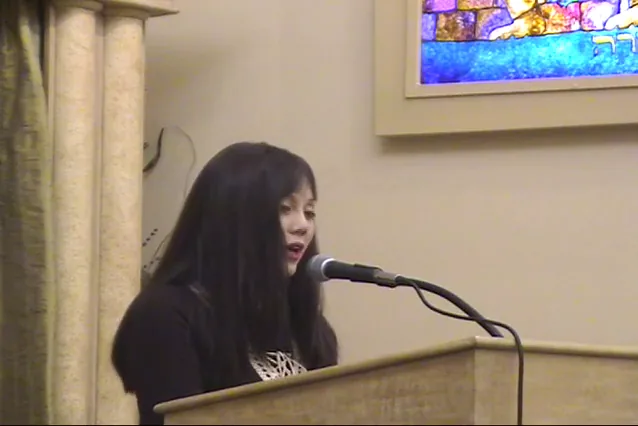
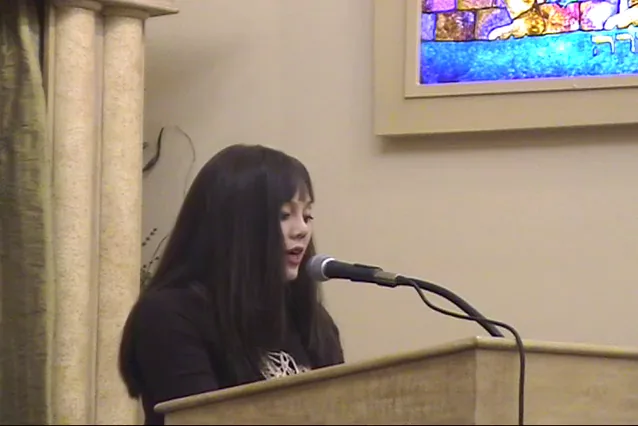
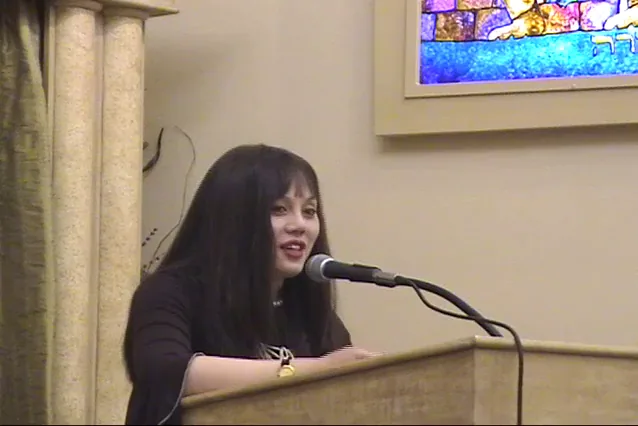
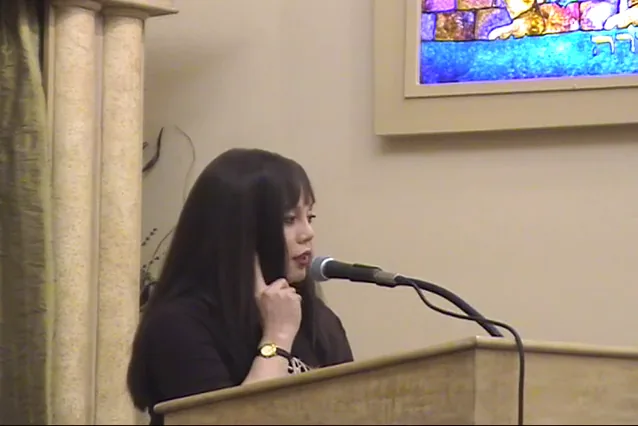
A talk in Los Angeles
A talk Esther gave in Los Angeles
The talk · in her own words
From China to the Jewish people: Esther in her own words
Lightly edited and condensed from a talk Esther gave in Los Angeles.
Contents — 12 sections
"A Chinese Jew? First time!"

Thank you, Rabbi, for the beautiful introduction. One thing I want to say first: the way, when I came from San Francisco, was a beautiful, beautiful way. Highway One. It's beautiful. Thank you, everyone, for coming. I'm sure everyone is very busy every day, but you still made the time. I'm very proud of you.
I'm sure it's obvious to everyone here that I didn't start out in life as a Jewish girl. My Jewish life started in December 2001. So actually, I'm one and a half years old.
So actually, I'm one and a half years old.
One day I discovered that Tiferes means beauty and splendor. You know what? That's exactly the meaning of my Chinese name.
I want to ask you some questions. Have you seen a Chinese Jew before? Right here. Oh! First time! For me! It's my privilege. Anyway, even if you saw some Chinese Jews, probably not that often, right? So in this sense, maybe we can say my being here is one of the miracles performed by Hashem. Of course, Hashem performs miracles every day. And actually, from the first minute I came to the United States, the miracles happened to me continuously, until today.
Okay, let me tell you how I chose my name: Esther Tiferes. Esther Tiferes is my legal name. When I first came to America — JFK, the airport — somebody picked me up. He called out, he said, "Tiffany?" I said, "What's that?" He said, "Your new name." I said, "Why is it Tiffany? I don't understand Tiffany at all. Why is it not Linda or Mary, or some popular American name?" He said, "I don't know. It just fits you."
Okay — later on I understood. Tiffany is a very beautiful but very expensive jewelry store in Manhattan, right? But also, I like the sound, actually. So when I was converting, I discovered that there is a Hebrew name very close to Tiffany. That's Tiferes. Because if you make both short, it's "Tif." So, because of Tiffany, I chose Tiferes.
Esther is something else. I like the story. It's the only story in the Torah where Hashem's name doesn't appear. It means Hashem gave us the freedom: we freely choose, by choosing the right and the good things. And Esther and Mordechai saved the whole Jewish nation. So I want to do something for Hashem. He doesn't need anybody to do anything, but that's my goal. So that's why I chose Esther. So: Esther Tiferes. I chose the name.
After I chose the name, one day I discovered that Tiferes means beauty and splendor. You know what? That's exactly the meaning of my Chinese name. Can you believe that? Hong is my Chinese name. So my Chinese name means splendid and magnificent.
No way back
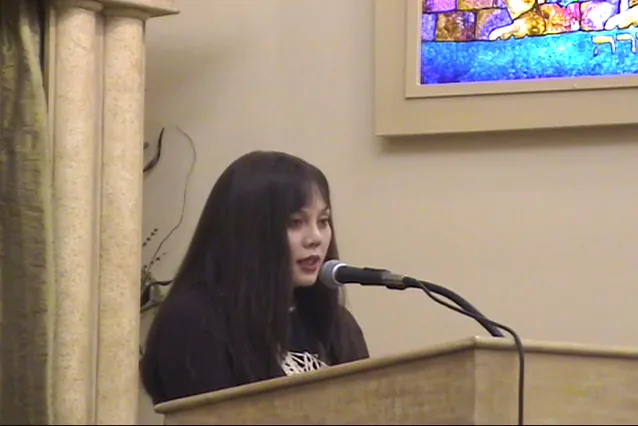
Okay, let's come back to the subject. I come from one of the biggest cities in China. It sounds very far, right? But thank God, I don't feel that far from Hashem. Anyhow, I have been in the United States about three years.
I came to this country as an exchange scholar, to participate in a conference on the topic of freedom of the press. This program was to last not longer than one month, and then maybe after that I would have an opportunity to tour America before returning to China.
The answer was: almost impossible.
Hashem changed my whole life in less than two years.
Before I came to the United States, I didn't even dream that I would still be here, much less have the opportunity to be here with you. And now, obviously, I will not return to China — at least not in the near future — unless someday, you know, there's also a Jewish community there, and of course kosher food, and synagogues, and religious schools, and so on.
Actually, I have called the Chabad rabbi in Shanghai, and I met the Chabad rabbi from Beijing in New York. I talked to both of them, and also got a number for the Chabad rabbi in Hong Kong. I asked them a couple of questions, but the answer that came out wasn't great. If I go back to China — the answer was: almost impossible. So it means, even if I want to live in China and every day eat vegetables and fruit and some canned tuna — okay? — I don't have a synagogue to go to. It's almost impossible.
So sometimes I cannot believe it myself, that Hashem changed my whole life in less than two years. I have been profoundly respectful and appreciative of the way that Hashem created me, gave me a Jewish soul, as well as the wisdom necessary to choose the right things. It is indeed a privilege to be here with you today as a Jewish girl, and I'm thankful that you are here to join me and share some of my experience.
A television career in Wuhan
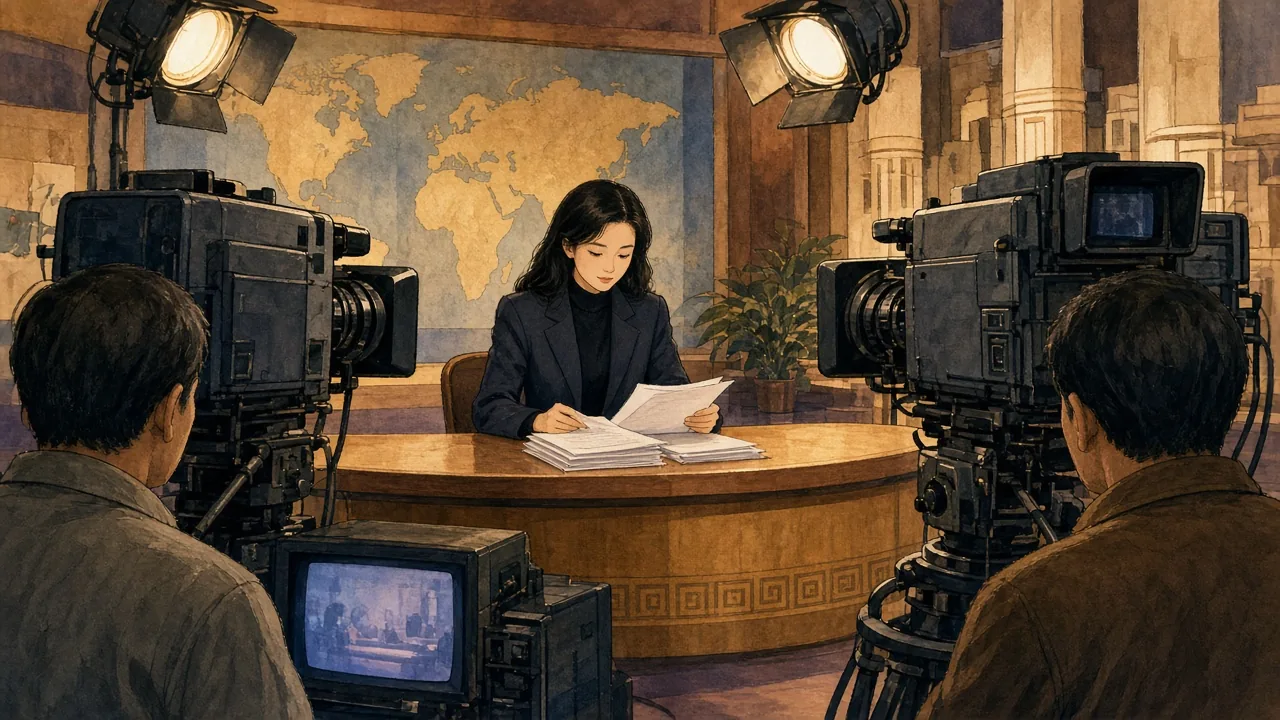
Okay, let me take you back to the beginning of my journey. For years I worked as a television newscaster and an entertainer in China, and I'm quite well known in my hometown of Wuhan, in central China. Prior to my journey in an international exchange program with other distinguished journalists, I was overwhelmed with happiness. I had devoted my life in China to the subject of the press.
This freshness of joy, however, was soon replaced with a sense of frustration. My ability to speak the English language was far less proficient than I expected. It is not hard to imagine how embarrassed I was at that international event. It was then that I was determined to improve my English. To do that, my plan changed, and I prolonged my visit to stay for some time in this country.
For years I worked as a television newscaster and an entertainer in China, and I'm quite well known in my hometown of Wuhan.
In six months — one, two, three — I'm going to pick up English and then go back to China.
I should note that I had the professional title of national first-class television announcer, and anchor for a comprehensive news program. And I was an investigative reporter, an entertainment TV show host, and a producer for three separate television departments of my state's most important TV station.
So the plan at that time was to take the opportunity to learn English, develop a wonderful TV show idea, improve my career, and hopefully become a better journalist when I returned to China. That was my plan.
So I was very confident of my language learning. In six months — one, two, three — I'm going to pick up English and then go back to China. Meanwhile, I will watch TV every day; maybe I'll get some wonderful TV show idea. Because in China, as a producer — I was very young — one of my responsibilities was to develop new TV shows. With many shows in my state, actually, I was the first one to create a new show, and then I kept going. So I thought: when I go back to China, I'll speak English fluently, and with a wonderful TV show idea, it would be very good for my career, right? But indeed, of course, learning English wasn't so easy — not as easy as I thought.
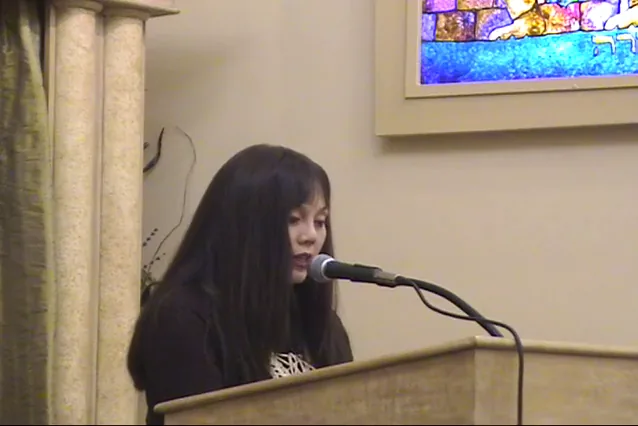
From freedom of the press to freedom of religion

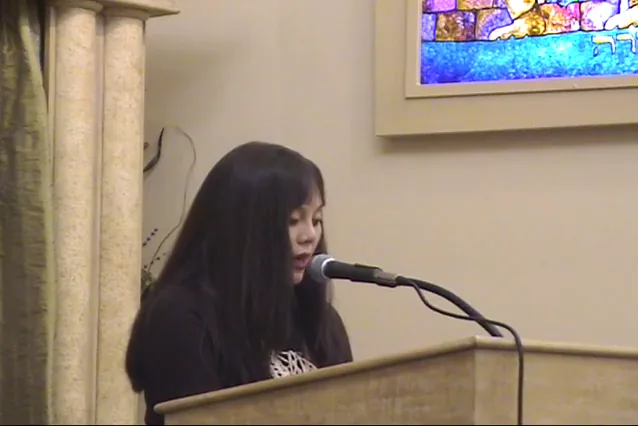
After the conference on freedom of the press, I began my research on freedom of religion. I didn't do it on purpose. Because the visa I had was for exchange scholars — it's a J-1 visa — it's a special visa. Usually, if you want to prolong the visa, you cannot change the kind of visa. So you have to go back to your own country to serve at least two years, and then you can come back to another country. So when I went for the visa, I had to find a second program with the subject closest to the first one. Because the first one's topic was freedom of the press, the second one was freedom of religion.
The subject led me to various scholars and professors. What set me apart was that I was, and still am, in persistent pursuit of the truth. Deep in my heart, I have always believed that there exists a superpower, the authority over all things in the world, but I was not clear where this power was and how to find it.
Questions are the best teacher.
I was, and still am, in persistent pursuit of the truth.
I remember when I was a little girl, my father always taught me. He said, "Questions are the best teacher." And I think he was right, because by finding out the answers of Judaism, I became a Jew. So I yearned to find the superpower, but never stopped believing in its existence.
[In this part, Esther describes her conversations with a professor about faith. Impressed by her seriousness, he offered her a scholarship, housing and a future in another faith, and told her, "You are a spiritual girl. God is calling you." She politely declined, because, as she says, religion "is a serious matter and should not be taken lightly." She kept reading and asking questions.]
I know myself. I always felt that emptiness in my heart, and that is why I was always looking, even in China.
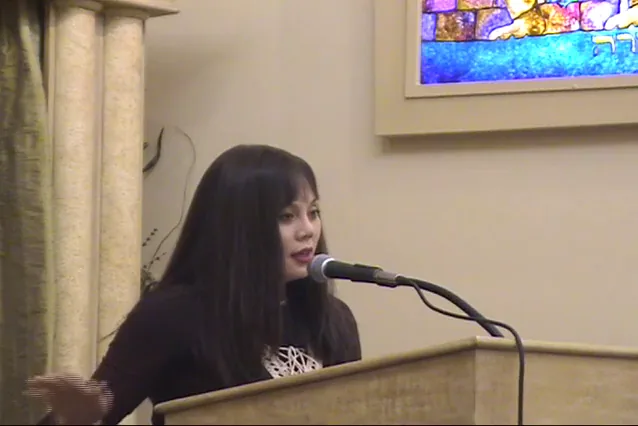
Finding the truth in Torah
[In this part, Esther explains why, after studying other faiths, she found the truth in Torah and Judaism.]
Okay, so I began to think: which nation, tribe or ethnic group follows just the Old Testament? The only people are the Jewish people. So I concentrated my study on this subject, researched it, and read a lot. In the end, I decided that I wanted to become a member of the blessed people, the Jews — because the Jewish people are chosen by and blessed by Hashem; they are the children of Hashem.
In the end, I decided that I wanted to become a member of the blessed people, the Jews.
The entire process of my conversion to Judaism was a struggle for a year.
The process was not as easy as I've described. The entire process of my conversion to Judaism was a struggle for a year, in which I was in constant study and going through internal turmoil.
Giving up Chinese food
"Can I keep kosher?" I asked myself repeatedly. Having been raised in the Chinese culture, it was extremely difficult to keep kosher. One joke I remember is this: What are the three pleasures in life? One: to live in an American house — you are very lucky; everybody has one, right? Second: to marry a Japanese or Chinese woman. By the way, now I know the best wife is not Japanese or Chinese, but Jewish. (laughter) The third pleasure in life is to eat Chinese food. See, it's not American food, not French food, not Jewish food, not Italian food. It's Chinese food.
So people say, "Oh, of course you can keep kosher; you can eat kosher Chinese food." I would say, "Oh, really?" People ask me, "Is it the same taste as real Chinese food?" You know what, it's very hard for me to answer this question, because I really don't want to insult people who are in this business. But the truth is, kosher Chinese food is terrible. (laughter)
By the way, now I know the best wife is not Japanese or Chinese, but Jewish.
Hashem said, 'You do your part, I'll do my part.'
Most Chinese kosher food has no flavor at all. Salty and oily — that's not Chinese food. My job gave me the opportunity to eat in so many different places in China; I tasted all kinds of Chinese food. So the best Chinese food should have the best color, taste, smell and service. It has to look good, smell good and taste good, and the service is very important.
So that's the truth of kosher Chinese food. But Jewish people still like it. Isn't it weird? But on the other hand, I understand it. Why? Because Jewish people like to eat! What can I say? (laughter)
The difficulty of keeping kosher was also because kosher food was not always available. For instance, where I used to work, there was no kosher food.
[Esther explains that even vegetarian food needs reliable kosher supervision.]
Some people say, "Why isn't it kosher? Just vegetables — no meat, no fish, no animals, and no milk at all. Vegetarian — how could it not be kosher?" That's a very good question. Because we don't know what kind of knife smashed the spices in the factory, right? And also, bugs could be a big problem if they don't know how to clean the vegetables and spices. One single small bug drives us into six sins. Do you know that? Eating pork is one sin, but eating one bug — six sins. Very serious stuff here.
Anyway, when I used to work in that area, at lunch my co-workers were eating food that smelled so delicious, and I constantly had to resist the temptation. What a pain! But thank God. Now Hashem has changed my taste. I really feel kosher food is very delicious. Really — Hashem said, "You do your part, I'll do my part. You have faith, you try your best, I'm going to help you." That's what happened to me. Don't worry, we will not become poor from buying kosher food. I'm pretty sure Hashem will bless us.
Trusting the mitzvos we don't understand
I remember one time I spoke in a synagogue, and people asked me, "Why isn't pork kosher?" So I told them what it says in the Torah. They said, "No, no, no, I know this. This is not my point." I said, "What's your point?" She said, "Why are some animals not kosher?" I said, "Sorry, we don't have the answer yet, but when Moshiach comes, you know, we'll have the answer, and pork will become kosher." She said, "No, this is not my point."
She said, "Okay — the mitzvos you are doing, if you understand what you are doing, I understand you. But what about the mitzvos you don't understand? How can you do something you don't understand? For example, why can't we open an umbrella on Shabbos? I know we are not allowed to make a building — it's like a building — but why?" So, her question: I understood her question. Even if I could answer the question about the umbrella, it doesn't answer her real question. So in the first moment I couldn't answer her.
By the same token, whatever Hashem tells us is a good thing to do, because it's for our sake.
As your children trust you, we should trust Hashem.
Then I asked her — she's a young lady — "Do you have children?" She said, "Three." "How old are they?" "Little." I said, "I'm sure you are a very good mommy. All the time you teach them, tell them, give them orders: don't do this, don't do that. Why? Because you know exactly what's going on. Whatever you tell them is for their sake; it's good for them, because you know better than them. They don't know what they are doing, right? By the same token, whatever Hashem tells us is a good thing to do, because it's for our sake. As your children trust you, we should trust Hashem. We should put our faith in Hashem in the same way." She said, "You know what? I never thought of that. Seems like you're right." I know I'm right.
Shabbos, modesty and the stage
Okay, another question I asked myself was: can I keep Shabbos? Probably I can. But what about my job? Can I risk my job because of Shabbos? Actually, I have been fired twice because I could not work on Shabbos.
Another question: I cannot wear pants, only skirts — and only long skirts, for my entire life. You know, the skirt should cover our knees by at least two inches.
If I want people to respect me, I have to respect myself first.
The whole world's attention does not help anything if we don't have Hashem's and our husband's attention.
You know, I love golf. But how can you play golf in a long skirt? Of course you can play golf in a long skirt. But let me ask: what is golf? G-O-L-F. Each letter is very meaningful. G means green and grass. O means oxygen. L means life and light. F means freshness and friendship. Okay — so under the sunshine and the blue sky and the beautiful green grass, you breathe the very fresh air and spend time with your family and your friends. You're walking and laughing and talking and playing. Those are the charms of golf. Of course you can play golf in a long skirt, but you lose the beauty. This is my personal opinion, okay? But I can imagine: from the side, the last moment you hit the ball, it's a beautiful, beautiful view. I can imagine, with a big skirt, what the view will be. (laughter)
So — but if you change the way you think, then you get a different thought, right? When people ask me, they say, "You have to change your lifestyle — no pants, no short skirts. How are you going to get through that?" I said: if I want people to respect me, I have to respect myself first.
[Esther speaks about modesty as dignity and self-respect, and about keeping that purity for one's husband.]
The other thing is: I loved singing — the opera, the concert. In China I have some certificates from singing competitions. Sometimes I was number one, sometimes number two, number three. But now I cannot sing before others, except for my family. Could I really do it? It's not just for one day or two days; I have to do this for the rest of my life. But you know what — when you really enjoy something and you have to give it up, you feel pain. That happens to everybody. But then I told myself: wait a second. Why is it hard? Because I need people's attention? Why is it so hard to give up? Too much attention is like bad energy, a curse. Really, that's the way I think.
I had plenty of flowers and clapping when I was in China. But after coming back from the shows, parties and meetings, I was still a regular person like everybody else. I had the same needs and the same feelings about life. The whole world's attention does not help anything if we don't have Hashem's and our husband's attention. Do you agree? (applause) I'm so proud of you.
Finding the right rabbi
So I dealt with these kinds of questions one by one, and I began talking with a rabbi about conversion. I didn't know how to start. At that time I was still working in Queens, not far from a very religious area — people told me that. Do you know how many times I walked in that area? That is why I know many, many synagogues in that area. Maybe I don't know the names of the synagogues, but I know which house or building is a synagogue and which is not. But I didn't have the courage to go into one of them.
[Esther describes two early disappointments on her way to finding a rabbi.]
I wanted my conversion to be in the most righteous way. I wasn't planning on changing God.
If you try your best, Hashem will give you the best rabbi directly.
From the little tiny bit I knew, I already knew: if you want to be a good Jew, you can't just do whatever you want. If God doesn't want you to drive on Shabbos, you cannot drive on Shabbos. You understand it — you do it. You don't understand it — you still do it. Let's say your king tells you, "You cannot do this today. If you do it, I'm going to kill you." Are you going to do it? No. But Hashem is the King above all kings. I wanted my conversion to be in the most righteous way. I wasn't planning on changing God.
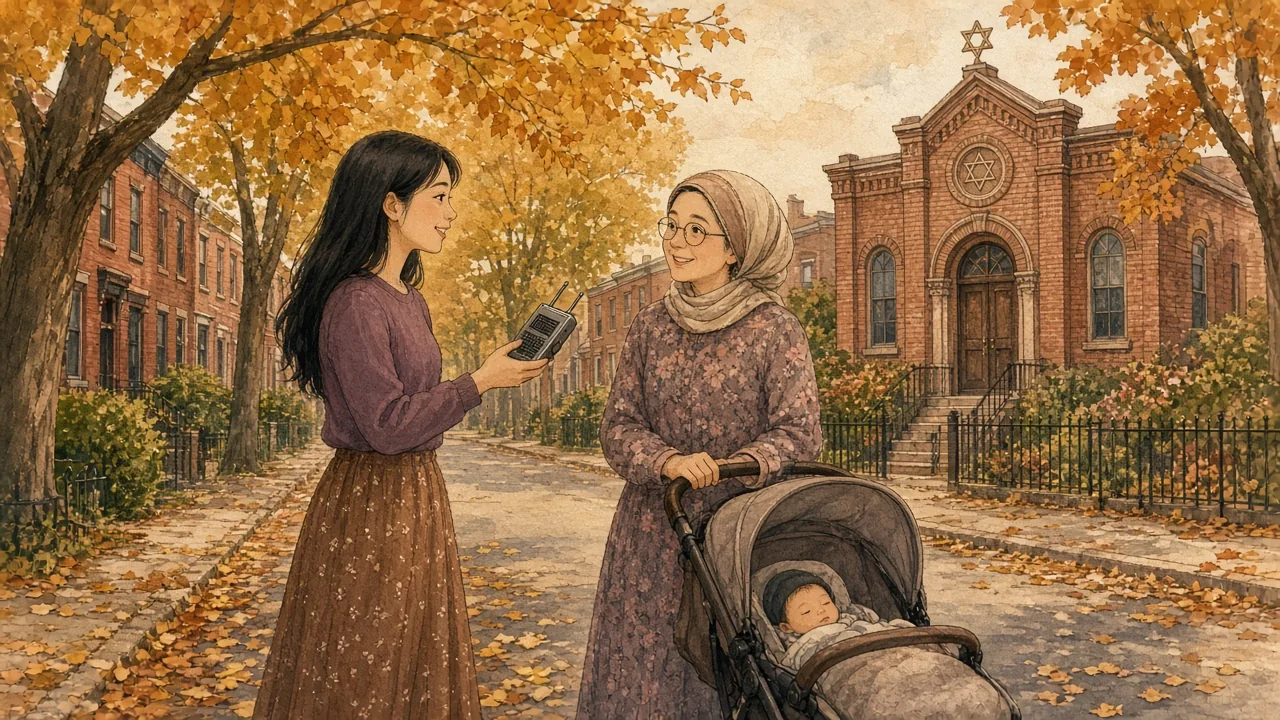
I was an investigative reporter. So Hashem put an idea into my mind. I turned on my journalist's tape recorder, went to Main Street, interviewed a woman on Main Street, and asked a couple of questions. She was very puzzled, and then asked me a question. She gave me a number — a rabbi's number in Brooklyn — and we made an appointment.
I met the rabbi. In the beginning he said he had thirty minutes, but we talked more than one hour. And then he said, "Where do you live?" I said, "Queens." He said, "Okay, go to my friend in Queens." You know who this rabbi is? He's the rabbi in charge of Orthodox conversion. You see — if you try your best, Hashem will give you the best rabbi directly. Thank you very much. (applause)
"A ticket at birth": why Judaism
Ladies and gentlemen, my friends, I really want to say something from the bottom of my heart. You are very fortunate to have been born Jewish, and not to have needed to go through what I went through. It's like being issued a ticket to heaven at birth. You just need to follow the rules, stay in line and wait for your turn, and you will reach the gates of heaven. I had to make a tremendous effort to get this ticket.
No one really understood me — my yearnings, my faith and my choices. I have no relatives and very few friends, and spent my time day after day in loneliness when I was in New York. My Chinese friends, colleagues and co-workers all said to me, "You had a very good life in China: a car, an apartment, and a very good profession. You will find yourself lost in America. Why choose a more difficult life? Why did you try so hard to be a Jew?"
You are very fortunate to have been born Jewish.
I found Hashem and I found the Torah, like I found my real parents.
I have asked myself: is it too much? In this position, when I was almost at the crossroads and ready to give up, I said, wait a second, wait a second — you can handle this. In life we gain and we lose. I want to gain in spirituality, if that means a loss in materialism. So what? Because what is lost will be lost anyway. See, my success in China cannot be brought or repeated here in the United States, and material wealth cannot be brought to heaven. We have to understand: everything is from Hashem.
Look: whatever I had in China, Hashem took it away — in one second. I'm nothing here, I'm nothing! But from nowhere, He gave me the most precious treasure: a new soul. He made me a completely different person. So Hashem will be with me for my eternal life. I prefer to live a life that is spiritually rich, but materially less so. I have never been a fan of extravagant things and material enjoyment. I prefer to be more assured of where my soul will go.
Every day we can see smart people. So if a person is just smart, it's nothing really, really special. But truly, there is a big difference between being smart and having wisdom. Because wisdom doesn't come from us; it's from Hashem. He gives your heart to understand the true life — the Torah. Sometimes I do things that are not smart at all, but Hashem loves me. Hashem helps me make the wise choice. Once I choose Hashem, He will choose for me.
People frequently asked me, "Why that?" They said, "We understand that you need a religion, since you are alone in the United States. But why Judaism?" I said, "I wished to become a Jew not because I'm out of my mind, or to fill my empty life. No. I did it only because it is the truth, and therefore there cannot be another choice." Like a lost child who one day is reunited with her parents — can she say, "I don't want my parents," or "I do not mind who my parents will be"? So by the same token, I found Hashem and I found the Torah, like I found my real parents, and there is no other choice for me except to return to their arms and do my duties as a child.
So when the rabbis were testing me, the first thing they said to me was, "Listen, it is not easy — it is not easy to live a religious life. We are all from Jewish backgrounds and come from Jewish families. We didn't have the chance to choose this religion; we were born into it. But you — you can live an easy life. Why do you want to make it more difficult for yourself and choose to be a Jew? You know that many people in this world do not like us. We almost didn't survive the Second World War. No one can guarantee that it will not happen again. Give up before it's too late. After you convert, you will be a Jew, and your conduct will be judged by Hashem as such."
So this is the way I answered them. I said, "You are trying to push me out. I understand, and I respect that. It is part of this task, and also part of your job today. But please don't do it." We Jews have the opportunity to serve Hashem and make our souls pure.
Do you know how lucky I feel to be one of the Jews? Among how many people in China now? 1.2 billion people. 1.2 billion people — only me. I came to the United States and chose Judaism, and now Hashem has chosen me. How beautiful my life is going to be! I'm going to finish my conversion; nobody can stop me.
A Jew a month later, and a new life
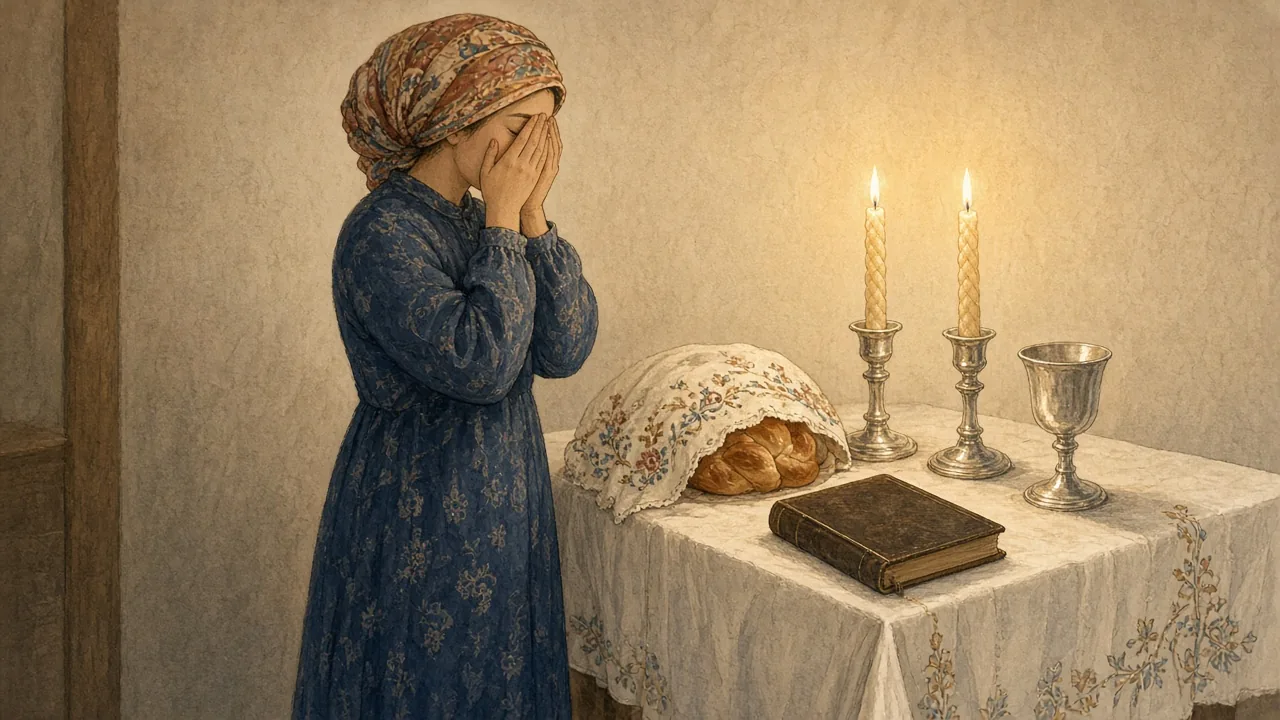
Baruch Hashem. I spent almost a year investigating religions and deciding to be a Jew, but it took me just five to six months to complete the conversion. It was very, very hard. How much you know is not the most important thing. The most important thing is that you have to be very faithful.
You know, I still don't speak English that well. A year and a half ago it was even worse, because then I worked with Chinese people, and most of the time I didn't have to speak English. And also, at the same time, I was very busy making a living and continuing to learn. Every day I got up about six o'clock and came back about eight or nine o'clock at night. There was really not so much time left for me to learn. And I had to learn English, and through English to learn Hebrew, and the laws — about Shabbos, the kosher laws, Yom Tov, and even the Torah — and the American lifestyle and the Jewish lifestyle. Everything was so new for me, right? But thank God, I learned everything at the same time.
One month to the day after I got fired, I became a daughter of Hashem.
I am a spiritual girl, and God was calling me all along. But I have not been back, because I found Him.
And Hashem sent me the best teacher. She's very beautiful, both inside and outside. At her young age she knows so much, and is very religious and smart.
Okay, so I want to ask you: how many things could be done in less than two years, and how many things have I done in five to six months? Incredible! In this sense, it is not enough to say I was lucky. I was indeed super lucky. Do you think I did everything on my own? It was Hashem's will and desire that caused me to leave my family and my life in China. The One who took us out of Egypt over 3,300 years ago decided to take this Chinese girl out of China and return her to her people, and in a very short time. Thank God. Look what an amazing miracle Hashem did for me. How can I not love Hashem with my full heart, and how can I stop loving Hashem?
Okay, let me tell you another miracle. Do you remember I said I had been fired twice because I couldn't work on Saturday? When I was fired the second time, I said to myself, "This is a sign. Hashem wants me to convert to Judaism faster." It was like He was knocking on the door of my heart: "Hello, hurry up!" So I didn't try to find a new job. I just stayed at home and kept learning Torah every day, and after one month I finished my conversion. What does it mean? One month to the day after I got fired, I became a daughter of Hashem.
And the first Shabbos after I went to the mikvah, I got a new job. How? I didn't even start looking for a new job. The new job was looking for me. After Shabbos, a lady who lived in the same area called my rabbi. She said, "Do you know any girl who I can trust, who has good taste?" That was it. And she's a very, very religious, nice lady, and she picked me up every morning and drove me home every evening when I was in New York. And we're closed Fridays and Saturdays, and the Jewish holidays. Isn't it beautiful? My friends, what do you think? Just show your face to Hashem. He will take care of everything.
I have one last comment to make. Do you remember the professor? I want to say something to him: "You were right. I am a spiritual girl, and God was calling me all along. But I have not been back, because I found Him." (applause)
Oh, I'm sorry, I should end my story right here, but because my life has changed, I have one more piece of news to tell. I got married recently. That's my husband, Haim. How did we meet? It's also beautiful. My husband came from France, and he stayed in Palo Alto, in California. I came from China, I went to New York — we crossed in the air — and then I spoke in California, and then we got married, from East Coast to West Coast. See, what does it mean? If Hashem wants to perform something, nothing stops Him. He brings Jews back from every corner of the earth, and He performs miracles every day. Even today, you are sitting here — I think many things happen around you. It is a miracle.
So I don't know what would be the most exact thing to say, but from the bottom of my heart, there's something appearing in my mind: Baruch Hashem. Thank you very much for your patience, and thank you for sharing my experience and giving me the opportunity. Thank you. (applause)
Pictures from a life
[After the talk, Esther showed photographs of her life and career and answered questions. These are some of the moments she shared.]
Here are some pictures of my career and my life that I want to share with you.
So we can say they know everything, but they know nothing, because Judaism is not that easy to understand.
And the rabbi said, 'Now you are the same.' That was a sign.
[Showing photographs of her family in China, she says:]
I really miss them. I miss them all. The Torah teaches us we always have to respect our parents. So I talk to them very often — at least once a week, sometimes every day. So we can say they know everything, but they know nothing, because Judaism is not that easy to understand.
[From her television years:]
This is the first investigative show on TV in my state; it was also very new in the whole of China. This is a very old show. I was in a singing competition. I was number one.
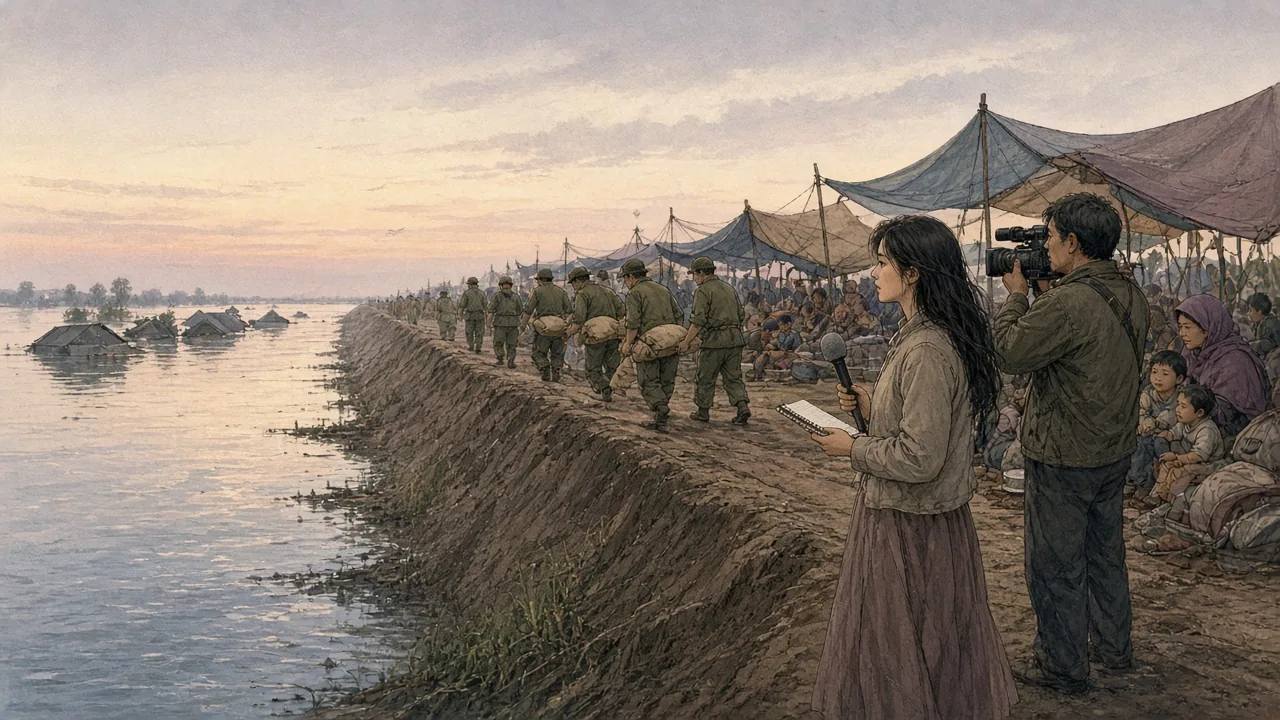
This is the Yangtze River. This is 1998. The Yangtze River had a great flood. Most people's houses were under the water. Okay — I was there. People lived on the dam — on the dam, this was their home, because their real home was under the water. It was terrible. So we were standing on the dam. It was very dangerous. You can see how tired I was. I was staying awake the whole night; I slept about five minutes in the morning. And this picture was taken by a journalist from the newspaper. He told us afterwards that there was a snake that went between us. That's a very good picture.
That was as a model. I was a model for a painter, for a stamp. By the way, you see the signature? Don't bother — the signature is the artist's signature. (laughter)
[Asked about her family's roots in China, she answers:]
I have no idea about that. I was going to investigate my family tree, but then I said, forget it, because there's no time. Whatever comes, comes. If by chance I will know, I will know. If not, I'm not going to spend time investigating that, because if I have time, I would rather learn more Torah.
I can tell you one story. In 1996, the first day of that year, I was producing a TV show in Kaifeng — it's a different city. After I finished the show, it was about eleven o'clock at night. I was hungry, so I said to my group, "Can we eat something?" Every restaurant was closed. I said, "Anything open?" They said there are street vendors. So we went there, and there was an old man; his food smelled very delicious. There was a big wok — a Chinese wok, huge. So I went there and did like this: I wanted to smell the fish. And the old man, all of a sudden, just did like this. I was very, very surprised. I was not really beaten, but he touched my face.
So who was he? He is a man from a special tribe. Even today they don't eat pork at all. And I come from the main tribe in China, where everybody eats pork. That's why, when I came close to his wok, he didn't want anybody close to his wok, because he didn't want his food to get dirty. I didn't know. So I said, "Leave him alone." I told the other people, "Don't do anything."
And then later, when I was converting and the rabbi was testing me, from nowhere this view just came back to my mind, and I just spoke it out. And the rabbi said, "Now you are the same." That was a sign. Like Hashem: "What are you doing? You are a Jew. You should come back."
This is the first time I came to America — you can see I was still wearing pants. And it was very hard for me to give up pants. But I thought, if this is what Hashem wants us to do, then I have to do it. And then I gave them up.
And also, I forgot to tell you, I'm a jeweler too; I made my jewelry. That was my wedding. Okay — that's us. (applause)