

The Holy Tongue: Why Hebrew Is Special

Before we open the Siddur and read its first words together, I want to stop at the door and ask a simple question: what kind of language are we about to pray in?
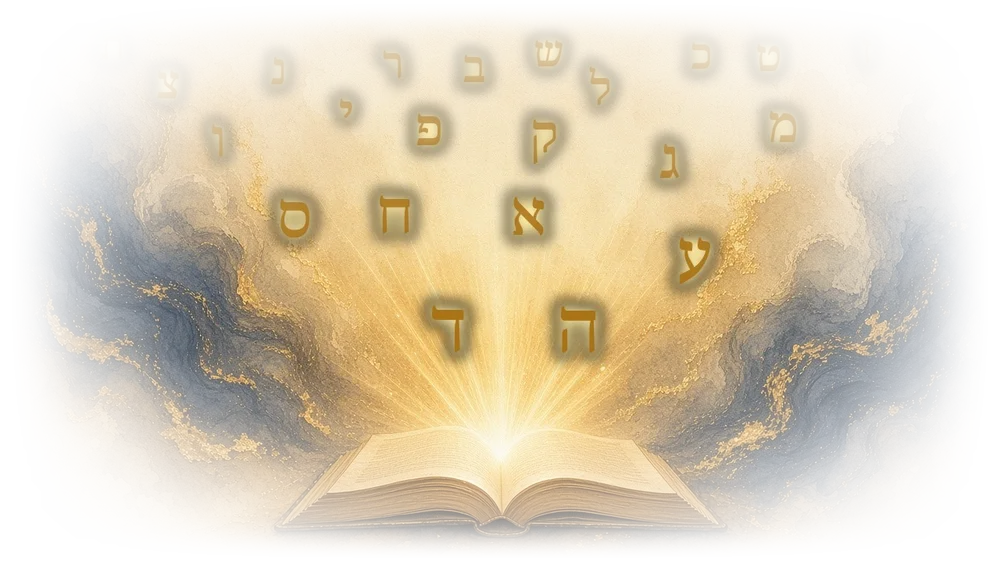
For most of us Hebrew is “the language of the Siddur”, the way Latin is the language of an old law book. But that is not how our Sages saw it. For them, Hebrew is not one language among the seventy. It is Lashon HaKodesh, the Holy Tongue: the language in which the Torah was given, and, even more surprising, the language in which the world itself was created.
Rashi brings this already in the second chapter of the Torah. When Adam sees Chavah, he says, “She shall be called ishah (woman), because she was taken from ish (man).” Rashi points out that the two words are built from one another, and concludes:
לָשׁוֹן נוֹפֵל עַל לָשׁוֹן מִכָּאן שֶׁנִּבְרָא הָעוֹלָם בִּלְשׁוֹן הַקֹּדֶשׁ“One expression coincides with the other… From here is derived that the world was created with the Holy Tongue.” (Rashi, from Bereishis Rabbah 18:4)
The Midrash that Rashi is quoting makes the point even sharper. Just as the Torah was given in the Holy Tongue, so the world was created in the Holy Tongue. Have you ever heard, asks the Midrash, a Greek or an Aramaic word for “woman” that is built out of the word for “man”? Only in Hebrew do the two words fall on one another.
Rabbi Yehudah HaLevi, in the Kuzari, adds that this was the language in which Hashem spoke with Adam and Chavah and in which they spoke to each other, and he shows it from the very names of the first generations: Adam from adamah, earth; Chavah from chai, living; Kayin from kanisi, “I have acquired”; Noach from yenachamenu, “he will comfort us”. Each name is not a label stuck onto a person. It says what the person is.
That is my first point, and everything else in these lessons rests on it: Hebrew is not a language like the others. Its words are not an agreement between people that a certain sound will stand for a certain thing. They are the very words through which Hashem brought the thing into being.
Kuzari 2:68 (Hebrew of R. Yehudah ibn Tibbon) · sefaria.org/Sefer_Kuzari.2.68

How can a word create a world? The Alter Rebbe answers in the first chapter of Shaar HaYichud VehaEmunah, the second book of the Tanya. The Baal Shem Tov explained the verse “Forever, O G‑d, Your word stands firm in the heavens”: the very words and letters of “Let there be a firmament” stand within the heavens forever and give them life. If those letters departed for even an instant, the heavens would return to absolute nothingness.
But a stone is not mentioned in the Ten Utterances of creation. Where are its letters? Here the Alter Rebbe teaches something I want every one of us to hold on to. The life-force descends from the Ten Utterances step by step, through substitutions and combinations of letters, until the combination of letters that forms the word even (stone) is drawn down from them, “and this combination of letters is the life-force of the stone.” And then he says it of everything:
הַשֵּׁמוֹת שֶׁנִּקְרָאִים בָּהֶם בִּלְשׁוֹן הַקֹּדֶשׁ – הֵן הֵן אוֹתִיּוֹת הַדִּבּוּר, הַמִּשְׁתַּלְשְׁלוֹת מִמַּדְרֵגָה לְמַדְרֵגָה מֵעֲשָׂרָה מַאֲמָרוֹת שֶׁבַּתּוֹרָה“The names [of all creatures] in the Holy Tongue are the very letters of speech which descend, degree by degree, from the ten utterances recorded in the Torah…” And: “the name by which [the creature] is called in the Holy Tongue is a vessel for the life-force condensed into the letters of that name.”
Why must it descend at all? Because, the Alter Rebbe explains, a particular creature cannot receive its life directly from the Ten Utterances; that light is far too great for it. It can receive it only when it comes down, degree after degree, until it can be contracted and clothed in that one creature. This is the language of tzimtzum, contraction. Hashem, Whose light has no limit, “contracts” it again and again until it can become a stone, a tree, an animal, a human being, a physical world.
We must understand this correctly, as Chassidus insists. Tzimtzum does not mean that Hashem became smaller or left any place. In the seventh chapter the Alter Rebbe explains that the contraction is a concealment: it hides the Divine life-force so that the creature can feel itself as something separate and real. From the creature’s side there is concealment; from Hashem’s side nothing is hidden at all. And the purpose of it all is that there be a world in which Hashem is revealed as King, for “there is no king without a nation”.
Now I want to share how I see this with a single word. Take the Hebrew word for a dog: kelev. When I say kelev, I am holding the very end of a long chain, the last and most compressed form of the Divine word that keeps this animal alive. It is like a seed into which an entire tree has been folded.
And because it is folded, it can be opened. Every letter in Hebrew has a name, and the name is itself spelled with letters. The word is Kaf, Lamed, Beis. Spell out each letter, Kaf as כַּף, Lamed as לָמֶד, Beis as בֵּית, and you have climbed one step up. Spell out the letters of those letters, and you climb another. This filling-out of the letters is called miluy, and one can keep going, level after level, without end, back toward the infinite source from which the word came down. The word in our mouth is the bottom rung of a ladder whose top we cannot see.
Tanya, Shaar HaYichud VehaEmunah, ch. 7 · tr. N. Mindel (Kehot); see also Lessons in Tanya, aid/7993 · chabad.org/…/aid/1029188

If this is true of every word, it is true above all of the words of our davening. The prayers in our Siddur were not composed by poets looking for beautiful phrases. The Gemara tells us that the Men of the Great Assembly instituted for Israel the blessings and the prayers, the kedushos and the havdalos, and that one hundred and twenty elders, among them several prophets, established the eighteen blessings of the Amidah in their order.
אַנְשֵׁי כְּנֶסֶת הַגְּדוֹלָה תִּקְּנוּ לָהֶם לְיִשְׂרָאֵל בְּרָכוֹת וּתְפִלּוֹת, קְדוּשּׁוֹת וְהַבְדָּלוֹתמֵאָה וְעֶשְׂרִים זְקֵנִים, וּבָהֶם כַּמָּה נְבִיאִים, תִּיקְּנוּ שְׁמוֹנֶה עֶשְׂרֵה בְּרָכוֹת עַל הַסֵּדֶר
Talmud Bavli, Megillah 17b · Hebrew/Aramaic text · sefaria.org/Megillah.17b
Among the authors of our prayers sat prophets. So the way I understand our Siddur is this: its words are the final contraction of what Hashem wishes to hear from us. Our Sages, with the vision of nevuah, prophecy, perceived that will as it comes down through all the worlds, and set it into these exact Hebrew words, so that every Jew, in every generation, could say them.
The Rambam describes the moment this became necessary. After the exile to Babylon, Jewish children grew up speaking a mixture of languages and could no longer ask for their needs or praise Hashem in Hebrew without mixing in other tongues. When Ezra and his court saw this, they established the eighteen blessings in sequence, “so that they would be arranged in the mouths of all people”, and the prayer of a person who cannot express himself would be as complete as the prayer of the most eloquent.
This is why I care so much that we understand the Hebrew we pray, and that we pray in Hebrew. When I say the words of the Siddur, I am holding the same compressed seeds of which I spoke, and when I understand them, I can begin to open them.
At the same time, the halachah is very clear, and very kind. The Alter Rebbe rules in his Shulchan Aruch that a person who can read the Hebrew but does not understand it should rather pray in a language he understands, because prayer without the heart is not prayer:
עַם הָאָרֶץ שֶׁאֵינוֹ מֵבִין בִּלְשׁוֹן הַקֹּדֶשׁ אַף עַל פִּי שֶׁיּוּכַל לְהִתְפַּלֵּל בִּלְשׁוֹן הַקֹּדֶשׁ – מוּטָב שֶׁיִּתְפַּלֵּל בְּלָשׁוֹן שֶׁמֵּבִין“Rather than praying in the Holy Tongue without mental focus, it is preferable that he pray in a language that he understands, even when praying individually, so that he can concentrate on what he is saying — for prayer without devout intent is of no value.”
Shulchan Aruch HaRav, Orach Chayim 101:5 · Sichos in English tr.; see also Shulchan Aruch, Orach Chayim 101:4 · chabad.org/…/aid/3299190
So if your Hebrew is not yet enough, pray in a language you understand; that is the halachah, and your rav can guide you in the details. But do not stop there. The translators of the Alter Rebbe’s Shulchan Aruch put it beautifully in their note: in gradual stages, one should accustom oneself to praying in the Holy Tongue, as one new passage after another becomes familiar and intelligible. That is exactly what these lessons are for. One passage at a time, we will make the words of the Siddur our own.
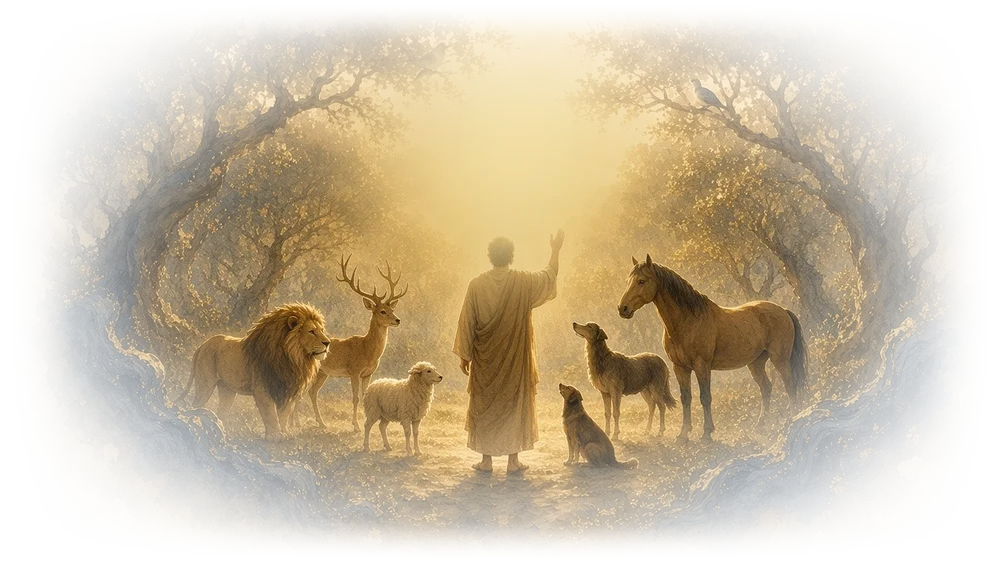
Let me end with the first man. The Torah tells us that Hashem formed every beast of the field and every bird of the heavens and brought them to Adam to see what he would call each one, and whatever Adam called each living creature, that was its name. Rashi adds that every creature to which Adam gave a name kept that name forever.
The Midrash tells the story behind the verse. When Hashem came to create man, He consulted the ministering angels. He told them that this man’s wisdom would be greater than theirs, and He brought before them the beasts, the animals and the birds and asked, “What is the name of this one?” And they did not know.
הֵבִיא לִפְנֵיהֶם אֶת הַבְּהֵמָה וְאֶת הַחַיָּה וְאֶת הָעוֹף, אָמַר לָהֶם זֶה מַה שְּׁמוֹ וְלֹא הָיוּ יוֹדְעִין
Rashi on Bereishis 2:19 · chabad.org/…/aid/8166
Then Hashem passed them before Adam and asked him. And Adam answered at once: this is an ox, this is a donkey, this is a horse, this is a camel. He even named himself Adam, because he was created from the adamah, and he called his Creator Ado-noi, because He is the Master of all His creatures.
Why could Adam do what the angels could not? Here is how I understand it. The angels live in the higher worlds; they see the Divine word as it is above, before it has finished coming down. Adam belonged to the lowest level, the final contraction, the same world in which the ox and the camel stand. He could look at a creature in its final, physical form and see in it the last letters of the word that gives it life, and he could connect that final form to its origin. That connection is a name. The angels see the source; man, standing at the bottom, can see the end and tie it back to the source. That is the power Hashem gave us in this world, and it is the power we use every time we pray.
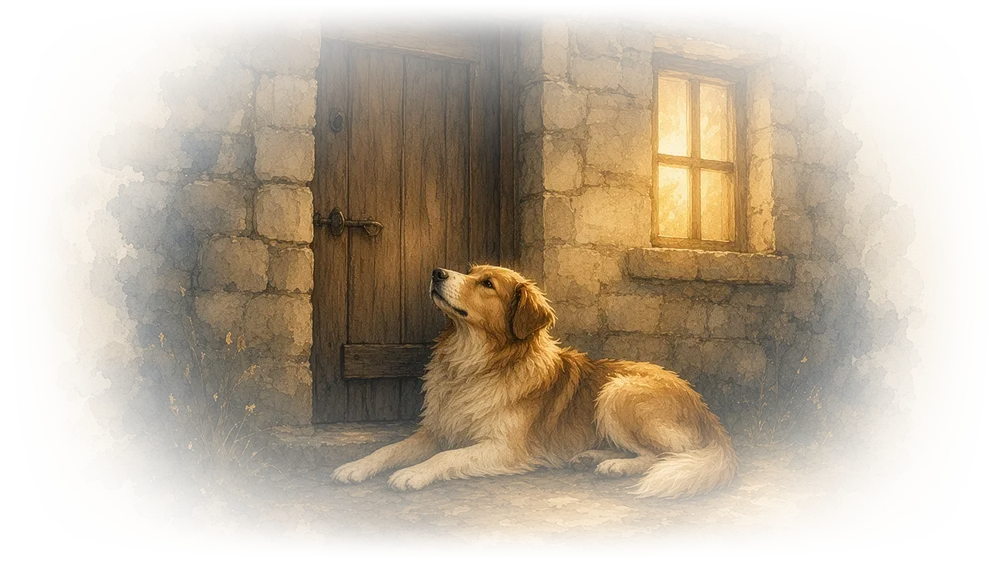
And so we come back to our dog. Adam looked at this animal and saw that its whole relationship to the human being is love and loyalty. He called it kelev, which can be read k’lev, “like a heart”, or kulo lev, “all heart”. The Maharsha says it in so many words: the dog is called kelev because it is all heart and faithful to its master. One short word, and the essence of the creature is in it.
נִקְרָא כֶּלֶב כִּי כֻּלּוֹ לֵב וְנֶאֱמָן לַאֲדוֹנָיו
Maharsha, Chiddushei Aggados on Sanhedrin 97a · on “the face of the generation like the face of a dog”; nikud added · sefaria.org/Chidushei_Agadot_on_Sanhedrin.97a
R. Mendel Kalmenson, interview on People of the Word (Chabad.org, Dec. 25, 2022) · chabad.org/…/aid/5751904
This is the Holy Tongue. Every word is a door. In the lessons ahead we will walk through these doors one by one, starting with the very first words a Jew says each morning. May Hashem help us to understand what we say, to mean what we understand, and to feel, with every word of the Siddur, that we are holding something that came down from very high, so that we can lift it up again.
Key words
| Word | Transliteration | Meaning | Root | Grammar |
|---|---|---|---|---|
| לָשׁוֹן הַקֹּדֶשׁ | Lashon HaKodesh | the Holy Tongue | ל־שׁ־ן · ק־ד־שׁ | Construct chain: lashon (tongue, language) + ha-kodesh (the holiness). Rashi: the world was created in it. |
| צִמְצוּם | tzimtzum | contraction, concentration | צ־מ־צ־ם | Noun of the pi’el pattern from a four-letter root. In the Tanya the related verb appears, לְהִתְצַמְצֵם “to be contracted”. |
| אוֹת · אוֹתִיּוֹת | os · osiyos | letter · letters (also: sign) | א־ו־ת | Noun; the plural is used in the Tanya’s phrase osiyos hadibbur, “the letters of speech”. |
| שֵׁם | shem | name | שׁ־ם | Masculine noun; plural שֵׁמוֹת. In the Tanya, the name is “a vessel” for the creature’s life-force. |
| נְבוּאָה | nevuah | prophecy | נ־ב־א | Feminine noun; נָבִיא is “a prophet”, plural נְבִיאִים (Megillah 17b: kamah neviim). |
| כֶּלֶב · לֵב | kelev · lev | dog · heart | כ־ל־ב · ל־ב־ב | Segolate noun kelev; read as k’lev “like a heart” or kulo lev “all heart” (Maharsha). |
Questions for review and discussion
- Rashi learns from ish and ishah that the world was created in the Holy Tongue. Why is a play on words proof of something so large? What does the Tanya add about how a Hebrew name relates to the thing it names?
- In Shaar HaYichud VehaEmunah the life-force descends “degree by degree” until it can be contracted into one creature. Why is the descent necessary, and why does the Alter Rebbe insist that tzimtzum is a concealment and not a real withdrawal?
- The Alter Rebbe rules that one who does not understand Hebrew should rather pray in a language he understands. How does that ruling fit with the special holiness of the Hebrew words? What practical step will you take this month toward praying with understanding?
- The angels could not name the animals; Adam could. Using the idea of the “final contraction”, explain why. Then pick a Hebrew word you know (lechem, adam, shamayim…) and ask what its name tells you about the thing.
Download the lesson