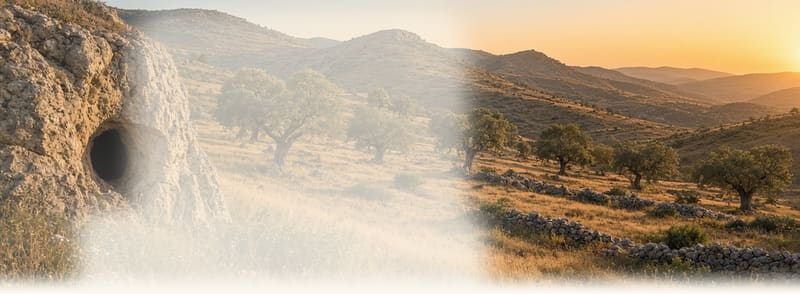
Parshat Chayei Sarah
Download the sheet
Full PDF Short PDF (16 pages) Full PDF in French Short PDF in French (16 pages) Share your feedback

This week’s parsha begins with a funeral and ends with a family scattered to the four winds, and yet it is called Chayei Sarah, “the life of Sarah.” I want to take you on a journey with me this Shabbos: from a cave in Chevron, to a tent, to the far East, out to all seventy nations, and back again to that same cave, where I believe the whole story of the Geulah is already hidden.
1. Chevron, Yerushalayim and Tzfat: Points of Connection
Let me begin with a question that has always bothered me. Efron offers Avraham the field for free. Any of us would have said thank you and signed. Avraham refuses. He insists on paying, in public, at the gate of the city, to the last shekel. Why?
My own thought is this: Avraham knew exactly what that cave was. He knew its stature, and he knew that Adam and Chava were buried there. That is why he wanted this place and no other, and that is why he made sure, with prophetic foresight, that its ownership would be clear and beyond dispute for all time.
The Midrash tells us how he found out. Avraham ran to fetch a calf for his guests, and the calf ran away from him into a cave. Avraham followed it in, “and he found Adam and his help-meet lying there upon their beds, and they slept, and lights were kindled above them, and a sweet scent was upon them like a sweet savour.” And then comes the key word: « לְפִיכָךְ חָמַד הַמְּעָרָה לַאֲחֻזַּת קֶבֶר », “therefore he desired to have the Cave of Machpelah as a burial possession” (Pirkei d’Rabbi Eliezer 36). Therefore. He wanted it because of what he had seen.
The Zohar tells the same story: Avraham “had once entered that cave and seen [Adam and Chava] buried there… whilst he was gazing a door opened into the Garden of Eden,” and “he saw, moreover, a shining light that illumined the cave, and a lamp burning” (Zohar I:127a). When the calf led him there, it was a field “which emitted heavenly odours… he saw a light issuing from the cave” (Zohar I:127b–128a). Another Zohar teaching says it outright: « מְעָרַת הַמַּכְפֵּלָה, סָמוּךְ לְפֶתַח גַּן עֵדֶן », “the Cave of Machpelah is next to the entrance of Gan Eden”; when Chava died, Adam came to bury her there, “and there he smelled the scents of Gan Eden” (Zohar Chadash, Midrash Rus; our translation).
Now look at how he paid. Avraham asks for the cave « בְּכֶסֶף מָלֵא », “for its full value.” Rashi explains: “all that it is worth. Thus, too, did [Dovid] say to Ornan, ’for full money’” (Rashi 23:9). Ornan is Aravnah, from whom Dovid bought the threshing floor that became the site of the Beis HaMikdash. So with one comment Rashi ties the purchase of Chevron to the purchase of Yerushalayim. And Avraham did not haggle. Efron “promised much but did not do even the very least… he took from him big Shekels” (Rashi 23:16), and Avraham paid every one of them. The Midrash sums it up: he bought it « בְּמֶכֶר זָהָב וּבִכְתָב עוֹלָם לַאֲחֻזַּת עוֹלָם », “by a purchase with gold, and a perpetual deed, for a perpetual possession” (Pirkei d’Rabbi Eliezer 36).
Who rests in that cave? The Gemara reads the name Kiryat Arba as “the city of the four couples: [Adam and Chava], [Avraham and Sarah], [Yitzchak and Rivkah], and [Yaakov and Leah]” (Eruvin 53a; Rashi 23:2). Humanity’s first parents and our own Avos and Imahos lie side by side, at the gate of Gan Eden.
This is where Rav Haïm Dynovisz comes in. He teaches that Eretz Yisrael is a living land, compared to a person with a body. “Our Masters even compare the Land of Israel to a man”, and he asks where each part of that body is. Yerushalayim? “Jerusalem, obviously; it is the heart.” And the brain? “Tzfat, up high.” And where is Chevron in this body? It isn’t an organ at all. It is where something is hidden: “Hashem hid the light of the final Redemption, which will be revealed with Mashiach, somewhere in Eretz Yisrael, and of course, you guessed it, in Hevron” (Rav Dynovisz, The Place Where the Light of the World Is Hidden, 15:44–17:07).
Rav Dynovisz teaches that this map of the Land comes from the Arizal: “In the Ari HaKadosh, he explains where the eyes of the Land of Israel are, where the mouth is, where the nose is, where the heart of the Land of Israel is” (Rav Dynovisz, The Place Where the Light of the World Is Hidden, 15:58). And he teaches that this is why each tribe received its own portion and the tribes were not mixed together. Every tribe has a temperament that matches its part of the Land’s body: “a tribe that is, we might say, more intellectual than another will find itself in the north” (Rav Dynovisz, The Place Where the Light of the World Is Hidden, 16:38), while a tribe of feeling, of the heart, settles in and around Yerushalayim. Each one grows best in the part of the body it belongs to.
He describes the connection between them as a flow. A spring becomes a stream, a stream a river, the river a great river, the great river an ocean. “The ocean… is of course Jerusalem… The spring is Hevron” (Rav Dynovisz, The History of the Jewish People Begins in Hebron). Everything that reaches Yerushalayim was first drawn from Chevron.
Chazal give us the heart of that picture in their own words: “Just as a navel is set in the middle of a person, so the Land of Israel is the navel of the world… Jerusalem in the center of the Land of Israel… and the foundation stone, out of which the world was founded, is before the ark. Now [Shlomo], who was wise, determined the roots [lit. veins: «הגיד»] that went out from it into the whole world” (Midrash Tanchuma, Kedoshim 10). From the Even Shesiyah, roots run out like veins to every land. And the Zohar places the first revelation of Mashiach in the north: “the Messiah has revealed himself in the land of Galilee” (Zohar II:7b), the land of Tzfat.
Rav Dynovisz teaches that the first to discover the light hidden in Chevron was Adam himself. After his sin Adam did teshuvah, and he understood that, as the root of all humanity, his mistake would weigh on the whole of history until the final Geulah. He also knew that Mashiach would come from him, for the letters of אָדָם stand for Adam, Dovid, Mashiach. So his teshuvah was not a private one; it was a teshuvah for the whole world. He searched Eretz Yisrael, the Eretz HaChayim, for the place where the strength of the final Geulah is hidden, and he searched for years and years. Then: “And one day he was passing through [Chevron], and there he felt, he felt something very, very strong, and he had a vision. He saw his great-great-great… grandson coming out of him, Mashiach, and he understood that the light of the final Geulah was there” (Rav Dynovisz, The Place Where the Light of the World Is Hidden, 22:24). And so Adam chose to be buried in that place. That is why the first couple in the Machpelah are Adam and Chava, and why the next letter of אָדָם, Dovid, also had to begin his reign in Chevron.
Dovid HaMelech shows us the order. “In [Chevron] he reigned over [Yehudah] seven years and six months, and in Jerusalem he reigned over all Israel and Judah thirty-three years” (Shmuel II 5:5). The Zohar explains that Chevron is the place “where [Dovid] joined the patriarchs” (Zohar I:125a). In Rav Dynovisz’s words, Dovid went there “to connect to the source, so as afterwards to reveal the power in Jerusalem.”
Rav Dynovisz also teaches why Dovid, who prepared everything for the Beis HaMikdash, was not the one to build it. The Beis HaMikdash was always meant to be a house for the whole world: « כִּי בֵיתִי בֵּית־תְּפִלָּה יִקָּרֵא לְכׇל־הָעַמִּים », “for My house shall be called a house of prayer for all peoples” (Yeshayahu 56:7). But Dovid had spent his whole life fighting to protect his people, and the nations held it against him. “And if he had built the [Beis HaMikdash], it would have been a Temple of Jews, not a universal Temple, because the nations would not have come” (Rav Dynovisz, The Place Where the Light of the World Is Hidden, 48:01). So, in Rav Dynovisz’s telling, Hashem said to Dovid: “If you build this [Beis HaMikdash], no one will come. So let [Shlomo] do it in your place” (Rav Dynovisz, The Place Where the Light of the World Is Hidden, 48:29). Dovid drew his strength from Chevron and bought the site in Yerushalayim; the house itself was left for his son, so that every people could come there to pray to the Master of the world.
Dovid was not the first to go to Chevron for strength before a great task. When Moshe sent the twelve spies, the Torah says « וַיַּעֲלוּ בַנֶּגֶב וַיָּבֹא עַד חֶבְרוֹן », “They went up in the south, and he came to [Chevron]” (Bamidbar 13:22). Not “they came,” but “he came.” Rashi explains: “[Kalev] went there alone to prostrate himself on the graves of the patriarchs [in prayer] that he not be enticed by his colleagues to be part of their counsel” (Rashi, Bamidbar 13:22, from Sotah 34b). Yehoshua already had Moshe’s prayer, “May G‑d save you from the counsel of the spies” (Rashi 13:16). Kalev had nothing like that. The Zohar says: “[Kalev] was then in distress. He said: What shall I do?… He dropped back from them, and came to the burial place of the patriarchs, and prayed his prayer there” (Zohar III:158b). Rav Dynovisz tells us why he went: “That is why Kalev, who was one of the spies, did this first of all: he went to Chevron. Why? Because Kalev knew that his companions were going to speak lashon hara, and he knew that because of that slander we would lose the Land” (Rav Dynovisz, Chayei Sarah: Of Numbers and Letters, 41:12–41:27).
What moved me most is that the Zohar puts the spy and the king side by side. We just saw that Dovid first had to join the Avos in Chevron. In another place the Zohar teaches the same about Dovid, and then it continues: “In the same way [Kalev]: a spirit of wisdom shone in him, and he came to [Chevron] to join himself to the Avos; he went to his own place, and afterwards it became his place, and he inherited it” (Zohar II:31a; our translation). Before the mission and before the crown, both went back to the source. They are also one family: the Gemara teaches that Kalev’s wife was Miriam, and that Dovid’s royal line comes from her (Sotah 11b). And the strength Kalev drew from Chevron did not fade. Forty-five years later, at eighty-five, he said: “as my strength was then, even so is my strength now” (Yehoshua 14:11). “And [Yehoshua] blessed him, and gave [Chevron] to [Kalev] the son of [Yefuneh] for an inheritance” (Yehoshua 14:13). The very next verse brings us back to our parsha. Rashi cites a Midrash that the Land rested from war “the forty years that they tarried in the wilderness as a reward for that which they honored the patriarch in [Kiryat Arba], for they said to him, ’A G‑dly prince are you in our midst’” (Rashi, Yehoshua 14:15). Those are the words the Bnei Ches spoke to Avraham at the purchase of the Machpelah: « נְשִׂיא אֱלֹהִים אַתָּה בְּתוֹכֵנוּ » (Bereishis 23:6).
And there is one more link to Chayei Sarah. The Arizal teaches that Kalev carried the soul of Eliezer, Avraham’s servant. In Shaar HaPesukim: « ולכלב הועילה תפלה, שנשתטח על קברי האבות בחברון », “for [Kalev], prayer helped, for he prostrated himself on the graves of the Avos in [Chevron],” and « וכבר נתבאר ענין גלגול כלב בן יפנה, בפרשת חיי שרה, בפסוק בא ברוך ה’, שהוא גלגול אליעזר עבד אברהם », “it has already been explained, in Parshas Chayei Sarah on the verse ’Come, blessed of Hashem,’ that [Kalev] ben [Yefuneh] is the gilgul of [Eliezer], the servant of [Avraham]” (Shaar HaPesukim, Shelach; our translation). In Shaar HaGilgulim he says it outright: « מפני שכל”ב הוא בחי’ אליעזר עבד אברהם, לכן כתוב בו ויבא עד חברון », “because [Kalev] is an aspect of [Eliezer], the servant of [Avraham], therefore it is written of him, ’and he came to [Chevron]’” (Shaar HaGilgulim, Hakdamah 36; our translation). That verse is in our parsha: Lavan greets Eliezer, “Come, you who are blessed of the L‑rd” (Bereishis 24:31). Rabbi Chaim Vital adds that this is the secret of “My servant [Kalev]” (Bamidbar 14:24): « תחלה היה עבד כנעני ארור, ועתה הוא עבדי ברוך », “at first he was a cursed Canaanite servant, and now he is ’My servant,’ blessed” (Shaar HaPesukim, Shelach; our translation). And the Gemara tells that when Rabbi Bena’a came to the cave of Avraham, “he encountered [Eliezer], the servant of [Avraham], who was standing before the entrance” (Bava Basra 58a). The faithful servant of our parsha never really left his master’s door, and as Kalev he came back to it to pray.
But the Torah does not open the story of the Machpelah with Dovid or with Kalev. It opens with a woman’s death. To understand why that cave was so precious, we have to go back to the tent where Sarah lived.
2. Sarah’s Tent and the Beis HaMikdash
The Midrash describes Sarah’s home: “All the days that Sarah was alive, there was a cloud suspended over the entrance to her tent… the doors were kept wide open… there was [divine] blessing bestowed upon her dough… there was a lamp kindled from Shabbat eve to Shabbat eve” (Bereishis Rabbah 60:16; Rashi 24:67). When Sarah died, all of it stopped, and all of it came back when Rivkah entered the tent.
A cloud, bread, and a light that never goes out. Those are the signs of the Mishkan and the Beis HaMikdash. Rav Dynovisz puts it simply: Sarah’s tent “was the place where the Divine Presence, the Shechinah, was manifest” (For Israel, Only the Impossible Is Possible, 1:03:20). And see how the lights match: a lamp burning in Sarah’s tent from Shabbos to Shabbos; « חַד שְׁרַגָּא דָּלִיק », “a lamp burning” in the cave (Zohar I:127a); « נֵרוֹת דּוֹלְקוֹת », lights kindled over Adam and Chava (Pirkei d’Rabbi Eliezer 36). Sarah’s tent was a small Beis HaMikdash, and it is no accident that she is laid to rest in the place where the same light burns.
And this week Chabad.org wrote something that belongs right here, next to Sarah’s tent and Rivkah’s return to it. Why does the Torah spend a whole chapter finding a bride for Yitzchak, when other crucial matters get only a hint? Their answer:
“There are crucial issues to which the Torah devotes only an allusion, yet the story of finding a bride for Isaac consumes an entire chapter. Because this truly is the theme of all of Torah: The union of male and female energies, so that the world can operate in harmony. The union of heaven with earth. Of soul with body. Of your spiritual life with your business life. Of light and mystery. Of Creator and creation. There really is nothing else. And it all begins with harmony between husband and wife.”
— Chabad.org (@Chabad), X, Nov 3, 2026 · https://x.com/Chabad/status/2117660324878795152
This helps me understand one of the hardest moments in her life. Sarah tells Avraham: « גָּרֵ֛שׁ הָאָמָ֥ה הַזֹּ֖את וְאֶת־בְּנָ֑הּ », “Cast out that slave-woman and her son, for the son of that slave shall not share in the inheritance with my son [Yitzchak].” Avraham is distressed, and Hashem answers him: « כֹּל֩ אֲשֶׁ֨ר תֹּאמַ֥ר אֵלֶ֛יךָ שָׂרָ֖ה שְׁמַ֣ע בְּקֹלָ֑הּ », “whatever Sarah tells you, do as she says, for it is through [Yitzchak] that offspring shall be continued for you” (Bereishis 21:10–12). Rashi learns from this that “[Avraham] was inferior to Sarah in respect of prophecy” (Rashi 21:12). Sarah saw what Avraham, in his great kindness, could not yet see. The Rebbe says it in one line: “It was Sarah who insisted that [Yitzchak], not [Yishmael], continue [Avraham]’s progeny” (“5 Powerful Insights From the Rebbe: Chayei Sarah,” chabad.org).
The Midrash gives the deeper reason when Avraham later sends away the sons of Keturah: “As far east as you can go, go east, so you will not be burned by [Yitzchak]’s coals” (Bereishis Rabbah 61:7). Yitzchak’s holiness is like a burning coal. A tent where the Shechinah rests, a cave at the gate of Gan Eden, a Beis HaMikdash: these are places of concentrated holiness, and holiness of that intensity has to stay whole. Sending them away protects Yitzchak, and it protects them too.
Which brings us to the most surprising part of the story. After Sarah passes away, Avraham marries again, and six more sons are born. Who was this woman, and what did Avraham give her children before he sent them east?
3. Keturah, Her Sons, and the Gifts to the East
This week I found myself asking a simple question: how old was Keturah when she bore Avraham six sons? Rashi tells us she was Hagar, and the verses let us work out a range. Hagar bore Yishmael when Avraham was 86 (Bereishis 16:16); a woman can bear children from about age 12 (Yevamos 12b), so Hagar was at least 12 then. Avraham married Keturah at 140 (Lekach Tov 25:1), at least 54 years later, which puts her at 66 at the very least. Six sons followed, Zimran, Yokshan, Medan, Midian, Yishbak and Shuach, over the years until Avraham passed away at 175 (Bereishis 25:7). So she bore them somewhere from her mid-60s into her 70s, 80s or even later. That is what makes these births so remarkable: she was well advanced in years. This is our own deduction; no source in Chazal gives her age. The commentators split into two views.
Keturah is Hagar. Rashi says: « קטורה. זוֹ הָגָר », “Keturah: this is Hagar” (Rashi 25:1). His source is the Midrash: « רַב אָמַר זוֹ הָגָר... עַל פִּי הַדִּבּוּר נְשָׂאָהּ », “Rav said: this is Hagar... he married her by Divine command” (Bereishis Rabbah 61:4). And when? « בן ק”מ שנה היה אברהם אבינו כשנשא את קטורה », “[Avraham] was 140 when he married Keturah” (Midrash Lekach Tov 25:1). The Rebbe explains the word « ויוסף », “[Avraham] again took a wife”: « על ידי שנוסף לאברהם כח נעלה יותר, הנובע מעצמותו יתברך », “a higher power, flowing from Hashem’s Essence, was added to [Avraham].” He heads one section of the sicha « הולדת ’בני קטורה’ – מעל לסדר ההשתלשלות », “the birth of the sons of Keturah: above the natural order” (Likkutei Sichos vol. 15, Chayei Sarah 4). The Rebbe is speaking about a spiritual renewal. He does not discuss Hagar’s age or claim a biological miracle.
Keturah was a different woman. « לפי הפשט אין זו הגר », “by pshat, this is not Hagar” (Rashbam 25:1). « איננה הגר, כי כתוב ולבני הפילגשים », “she is not Hagar, since it says ’concubines’ in the plural” (Ibn Ezra 25:1). Radak says Avraham « הוֹסִיף וְלָקַח הַשְּׁלִישִׁית כְּדֵי לְשַׁמְּשׁוֹ לְעֵת זִקְנוּתוֹ, וּלְהוֹלִיד », “took a third [wife] to serve him in his old age and to have children” (Radak 25:1). The Ramban calls her a full wife, « כִּי הִיא כְּנַעֲנִית », “for she was a Canaanite” (Ramban 25:6). For the Ramban, the wonder in Avraham’s family was the mother’s, not the father’s: “There is no wonder that a 100-year-old should beget... forty years after this he begot many children from Keturah”; the real wonder was that Sarah gave birth “after she had ceased the way of women” (Ramban 17:17).
Then the Torah tells us: “To the sons of the concubines... [Avraham] gave gifts, and he sent them away from [Yitzchak] his son, while he was still alive, eastward, to the land of the East” (Bereishis 25:6). Yitzchak had already received “all that he had” (25:5). So what were these gifts?
The Gemara answers: « מְלַמֵּד שֶׁמָּסַר לָהֶם שֵׁם טוּמְאָה », “this teaches that he handed them a ’name of impurity’” (Sanhedrin 91a), and Rashi brings it: « פֵּרְשׁוּ רַבּוֹתֵינוּ שֵׁם טֻמְאָה מָסַר לָהֶם » (Rashi 25:6). Did Avraham teach his children something bad? The Maharal says no: « ולא שרוצה לומר שנתן להם להשתמש בכשפים, אלא לסלק », “it does not mean he let them use sorcery, but rather how to remove it” (Gur Aryeh 25:6). The Kehot Chumash explains: “[Avraham] taught Hagar’s sons how to protect themselves from the forces of impure spirituality. These progeny disseminated at least a diluted form of [Avraham]’s spiritual legacy in their new homelands” (Kehot Chumash 25:6).
There are other views. Rashi’s second explanation: “all that he had received as gifts because of Sarah... all these he gave to them because he did not wish to derive any benefit from these” (Rashi 25:6). Notice that even here Sarah is in the picture: what came to Avraham because of her leaves with them. The pashtanim say it was simply wealth: « ממון נתן להם », “he gave them money” (Ibn Ezra 25:6); « מִכֶּסֶף וְזָהָב וּמִקְנֶה », “silver, gold and livestock” (Radak 25:6).
And why the East? We already heard the Midrash: “so you will not be burned by [Yitzchak]’s coals” (Bereishis Rabbah 61:7). Avraham kept a loving distance so that each child could grow on his own path while Yitzchak’s holiness stayed whole. Generations later the Navi still speaks of the East’s famous wisdom: “[Shlomo]’s wisdom was greater than the wisdom of all the Kedemites” (Melachim I 5:10), and Rashi explains that they were « יוֹדְעִים בְּמַזָּלוֹת », “learned in the constellations.”
That wisdom of the East did not stay where Avraham left it. And this opens a much bigger question, one that touches every nation on earth.
4. The Seventy Nations and Hashem’s Hidden Plan
The Zohar says the wise men of the East “were possessed of a wisdom which they inherited from [Avraham], who transmitted it to the sons of the concubines... In course of time they followed the track of that wisdom into many (wrong) directions” (Zohar I:100b). How did the world come to be so full of mistaken beliefs?
The Rambam tells the story from the beginning. “During the times of Enosh, mankind made a great mistake, and the wise men of that generation gave thoughtless counsel.” They reasoned that since G‑d made the stars and spheres to run the world, they deserved honor, and “this was the essence of the worship of false gods.” At first “they would not say that there is no other god except for this star.” Later “there arose people - false prophets” who invented images and rites, until “[G‑d’s] glorious and awesome name was forgotten by the entire population... with the exception of a [few] individuals... The world continued in this fashion until the pillar of the world - the Patriarch [Avraham] - was born” (Rambam, Hilchos Avodah Zarah 1:1–2). Avraham found his Creator on his own: “[Avraham] was forty years old when he became aware of his Creator... He broke their idols... He would go out and call to the people, gathering them in city after city and country after country... He planted in their hearts this great fundamental principle, composed texts about it, and taught it to [Yitzchak], his son” (1:3).
The Torah also tells us how the nations were divided: « בְּהַנְחֵ֤ל עֶלְיוֹן֙ גּוֹיִ֔ם… יַצֵּב֙ גְּבֻלֹ֣ת עַמִּ֔ים לְמִסְפַּ֖ר בְּנֵ֥י יִשְׂרָאֵֽל » (Devarim 32:8). Targum Yonasan explains: “He cast the lot among the seventy angels, the princes of the nations... even at that time He established the limits of the nations according to the sum of the number of the seventy souls of Israel who went down into [Mitzrayim].” Each of the seventy nations has its own heavenly sar, and their borders are set to match the seventy souls of Yaakov’s family.
The Zohar describes how Israel and the nations fit together: « יִשְׂרָאֵל עֲבַד לוֹן קוּדְשָׁא בְּרִיךְ הוּא לִבָּא דְּכָל עָלְמָא… הָכִי עַמִּין כֻּלְּהוּ, לָא יַכְלִין לְמֵיקָם בְּעָלְמָא, בְּלָא יִשְׂרָאֵל. וְאוֹף הָכִי יְרוּשָׁלַם בְּגוֹ שְׁאַר אַרְעָאן, כְּלִבָּא בְּגוֹ שַׁיְיפִין », “Hashem made Israel the heart of the whole world… so all the nations cannot endure in the world without Israel. And so too Jerusalem among the other lands, like the heart among the limbs” (Zohar III:221b; our translation; Hebrew checked on Sefaria, Zohar, Pinchas 25:152). This is the same picture we saw with Rav Dynovisz’s map of the Land, Jerusalem as the heart. A heart does not replace the limbs; it keeps them alive.
Chassidus goes deeper still. The Alter Rebbe teaches that the wisdom of the nations comes from “the contamination of the kelipat nogah contained in those sciences, whither they have fallen through the ’shattering of the vessels’ out of the so-called ’hinder-part’ of chochmah of kedushah” (Tanya ch. 8). It is not a separate source of truth. It is a fallen piece of holy wisdom, and a Jew may use it only “as a useful instrument” for Torah and avodah.
Now comes the most startling teaching of all. In the uncensored text of Hilchos Melachim, the Rambam first calls the later movements he is discussing a « מכשול גדול », a “great stumbling block.” He does not praise them; he says they misled most of the world. And then he writes: “But the thoughts of the Creator of the world are beyond human grasp, for our ways are not His ways and our thoughts are not His thoughts.” These movements, he says, serve only “to clear the way for the King Mashiach and to repair the whole world to serve Hashem together.” How? “The whole world has already been filled with talk of Mashiach, of Torah and of mitzvos; these matters have spread to distant islands and to many peoples... And when the King Mashiach truly arises and succeeds... they will all immediately return and know that what their fathers handed down was false” (Rambam, Hilchos Melachim 11, uncensored; our translation).
I want to be careful here. This is not praise of any belief. It is the Rambam teaching us that Hashem runs history even through the world’s mistakes, and that everything is quietly being steered toward one day. And that brings us back, as everything in this parsha does, to Chevron.
Rav Haïm Dynovisz noticed something about that cave that I had never thought about. The first people buried there were not our Avos; they were Adam and Chava, whom he calls “the founding parents of the seventy nations” (Rav Dynovisz, The Place Where the Light of the World Is Hidden, 1:43–2:09). Our Avos, the greatest people who ever lived — Hashem Himself says « חֲבַל עַל דְּאָבְדִין וְלָא מִשְׁתַּכְּחִין », and Rashi explains: « יֵשׁ לִי לְהִתְאוֹנֵן עַל מִיתַת הָאָבוֹת », “We suffer a great loss for those who are lost and cannot be found… I must lament the death of the Patriarchs” (Rashi, Shemos 6:9; Chabad.org) — chose to be buried beside the roots of all humanity. In Rav Dynovisz’s words: “And yet they chose to be buried beside the roots of the seventy nations… they saw themselves as human beings with a mission” (Rav Dynovisz, The Place Where the Light of the World Is Hidden, 10:23–10:44). And he reads the name itself: Chevron, from chibur, joining, is “the microcosm of humanity united, reunited and rebuilt” (Rav Dynovisz, The Place Where the Light of the World Is Hidden, 1:43–2:09). The seventy nations went out from Adam in every direction. The way home leads back to the cave where it began.
5. Back to the Machpelah: How It All Leads to Mashiach
The Gemara tells of a day when the descendants of Yishmael and of Keturah came to court before Alexander of Macedon. Their claim: « אֶרֶץ כְּנַעַן שֶׁלָּנוּ וְשֶׁלָּכֶם », “The land of Canaan is both ours and yours.” Geviha ben Pesisa answered from our parsha: “’And [Avraham] gave all that he had to [Yitzchak]. But to the sons of the concubines... [Avraham] gave gifts, and he sent them away...’ In the case of a father who gave a document of bequest [agatin] to his sons during his lifetime and sent one of the sons away from the other, does the one who was sent away have any claim against the other?” (Sanhedrin 91a). Everything Avraham did in Chayei Sarah, the gifts, the sending away, the inheritance to Yitzchak, the public purchase, turns out to be a legal record that answers the claim.
And for three places, the Midrash says, the record is airtight: “This is one of three places that the nations of the world cannot deride Israel and say: ’They are stolen [property] in your hands,’ and these are: The Cave of Makhpela, the Temple, and [Yosef]’s tomb” (Bereishis Rabbah 79:7). Each was bought with full payment, in front of witnesses: the Machpelah by Avraham, the site of the Beis HaMikdash by Dovid, and the field of Shechem by Yaakov.
The Rebbe sees Sarah’s hand in all of it. Sarah wanted Hashem’s promise to Avraham to become “actual fact. This transpired with the purchase of the Cave of Machpelah. From that point on, the Jews owned a portion of the Holy Land, and that ownership was recognized by all the nations of the world.” And when Avraham divided his estate, “This reflects the influence of Sarah who made sure that the inheritance went to [Yitzchak]” (“5 Powerful Insights From the Rebbe: Chayei Sarah”). In an article based on the Rebbe’s teachings, Rabbi Yanki Tauber writes: “The first part of the land of Israel to belong to the Jewish people in the actual and legal sense was the ’Machpelah field and its cave’.” He cites the Paaneach Raza that the 400 shekels correspond to 600,000 square cubits, so that the first plot “included a share for every Jewish soul” (“The Hebron Purchase,” chabad.org). And Rabbi J. I. Schochet writes: “[Avraham]’s purchase of the field which contained the Cave of Machpelah represents the beginning of the general redemption of all Jews” (“Living with Moshiach: Chayei Sarah II,” chabad.org).
The challenge to our ownership is even older than Alexander’s court, and it began at the cave itself. When Yaakov’s sons brought him to be buried, “[Esav] came and was preventing them from burying [Yaakov] there,” and he demanded, “Bring the bill of sale to me.” The deed was in Mitzrayim, and Naftali had to run to bring it (Sotah 13a). Rashi opens the entire Torah with the same question: “If the nations of the world will tell Israel, ’You are robbers, for you conquered the lands of seven nations,’ Israel will respond to their accusation, ’The entire earth belongs to the Holy One, blessed be He; He created it and gave it to whomever He deemed proper. When He so desired He gave it to those nations, and when He so desired, He took it away from them and gave it to us’” (Rashi, Bereishis 1:1). And the Rebbe teaches something that brings us straight back to Kalev: “The claim of the nations of the world mentioned in Rashi’s commentary is an extension of the claim of the spies” (Likkutei Sichos vol. 10, Bereishis 1). The spies said, in effect, that the Land could never really become ours. Kalev answered them, and his answer came from Chevron. His reward was Chevron itself: “[Chevron], therefore, became the inheritance of [Kalev]… to this day, because he fulfilled the will of the L‑rd G‑d of Israel” (Yehoshua 14:14).
We see this in our own history very clearly. For centuries, Jews were allowed no closer than the seventh step, and still “throughout the generations, Jews would pray at the Cave of Machpelah, even if they could only go to the seventh step” (“Cave of the Patriarchs (Machpelah),” chabad.org). In our own generation the question “whose is it?” is being asked again, in front of the whole world. The Rebbe gives each of us the answer: “A person need not be alarmed when confronted by opposition to the observance of the Torah and its mitzvos… On the contrary, the Jewish people should strengthen their observance of the Torah and its mitzvos” (Likkutei Sichos vol. 10, Bereishis 1). That is Kalev’s way. We don’t join the counsel around us. We go to the Avos, we draw strength from them, and we hold on to Hashem’s promise to Kalev: « וְלוֹ אֶתֵּן אֶת הָאָרֶץ אֲשֶׁר דָּרַךְ בָּהּ », “I will give him [Kalev] the land on which he has walked” (Devarim 1:36), and Rashi there tells us which land: « חֶבְרוֹן », Chevron.
Now I can complete the thought I began with. My own thought is that Avraham did not pay full price and demand a public deed only for his own generation. He foresaw that right before Mashiach the ownership would be questioned once again, and he made sure the answer was already written in the Torah, “a perpetual deed, for a perpetual possession.” I have not found a source that says this in so many words. What I have found are the pieces that point to it: the court case of Sanhedrin 91a, the three places that cannot be called stolen, the Rebbe’s teaching that the ownership “was recognized by all the nations of the world,” and the purchase as “the beginning of the general redemption.” Rav Dynovisz calls Chevron “the city of the final Redemption.”
Rav Dynovisz even describes the path the Geulah will take. We saw that the Zohar places Mashiach’s first revelation in the Galil. Rav Dynovisz teaches: “Mashiach will reveal himself in the North” (Rav Dynovisz, The Place Where the Light of the World Is Hidden, 27:49). From there he will go down to Teveria and on toward Yerushalayim, “but first he will pass through [Chevron]; it is in [Chevron] that he will be revealed as Mashiach, and afterwards he will go up to Jerusalem” (Rav Dynovisz, The Place Where the Light of the World Is Hidden, 27:59). It is the same road his ancestor Dovid took: first Chevron, then Yerushalayim. And Rav Dynovisz says our people already feel it: “our people are sensing that it is from there that the final Geulah will come forth, from [Chevron]” (Rav Dynovisz, The Place Where the Light of the World Is Hidden, 27:38).
And then? The light hidden in Chevron is revealed. The wisdom that spread out “into many directions” comes home. The Navi promises: “For then I will turn to the peoples a clear language, that all of them call on the name of Hashem and serve Him with one shoulder” (Tzefaniah 3:9).
Rashi reads this very pasuk into the Shema. On « ה’ אֱלֹהֵינוּ ה’ אֶחָד » he writes: « ה’ שֶׁהוּא אֱלֹהֵינוּ עַתָּה, וְלֹא אֱלֹהֵי הָאֻמּוֹת, הוּא עָתִיד לִהְיוֹת ה’ אֶחָד », “The L‑rd who is now our G‑d and not the G‑d of the other peoples, He will at some future time be the One L‑rd,” and he brings our pasuk from Tzefaniah as proof (Rashi, Devarim 6:4; Silbermann / Sefaria). Rav Dynovisz puts it sharply: “’Hashem Echad’ is what the nations will say at the time of the Geulah… and our mission is to bring them to ’Hashem Echad’” (Rav Dynovisz, The Place Where the Light of the World Is Hidden, 4:31–5:10). And he adds a warning I want us to hear: “Unity is the very opposite of uniformity… Unity is the joining of opposites, of differences… even in the world of the Geulah, the seventy nations will not become Jews” (Rav Dynovisz, The Place Where the Light of the World Is Hidden, 5:16–5:45). That is exactly what the Rambam describes: they stay nations, and they become chassidei umos ha’olam.
The way there is the oldest path of all, the seven mitzvos given to Adam and Noach. The Rambam rules that one who accepts them and keeps them « מִפְּנֵי שֶׁצִּוָּה בָּהֶן הַקָּדוֹשׁ בָּרוּךְ הוּא בַּתּוֹרָה », “because Hakadosh Baruch Hu commanded them in the Torah,” is « מֵחֲסִידֵי אֻמּוֹת הָעוֹלָם », one of the pious of the nations (Hilchos Melachim 8:11). The Rebbe tied the very same pasuk to our task today: “The above is particularly relevant in the present age, the final era before the coming of Mashiach... The spreading of this awareness is incumbent upon every Jew” (the Rebbe, Yechidus on the eve of 22 Kislev).
Rav Dynovisz finds all of this in the letters of the name חֶבְרוֹן. First חבר, to join. Then a vav, which is six, the six middos that every person carries, from Avraham’s chesed and Yitzchak’s gevurah to Yosef’s yesod. Then a nun, fifty — as the Sages teach, “Fifty Gates of Understanding were created in the world, and they were all given, except for one” (Rosh Hashanah 21b; wording as in Chabad.org, “Chamishim Shaarei Binah”). In his words: “Chevron: the secret of Chevron is the unity between the qualities, the midos, the vav, chaver-vav, through the nun, through Binah, the fifty gates of Binah” (Rav Dynovisz, The Place Where the Light of the World Is Hidden, 51:02–51:16). He teaches that whole peoples, not only individuals, are each built around one of these qualities: “These are the six great qualities that contain all of humanity… At the level of peoples and civilizations… we are all framed within these six great qualities, but our problem is that we don’t get along” (Rav Dynovisz, The Place Where the Light of the World Is Hidden, 57:23–57:40; ellipses mark national/political examples cut per standing rules). And that is why the world quarrels: “humanity is like a puzzle, and each piece thinks it is the whole picture… when all the pieces are put together, then we will see the great picture” (Rav Dynovisz, The Place Where the Light of the World Is Hidden, 58:14–58:33). This letter-reading of חֶבְרוֹן as חבר + ו + נ is his own Kabbalistic reading, and I share it as his; no classical text was found that parses the name that way. But it gives me a way to picture “one shoulder”: not seventy nations made the same, but seventy pieces that finally fit, around the cave where their first parents and our Avos lie together.
So our journey ends where it began. Adam and Chava, the parents of all humanity, rest in the Machpelah. Avraham, the father of a multitude of nations, bought it with a perpetual deed. Sarah’s light, which burned in her tent, burns in that cave and will burn again in the Beis HaMikdash. And one day all of Adam’s children, all seventy nations, will come back to serve their Creator together, “with one shoulder.”
Eliezer’s mission, and ours
In 5750, as this year, Shabbos Chayei Sarah fell on 27 Cheshvan, Shabbos Mevarchim Kislev, the Shabbos of the Kinus Hashluchim. The Rebbe asked why the Torah tells Eliezer’s journey at such length, and answered: “[Eliezer]’s mission in arranging for the marriage of [Yitzchak] and Rivkah reflects — in microcosm — the mission of every Jew, to make a dwelling for G‑d in the lower worlds.” Rivkah, raised among deceivers, “was like ’a rose among the brambles.’” Sarah’s 100, 20 and 7 years stand for the soul’s will and pleasure, its intellect and its emotions, all unified in her service.
And a gematria for the children: “shliach (שליח) plus ten (representing the ten powers of the soul) is numerically equivalent to Mashiach (משיח). When a person dedicates all of his ten powers to the fulfillment of the mission to make this world a dwelling for G‑d, he reveals the spark of Mashiach he possesses within his soul.” (שליח = 348; + 10 = 358 = משיח.) “Through revealing the aspect of Mashiach which relates to him, each individual hastens the actual coming of Mashiach...”
Rivkah’s Shabbos lights
Yitzchak “brought her into the tent, Sarah his mother” (Bereishis 24:67). Rashi, as the Rebbe quotes him: “As long as Sarah was alive, a light burned from one Shabbos eve to the next, blessing was found in the dough, and a cloud was attached to the tent. When [Sarah] died, these signs ceased, but when Rivkah came, they resumed.” Rivkah lit Shabbos lights from the age of three, and from this the Rebbe calls on girls to light from age three: “Every Jewish girl is a daughter of Sarah, Rivkah, Rachel, and Leah, and through her kindling Shabbos lights, her home is illuminated throughout the entire week.” And “the kindling of the Shabbos lights will bring closer the era when G‑d will show us ’the lights of Zion,’ with the coming of the complete and ultimate Redemption.”
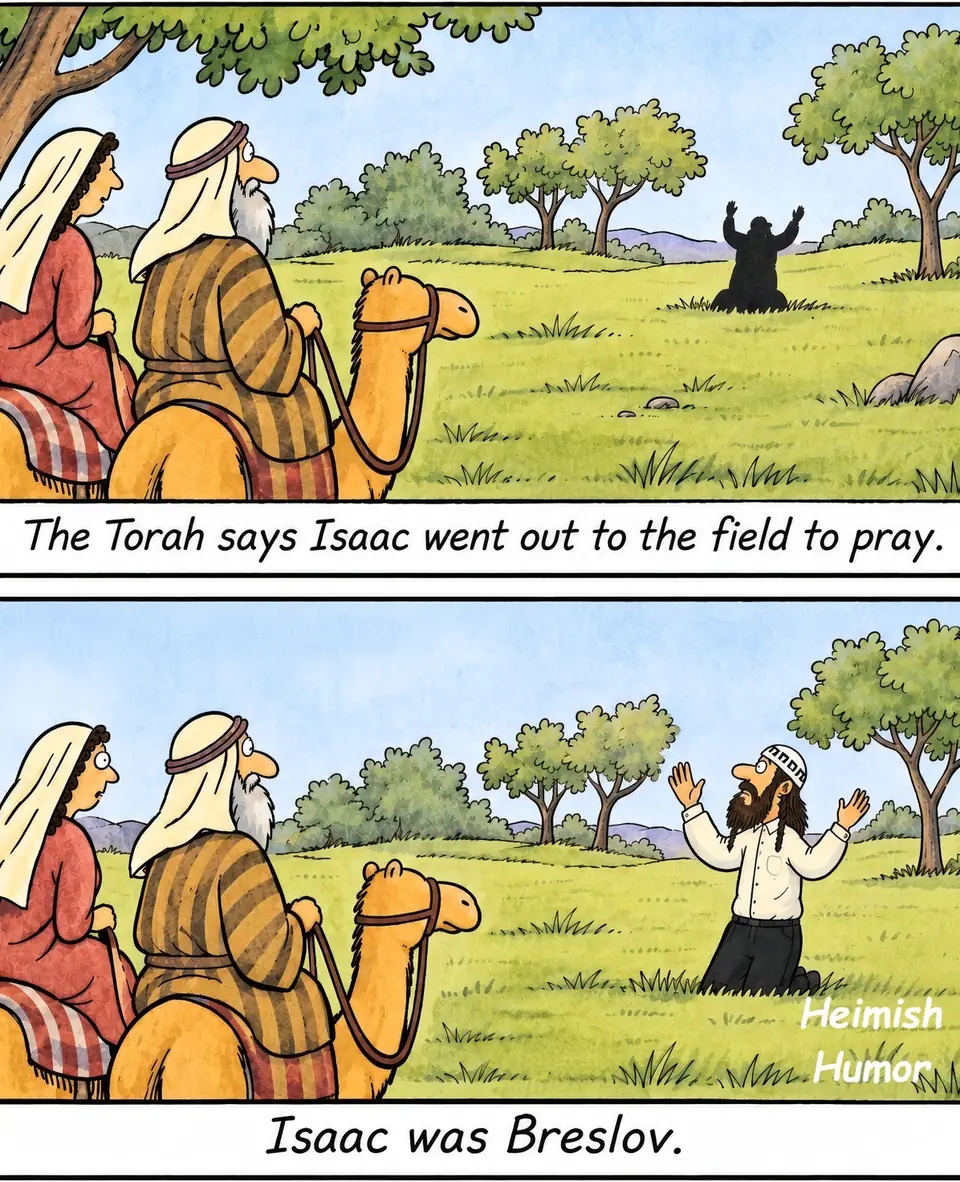
Only the impossible is possible (21:39; 34:19; 36:31)
Hashem had already told Avraham where Rivkah’s family lived (Bereishis 22:20–23), yet Avraham gave Eliezer no address. Rav Dynovisz explains: Yitzchak, circumcised on the eighth day, and Rivkah, daughter of Besuel, Nachor’s eighth son, both stand under the number eight, above nature, so their match could only come through Hashgachah: “the Jewish people was born to live, naturally, beyond nature. The true nature of Israel is to live on the level of miracles.” Eliezer’s sign, a drink for him and then water for all ten camels, asked Providence to act through Rivkah’s own kindness. The lesson: “for us, Israel, great things succeed precisely, and only, when we take the path above nature.” Avraham had every natural means at hand, and still “he decided of his own free will to take the path of the impossible. And that is how it worked.”
Sarah, the warrior, and the authentic couple (08:20; 50:30)
Following the Zohar, Rav Dynovisz reads Sarah’s 127 years as 100 (Keser), 20 (Chochmah and Binah) and 7 (the lower sefiros): of the women of Tanach, he says, only she drew in all ten sefiros, the same 100–20–7 the Rebbe reads in 5750. Each of the Avos married his opposite, chesed with gevurah, and real unity is not sameness: “the root of rebuilding humanity is the authentic couple”. Sarah was a fighter; eshes chayil means a woman of strength: “the true definition of a woman is to be a warrior”. And at Avraham’s burial Yishmael let Yitzchak go first, a sign that he had done teshuvah (Rashi, Bereishis 25:9).
Rashi, Bereishis 25:9 · sefaria.org
“Listen to her voice”: Judaism lived in the body
The Zohar says Avraham stands for the soul and Sarah for the body. So why does Hashem tell Avraham, “Whatever Sarah tells you, listen to her voice” (Bereishis 21:12)? Rabbi YY Jacobson teaches the Rebbe’s answer (Likkutei Sichos vol. 1, Chayei Sarah): the mitzvos were given to souls inside bodies. They need physical things, and even the “duties of the heart” must be felt in the body: “the mitzvahs were not given to angels they were not given to the souls in paradise”. With the Baal Shem Tov’s reading of “the donkey of your enemy” (Shemos 23:5), the body’s very burden is what raises it up.
Class source sheet, TheYeshiva.net · theyeshiva.net/jewish/8244
Life never ends
Why is the parshah that tells of Sarah’s passing called “the life of Sarah”? Rabbi Manis Friedman: a life can be judged only at its end, and life is not length but purpose: “life is probably synonymous with purpose a purposeful life is a life a life without purpose is a torture”. Sarah had the innocence of a seven-year-old, the maturity of a twenty-year-old and the wisdom of a hundred-year-old: “Sarah didn’t just exist for 127 years she lived”. Existing means taking care of my needs; living means knowing what I am needed for.
The servants of the soul
Our Sages say the conversation of the Avos’ servants is more precious than the Torah of their children, which is why Eliezer’s story is told twice (Rashi, Bereishis 24:42). Rabbi Friedman links this to Tanya ch. 4: thought, speech and action, the soul’s “garments,” are in a sense greater than its love and fear. In a relationship, what I do for you matters more than how I feel: “in a relationship the servants of the soul are more significant than the soul itself”.
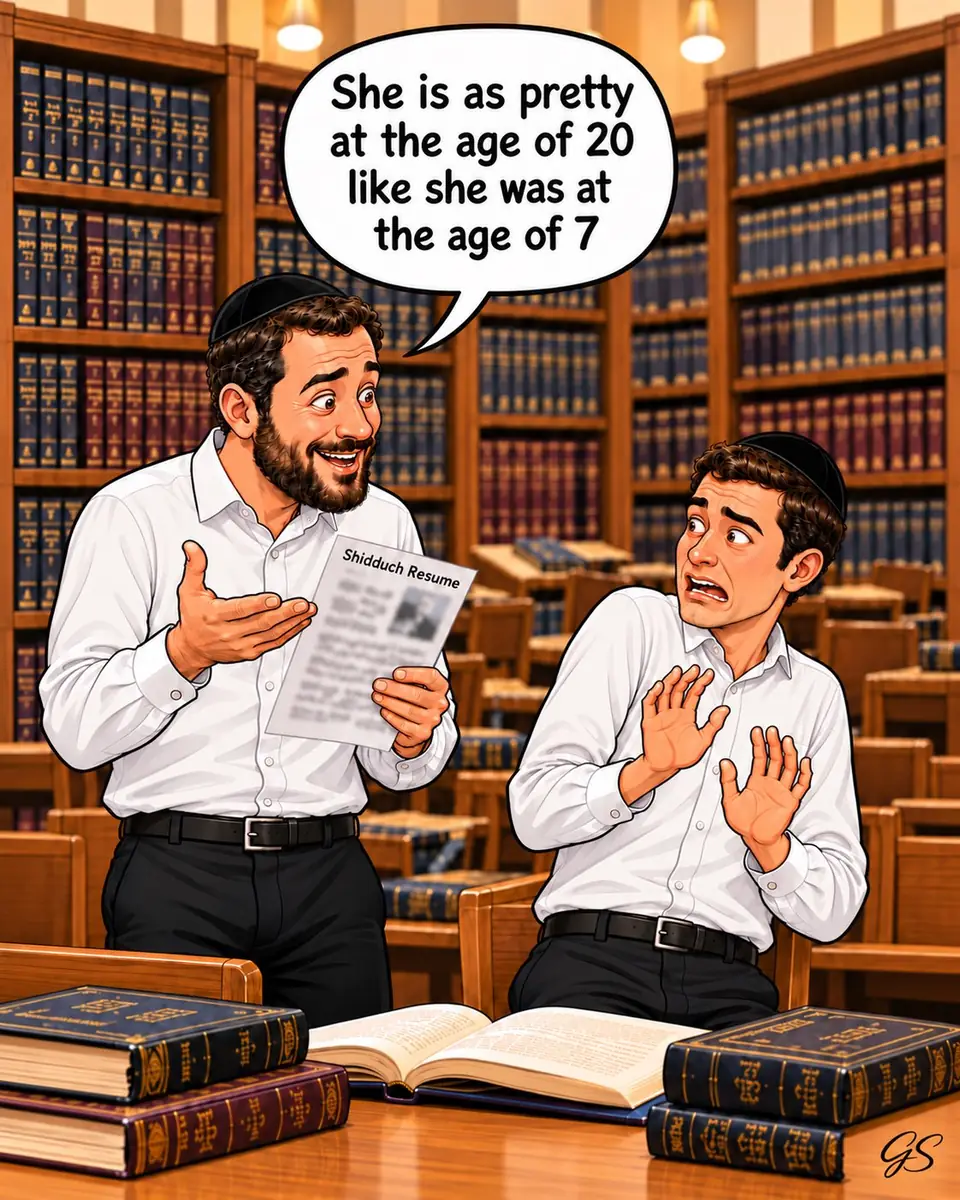
Chevron, the city of connection
Rabbi Wolf on Chevron’s deeper secret: it is called Kiryas Arba, “the city of four,” for the four couples buried there (Rashi, Bereishis 23:2), and Chevron comes from chibur, “connection.” Our own body is a “city” built of four elements: “the body is called the city”. And the Zohar teaches that the Me’aras HaMachpelah is the entrance to Gan Eden (the Garden of Eden), the path by which prayers ascend.
Rashi, Bereishis 23:2 · sefaria.org
The mystery of four hundred
Avraham paid Efron 400 silver shekels for the Me’aras HaMachpelah (Bereishis 23:15–16). Rav Ginsburgh: “The numerical value of Efron (עֶפְרֹן) is also 400, the same as an “evil eye” (רַע עַיִן), indicating that this was Efron’s mode of perceiving others. [Avraham], on the other hand, looked upon everyone with “pure eyes” (טְהוֹר עֵינַיִם), an expression whose value is also 400.” On the opening verse he writes that “the fact that the Hebrew word for “the years” (shenei) can also mean “two” reveals an important truth, for it suggests that Sarah had two sets of years, or “two lifetimes.”” And “the Zohar explicitly states that the Cave of Machpeilah is a microcosm of the entire land of Israel.”
The shluchim gather on Eliezer’s Shabbos
The International Kinus Hashluchim 5787 takes place “on Shabbos Parshas Chayei Sarah, Mevorchim Kislev, 27 Cheshvan (November 7),” and is “set to be the largest Kinus yet.” Thousands of shluchim, the Eliezers of our generation, gather on the very Shabbos the Torah tells of the first shliach. The Motzei Shabbos theme comes from the Rebbe’s kapitel, “Heitivah Hashem Latovim” (Tehillim 125:4), and this Shabbos’s Hayom Yom says: “do a kindness for a fellow-Jew and G‑d will do a kindness for you.”
Anash.org, “New Details Emerge of Largest Kinus Yet” · Oct 21, 2026 · anash.org
Hayom Yom, 27 Cheshvan, Chabad.org · chabad.org
Open for prayer in Me’aras HaMachpelah
For Shabbos Chayei Sarah, “starting Friday at 3:00pm,” the Me’aras HaMachpelah is reserved for Jewish prayer, including the Hall of Yitzchak and Rivkah: “This hall contains the opening into the actual cave.” This Shabbos Jews pray where Avraham bought the cave and its field (Bereishis 23:16–20).
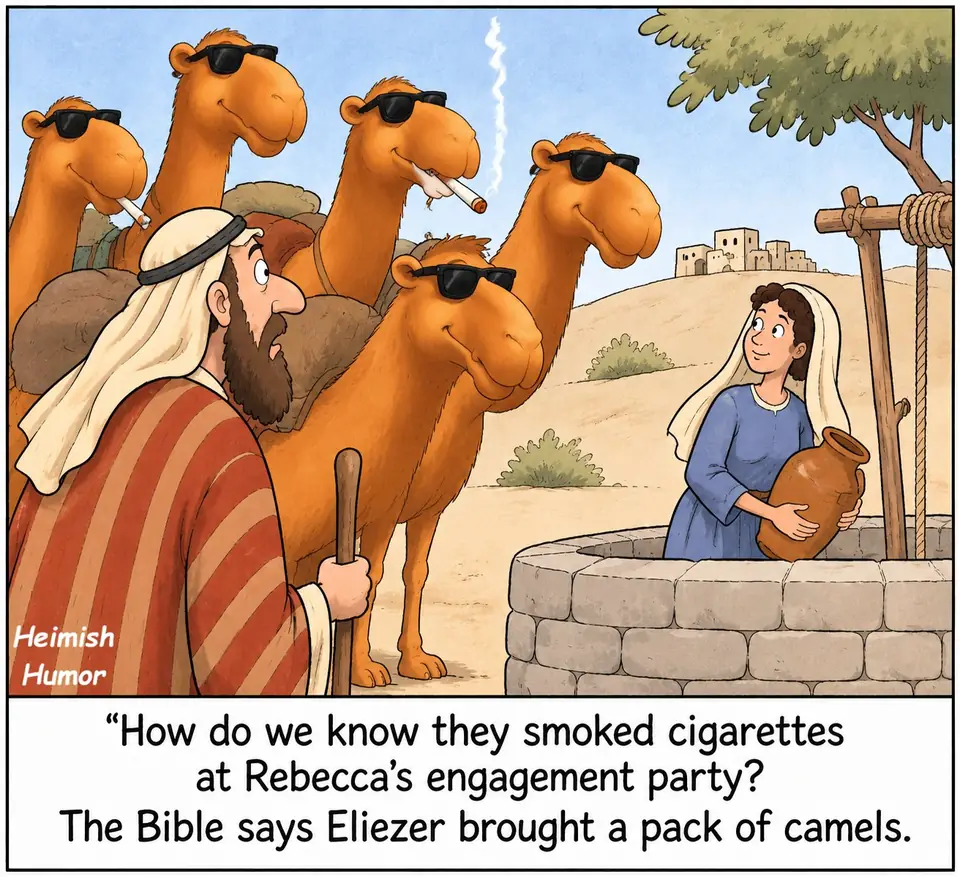
What lives forever
Rabbi Simon Jacobson on the lesson of Sarah’s life: what outlives us is not the ego but what we give: “The things that will live on forever are the good deeds that you do.” In his MyLife class this week on Tanya ch. 37, he shows how each mitzvah turns a physical thing into a vessel for G‑dliness, and how the mitzvos together build the era of Mashiach. In the Alter Rebbe’s words: “Now this ultimate perfection of the Messianic era and [the time of] the resurrection of the dead, meaning the revelation of the Ein Sof-light in this physical world, ... is dependent on our actions and [divine] service throughout the period of exile.”
Rabbi Simon Jacobson, MyLife: Chassidus Applied, “Chapter 37.02: Chof Cheshvan. Dynamics of a Mitzvah,” YouTube · uploaded Nov 1, 2026 · youtu.be/_cEN6_093I4
Tanya, ch. 37, Chabad.org · chabad.org
Kislev, the month of redemption
At the Kinus of 5752, also on Shabbos Chayei Sarah, the Rebbe said: “the shlichus of our generation centers on preparing us to receive Mashiach in practice.” “This is all the more relevant because this Convention is being held on the Shabbos in which the month of Kislev is blessed, for Kislev is referred to as ’the month of redemption.’” Rav Ginsburgh sees Sarah as the model of balance in working for the Geulah: “I want with all my strength to bring redemption to the world (and will do everything in my power to advance this cause), but I also know (sensing G‑d and remaining humble before Him) that success completely depends on the mercy of Heaven.”
Rav Yitzchak Ginsburgh, “Parshat Chayei Sarah: A Balanced View of Redemption,” Gal Einai · inner.org
Torah and commentaries
- Bereishis 23:1–25:18 (Chayei Sarah); 16:16; 21:10–12; 24:31; 24:67; 25:1–7
- Rashi on Bereishis 21:12; 23:2; 23:9; 23:16; 24:67; 25:1; 25:6; Devarim 1:36; 6:4; Bamidbar 13:16; 13:22; Yehoshua 14:15; Shemos 6:9
- Rashbam, Ibn Ezra, Radak, Ramban on Bereishis 25:1–6
- Kehot Chumash on Bereishis 25:6
- Gur Aryeh (Maharal) on Bereishis 25:6
- Midrash Lekach Tov 25:1
Talmud and Midrash
- Eruvin 53a; Sotah 11b; 13a; 34b; Sanhedrin 91a; Bava Basra 58a; Yevamos 12b; Rosh Hashanah 21b
- Bereishis Rabbah 60:16; 61:4; 61:7; 79:7
- Pirkei d’Rabbi Eliezer 36
- Midrash Tanchuma, Kedoshim 10
- Targum Yonasan on Devarim 32:8
Zohar and Kabbalah
- Zohar I:100b; 125a; 127a–128a; II:7b; 31a; III:158b; 221b
- Zohar Chadash, Midrash Rus
- Shaar HaPesukim, Shelach; Shaar HaGilgulim, Hakdamah 36 (R. Chaim Vital / Arizal)
Rambam and later authorities
- Rambam, Hilchos Avodah Zarah 1:1–3; Hilchos Melachim 8:11; 11 (uncensored)
- Tanya ch. 8
Chassidus and the Rebbe
- Likkutei Sichos vol. 10, Bereishis 1; vol. 15, Chayei Sarah 4
- “5 Powerful Insights From the Rebbe: Chayei Sarah,” Chabad.org
- Yanki Tauber, “The Hebron Purchase,” Chabad.org
- J. I. Schochet, “Living with Moshiach: Chayei Sarah II,” Chabad.org
- “Cave of the Patriarchs (Machpelah),” Chabad.org
- The Rebbe, Yechidus on the eve of 22 Kislev (seven mitzvos / Mashiach)
- Chabad.org X post, Nov 3, 2026 (status 2117660324878795152) — marriage / bride for Isaac
Teachers and online sources
- Rav Haïm Dynovisz, L’endroit où est caché la lumière du monde (YouTube XWdBAemM23A)
- Rav Haïm Dynovisz, ’Hayé Sarah: Des chiffres et des lettres (YouTube VLPXKO6wkNM)
- Rav Haïm Dynovisz, Pour Israël, seul l’impossible est possible; L’histoire du peuple juif commence à Hébron
- Rabbi YY Jacobson; Rabbi Manis Friedman; Rabbi Reuven Wolf; Rav Yitzchak Ginsburgh; Rabbi Simon Jacobson
- International Kinus Hashluchim 5787 notices (Chabad.org / related)
Cartoons
- Heimish Humor cartoons for Chayei Sarah 5787 (shidduch résumé; pack of camels), shared by Rabbi Haim Tebeka
Also cited in this sheet
- The Rebbe, Shabbos Parshas Chayei Sarah, 27th Day of MarCheshvan 5750, Sichos In English, Chabad.org · chabad.org/2504427
- The Rebbe, “Chayei Sarah: Rivkah’s Shabbos Lights,” Likkutei Sichos vol. 15, Chabad.org · adapted from sichos of 20 Cheshvan and Shabbos Chayei Sarah 5735 · chabad.org/4773533
- Heimish Humor (cartoon) · Shared by Rabbi Haim Tebeka
- Rav ‘Haïm Dynovisz, “05 ’Hayé Sarah - Pour Israël, seul l’impossible est possible,” YouTube (Archives 260) · uploaded Nov 14, 2025 (recorded Oct 27, 2010); ~00:21:39; 00:34:19; 00:36:31 (auto-captions, not yet checked against the audio) · youtu.be/bKhpYvMnjr4
- Rav ‘Haïm Dynovisz, “05 ’Hayé Sarah - Sarah la femme d’Avraham, une lionne source de la délivrance…,” YouTube (Archives 260) · uploaded Nov 9, 2023 (recorded Nov 16, 2022); ~00:08:20; 00:50:30 (auto-captions, not yet checked against the audio) · youtu.be/7gdy1l90xeY
- Rashi, Bereishis 25:9 · sefaria.org
- Rabbi YY Jacobson, on Likkutei Sichos vol. 1, Chayei Sarah (sicha of 24 Cheshvan 5711), YouTube · uploaded Oct 25, 2021; ~00:35:25 (captions) · youtu.be/0f7iBOKTyv4
- Class source sheet, TheYeshiva.net · theyeshiva.net/jewish/8244
- Rabbi Manis Friedman, “Parshat Chayei Sarah: Life Never Ends,” YouTube · uploaded Nov 13, 2020; ~00:03:49; 00:09:33 (captions) · youtu.be/s-OGBwowSmU
- Rabbi Manis Friedman, “Eliezer, his camels and the marriage of Isaac [Yitzchak]: Bible Secrets – Chayei Sarah,” YouTube · uploaded Nov 18, 2022; ~00:06:36 (captions) · youtu.be/cBI36_5PYW0
- Rabbi Reuven Wolf, “Chayei Sarah – Chevron, Her Deeper Secret,” YouTube (Maayon Yisroel) · uploaded Nov 19, 2019; ~00:55:41 (captions) · youtu.be/uTJUDG22YyY
- Rashi, Bereishis 23:2 · sefaria.org
- Rav Yitzchak Ginsburgh, “The Mystery of Four Hundred,” Gal Einai · Nov 12, 2025 · inner.org
- Chabadinfo, “Registration Opens for International Kinus Hashluchim 5787” · about Oct 11, 2026 · chabadinfo.com
- Anash.org, “New Details Emerge of Largest Kinus Yet” · Oct 21, 2026 · anash.org
- Hayom Yom, 27 Cheshvan, Chabad.org · chabad.org
- The Jewish Community of Hebron, “Holiday opening & closing schedule for Tomb of Machpela – 2026” · Jan 14, 2026 · hebron.org.il
- Rabbi Simon Jacobson, “Is There Life after Death? Eternal Lessons from our Matriarch Sarah,” YouTube · uploaded Oct 24, 2021; ~00:12:48 (captions) · youtu.be/zYzMsxHLLYA
- Rabbi Simon Jacobson, MyLife: Chassidus Applied, “Chapter 37.02: Chof Cheshvan. Dynamics of a Mitzvah,” YouTube · uploaded Nov 1, 2026 · youtu.be/_cEN6_093I4
- Tanya, ch. 37, Chabad.org · chabad.org
- The Rebbe, Shabbos Parshas Chayei Sarah 5752 (Kinus Hashluchim), Sichos In English vol. 50 · sichos-in-english.org
- Rav Yitzchak Ginsburgh, “Parshat Chayei Sarah: A Balanced View of Redemption,” Gal Einai · inner.org
|
|
|